

Prevent accidents, always check your camera gear before heading out
Monday 14 September 2020, 16:32 by Nando Harmsen | 6,125 views | 16 commentsThis article was translated from Dutch with the help of AI. Read the original.
It usually goes well. You go out to take photos, use your equipment, and set up your tripod or flashes as you want them. You assume everything is in order and working properly.
Until something does go wrong. You do not want to think about your valuable lens or camera falling and breaking.
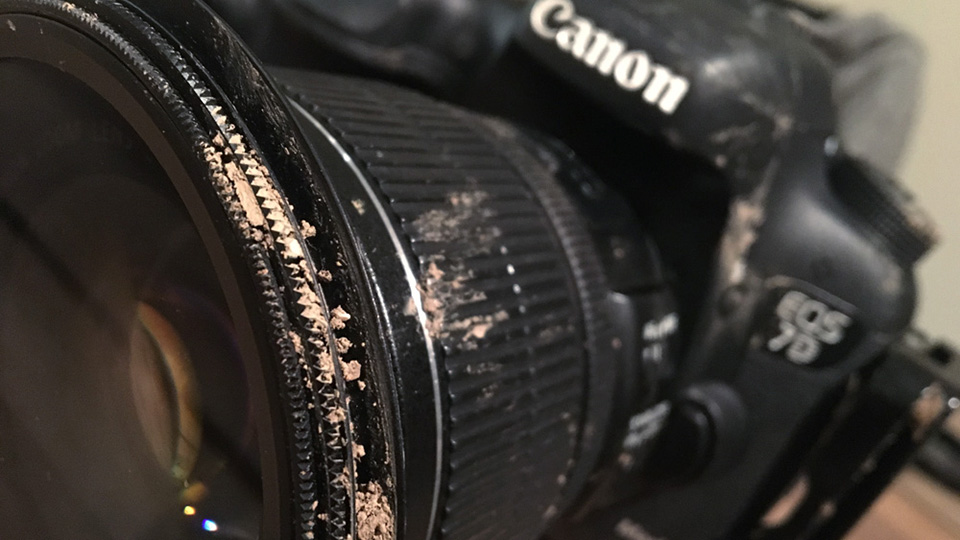
A few years ago, I was out with a fellow photographer. After a long day of taking photos, we ended up on a dyke by the Wadden Sea.
That was when it happened. In a moment of inattention, caught up in the excitement of photographing a sunset, the camera was not properly attached to the tripod.
A Nikon D610 with a 16-35mm lens plunged towards the concrete dyke. The lens broke off, and everything bounced across the concrete towards the waterline.
The lens disappeared into the mud. We never saw it again. We managed to save the camera, and with it the valuable photos from that day.
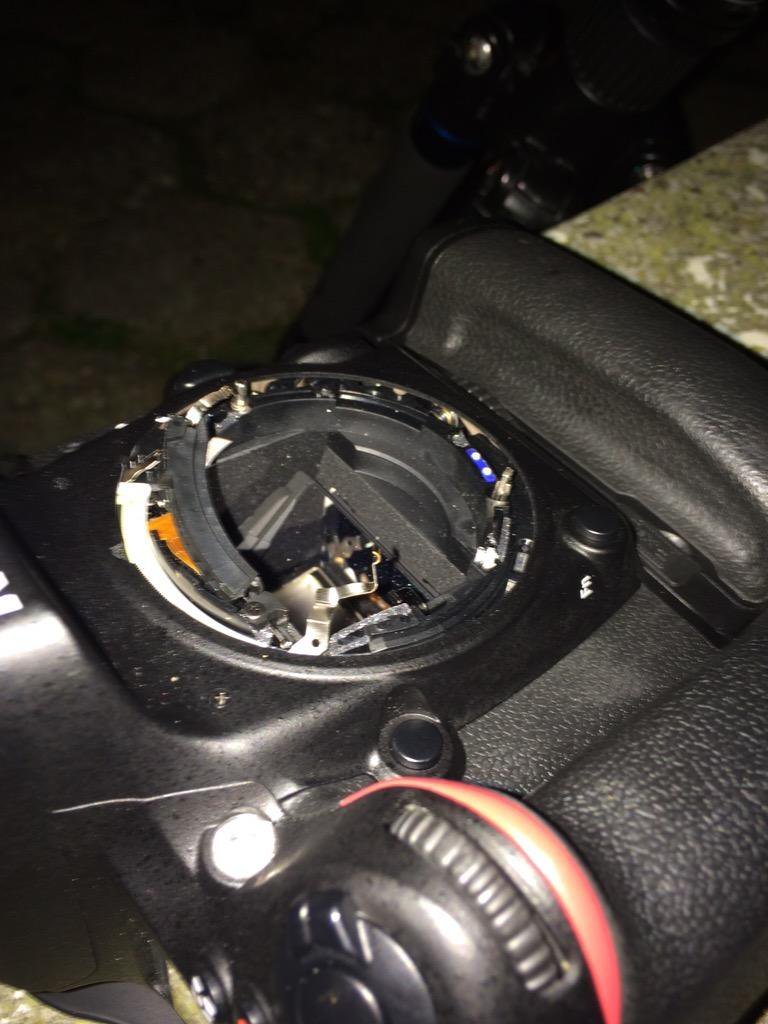
As you can see, it can happen very quickly. A moment of inattention is enough. But that is not all. Wear and tear on your equipment can also cause an unexpected fall. A camera strap can come loose, and so can a tripod plate.
The connection between your Black Rapid Strap and your camera can wear out, and a shoulder strap on your backpack can tear. Metal rubbing against metal wears out quickly, and the material of a bag or backpack does not last forever.
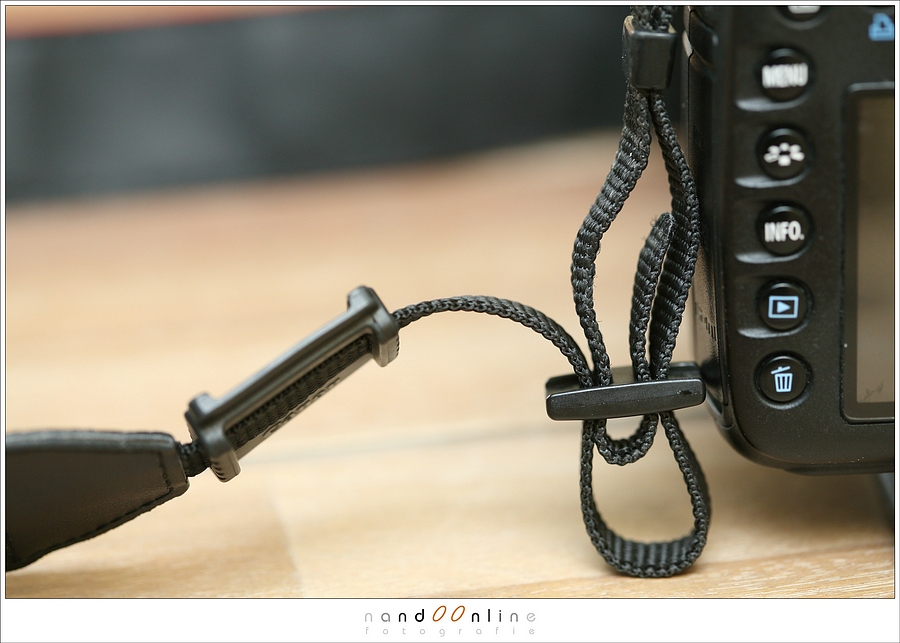
That is why it is important to check all your equipment regularly. Ideally, every time you go out. It does not have to take long, a quick check is enough. Check the following things.
- Is the camera strap properly attached, and is it free from tears?
- Are the carrying rings and D-rings free from wear, and do they look sound?
- Do the zips on your camera bag work properly?
- Is the tripod plate properly attached underneath your camera, and can it not rotate?
- Is the lens plate for your tripod properly attached to the tripod collar?
- Is your lens properly clicked into place?
- Is the ball head fully tightened onto your tripod?
- Is your camera properly secured to your tripod?
- Is your tripod stable?
- Have you properly fitted the filter ring and filter adapter of your filter system?
- Does the filter not come loose when you rotate a polarising filter?
- Are your flashes properly secured to the light stand?
- Is your light stand stable?
- Is your camera bag properly closed before you pick it up or put it on your back?
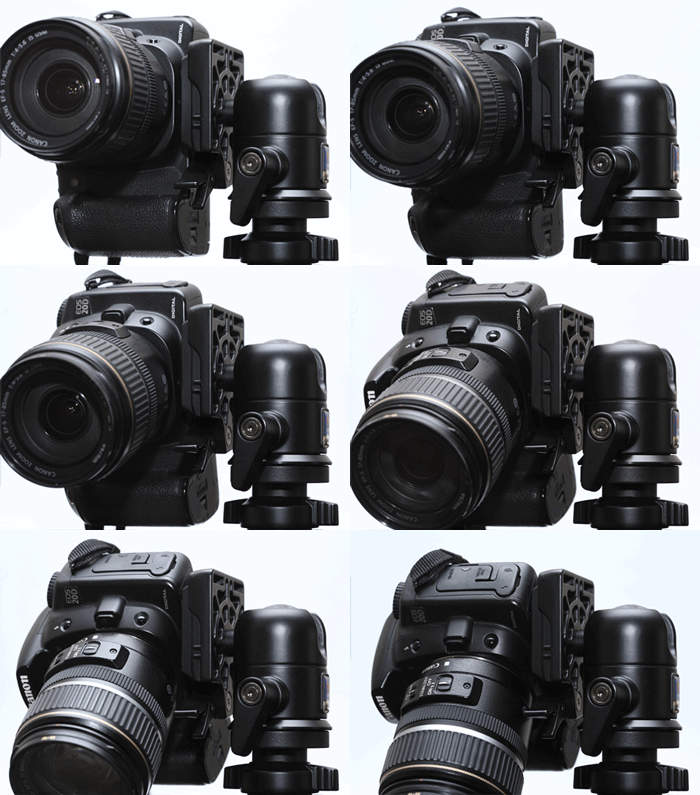
Usually, these are small things you need to watch out for. They do not take much time, but they can prevent a lot of trouble. Buying good-quality equipment is also important. There are many suppliers offering accessories for next to nothing, often at a fraction of the price charged by a well-known brand.
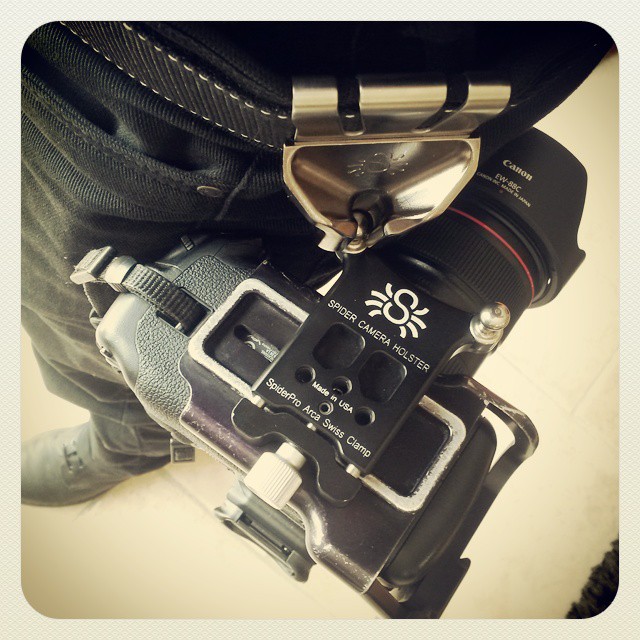
I am not saying that those cheap products are no good, but make sure you are confident in their quality.
It would be a shame if your 2,000-euro camera fell and smashed because you would rather spend 10 euros on a camera strap than 50 euros on one from a reputable brand.
But remember that even the 50-euro one can fail. So keep checking, always.
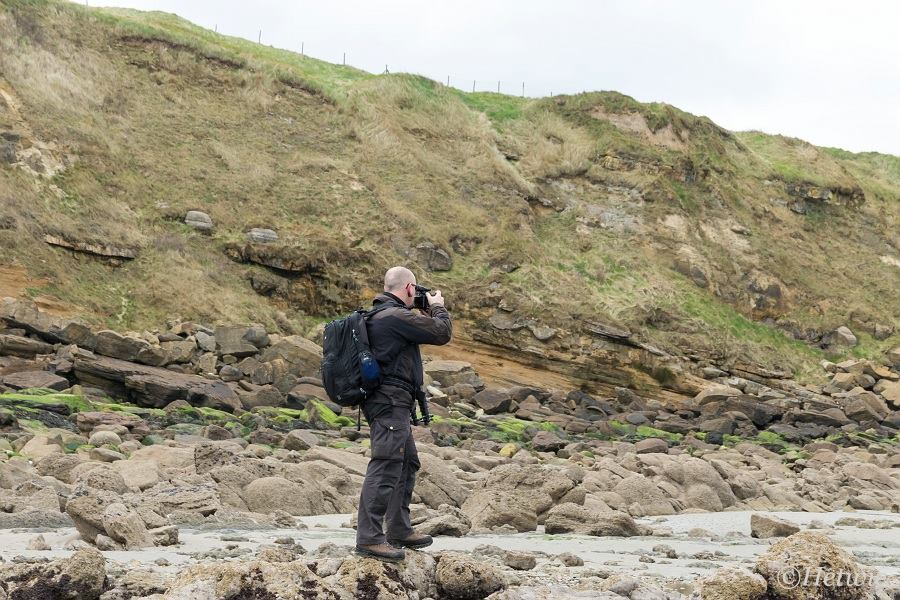
Have you ever had damage caused by wear and tear, or simply by a moment of inattention?
Share your experience in a comment. It is useful for everyone, and it may prevent someone else from suffering the same kind of trouble.
About the author
Nando Harmsen has been photographing for more than 40 years. He specialises in wedding photography and landscape photography. Nando also gives talks, workshops, masterclasses and photo trips, and regularly reviews new and interesting equipment.
You might also like
-
 Review: Benro geared head
by Martin van Rooij
-
 Review: Sirui L324F with KS-G3 geared tripod head
by Nando Harmsen
-
 Adjusting a gimbal head
by Nando Harmsen
-
 Falling stars (Lyrids), photographic contributions
by Michelle Peeters
-
 A tip for using telephoto lenses on a ball head
by Nando Harmsen
-
 The best camera is the camera you have with you!
by Laura van der Burgt
16 comments
-

 Donald Willemsen
wrote on Tuesday 15 September 2020 at 11:24
| reply
Forewarned is forearmed.
Translated from Dutch.
Still, one small comment: Nando, you give good advice and in doing so you give various examples where you say that it is better to pay a bit more for good equipment than to get by with cheap stuff.
Cheap is often expensive in the end, as a well-known saying goes. But amateur photographers with a limited budget also want to protect their camera and lenses, bought after saving for a long time, against possible damage. So they logically buy somewhat cheaper equipment. They may reason that a little protection is better than no protection.
You, as a professional photographer, are able to earn back an investment (and quite rightly so, by the way), but amateur photographers do not have that possibility, or much less so.
I would like to see tests carried out and published of all kinds of materials, from cheap to expensive, also indicating how good the quality of these materials is.
Every month you see test reports of cameras and lenses in the various magazines. You never see tests of, for example, camera straps.
Nando, I am happy with your article. People cannot be warned often enough about the countless pitfalls 😃. -
 Ton van Schilt wrote on Tuesday 15 September 2020 at 12:23 | reply
Once at a photo meeting in Middelburg, a participant wanted to switch his expensive 24-105 mm Canon lens. He fell to the ground in 1000 pieces. this elderly man had photographed with a compact camera before that. He had received the lens from his daughter for his birthday. I then took a photo of the broken lens on the ground for the insurance.
Translated from Dutch. -
 Martin Hermes wrote on Tuesday 15 September 2020 at 12:39 | reply
"Prevent accidents - always check your camera gear before you head out" I nowadays see most people walking around with a camera in their hand without even wearing the strap around their neck that also falls under "accidents" their own fault, of course, but apparently it's fashionable in all the photography magazines you see this new hype. It's just like those yogurt photos of flowing water awful, nature doesn't look like that I had hoped it was temporary but no such luck !!
Translated from Dutch. -
 andré janssen wrote on Tuesday 15 September 2020 at 13:04 | reply
Nando, great to have your contributions to this section!I look forward to it every time!
Translated from Dutch. -
 Robert wrote on Tuesday 15 September 2020 at 13:42 | reply
A bit of a flat article. Even when you're on assignment and your cameras are hanging in and around your neck....someone just walks into them. No matter how careful you are. Put it on a tripod...well ..then a solid surface edg is of course your own responsibility.
Translated from Dutch.
Even if your camera is safely on a table....someone will just knock it off.
Accidents can't be prevented. Cha-ching...
Photo-shooting greetings Robert -
 Johan Hahn wrote on Tuesday 15 September 2020 at 14:12 | reply
All the equipment was in perfect working order. Hiking boots on to protect my ankles and not slip. But yes, it happened in Vietnam (Halong Bay): stepping out of a boat onto a quay that was barely visibly slippery as ice due to remnants of seaweed. I was lying on the ground and so was my Nikon D800 with 24-70 lens and flash. Damage: flash broken off, shoe and all, and lens crooked and lens hood at the bottom of the bay. The lens was still usable, but with considerable limitations. The repair ran into the hundreds of euros, but good insurance covered all the damage. Bright spot: my small backup camera. So, besides a good check, make sure you have a backup camera!
Translated from Dutch. -
guest wrote on Tuesday 15 September 2020 at 15:40 | reply
Nando, I also have a SpiderPro with such a nice pin construction. My Canon 6d MkII with Tamron 28-300 lens is hanging from it. I did secure that pin with glue because when I went for a ride on my bike with this construction (still without glue), the pin unscrewed due to the movement and my camera tumbled onto the asphalt. About 1.5m above the Earth's surface and the still present force of attraction ensured that I could at least write off my polarizing filter. After examination, it turned out that the camera and the lens had otherwise survived the damage. Compliments to Canon and Tamron, then. And that my insurance covered the damage. Lesson learned, at least.
Translated from Dutch. -
 Gerard wrote on Tuesday 15 September 2020 at 16:13 | reply
I was at an airshow in Sanicole. We were standing with a group in a tent waiting for the 'Breitling Super Constellation', which everyone had actually given up hope of still coming. Suddenly the sonorous rumble of the four propeller engines. I indeed slung the unfastened camera bag over my back and just like above, the Canon 24-105 fell out along with my brand-new 5DMKIII. Fortunately, only the lens's UV filter was broken, but what a fright I got. Since then I always check whether everything is properly closed! Pffff, I'm getting hot again while writing this..
Translated from Dutch. -
 Paulussie wrote on Tuesday 15 September 2020 at 17:09
| reply
What happened to me is something you don't think about very quickly.
Translated from Dutch.
In winter, out and about with my F801 with a Tokina 28-80 2.8 around my neck.
At some point it becomes pleasant in the sun, I pull the scarf from my neck, the camera strap flies along, over my head, the whole thing dives straight forward onto the ground (a piece of grassland, luckily). Only the lens hood cracked, it took the impact.
Since then I've become even more careful, but it still went wrong once more, in a similar kind of situation as described above. In Rotterdam, where I was born, visiting. The one from Noordereiland to Rotterdam centre had been demolished, and the municipality had made a platform there to look out over the river beautiful view of, among other things, the White House.
Seemed like something for me, so I stepped onto it; Mirror-smooth! They had forgotten to treat the wood.
The first step I took onto it, I immediately went down. Camera in hand, so catching myself with the other hand didn't really work, so the camera still hit the ground, but not too hard, only the polarising filter (77mm, so expensive) broke.
In this case I held the municipality of Rotterdam liable, which they did indeed accept.
Accidents cannot be ruled out.
Caution remains necessary, good equipment is expensive. -
Donald Willemsen
wrote on Tuesday 15 September 2020 at 17:59
| reply
I use a Cotton Carrier camera vest to which my camera is clipped, and for safety there is also a strap attached between the camera and vest. This way I have my hands free while walking (with crutches) or in my wheelchair. The camera also doesn't swing back and forth, which is the case with a camera strap. This is how I try to prevent damage. I have already had it happen once that, when using a camera strap, a long telephoto lens bumped into something, which caused the front lens to get a sizeable crack. So that lens could go straight into the trash.
Translated from Dutch. -
 Leidy Rijckaert de Boer wrote on Wednesday 16 September 2020 at 09:20 | reply
Very good tips. I am already careful, but it is still good to see it all listed once again.
Translated from Dutch.
Some time ago I was photographing at the Pannerdensch Canal. My camera was on a tripod. It was standing about a metre from the bank in the water. It did not take long because a cargo ship came by. Due to the enormous waves that were created then, my tripod (which I had weighted down anyway) slowly sank crooked. Fortunately, I was standing right nearby and saw it happening. Just in time I managed to grab my tripod and thus prevent everything from ending up in the water.
Kind regards, Leidy -
 johan bauwens wrote on Wednesday 16 September 2020 at 10:02 | reply
I once slipped on a frozen surface when I wanted to photograph geese. Camera and lens fell from a height of 1.8 m. The camera wasn't broken but the 100-400 was. I've indeed also experienced wanting to put my backpack on my back, the zipper not fastened and the macro lens falling out (broken too, of course). Putting your lens or backpack down too hard on a hard surface isn't healthy either. By the way, I don't know a single insurer that would cover such things unless at an exorbitant price
Translated from Dutch. -
johan bauwens wrote on Wednesday 16 September 2020 at 10:03 | reply
@Martin : I actually do like long-exposure photos of flowing water, the sea, a waterfall etc, a matter of taste
Translated from Dutch. -
 Ria B wrote on Wednesday 16 September 2020 at 11:09 | reply
A narrow little accident is often in a small corner .. So my son and I were on the beach in the middle of the night photographing the sea sparkle, I put my camera or tripod next to his and we stand talking for a bit .. he says Mum .. I’ll just press the button and run into the sea ... okay .. he runs off and at that moment his camera with tripod tumbles forward ..and pulls mine along. Both cameras dive into the wet sand. Mine made a nice fall and apart from a load of sand no damage . My son’s camera was also fine , only the focus ring of his lens was broken , repair of 250 euros , fortunately covered by the insurance.
Translated from Dutch. -
 Matty wrote on Wednesday 16 September 2020 at 23:55 | reply
I’ve experienced it, being about to leave, just taking the batteries out of the charger and putting them in the bag and then getting distracted for a moment and you pick up your camera bag and the zipper isn’t closed, camera with lens bounces right out, the lens took a hit and then I grabbed it just before the camera hit the ground.
Translated from Dutch.
That was a shock, the majority of the costs were paid by the insurance but you’d rather not experience it -
 Ineke wrote on Tuesday 22 September 2020 at 14:53
| reply
Good advice, Nando!
Translated from Dutch.
But even with more expensive stuff, things can sometimes (almost) go wrong. I have one of those Blackrapid straps; two-part. So I can hang a camera on both sides. Expensive thing, but definitely worth the money. Very comfortable. BUT: I still always check whether those hooks are screwed properly into the camera. I once experienced that one had come loose and was just barely still hanging from the camera. Probably not tightened properly. But because I check everything 100 times, I prevented my expensive camera from crashing onto the ground.
Have your say
Please note: Articles older than a week can only be commented on by signed-in visitors.Would you still like to comment? sign in or create a free account.
Become a better photographer every week
A practical photography tip in your inbox every week.
38,938 photography enthusiasts already receive the tips! More about the weekly mail. Or keep up to date via  Facebook.

Elja Trum
Photofacts; everything to do with photography!
Would you like to take better photos and keep up with what is happening in photography? Photofacts publishes articles that teach you something about photography — from a product announcement to a practical shooting tip or a look at a website. Photofacts covers photography every day and is a hobby project of Elja Trum's that got out of hand. The articles are written by a team of volunteer authors. If you would enjoy writing one or more articles for Photofacts, do get in touch.More about PhotofactsPhotofacts is made possible in part by
