

HDR: What do you mean?
Tuesday 13 April 2021, 20:02 by Rob IJsselstein | 4,950 views | 4 commentsThis article was translated from Dutch with the help of AI. Read the original.
Anyone who takes photos regularly will come across the term HDR. Whether you use a camera or a phone camera.
HDR stands for high dynamic range, and the term is used for a technique to get a well-exposed photo in situations with high light contrasts. The technique is widely used, yet HDR has a negative connotation for many people. Is that justified?
What is HDR?
As mentioned, HDR stands for high dynamic range, which in this context means large differences in brightness.
The differences between light and dark parts of an image are often so great that a camera sensor cannot process them properly in a single shot. Unlike our eyes, which can do this better.
Think, for example, of a landscape with dark shadows and bright white clouds. In these situations, you risk losing all detail in the darkest and/or lightest parts of a photo: they become completely black or completely white.
The HDR technique
A technique was developed to create an image in which the details in both the dark and light areas are clearly visible.
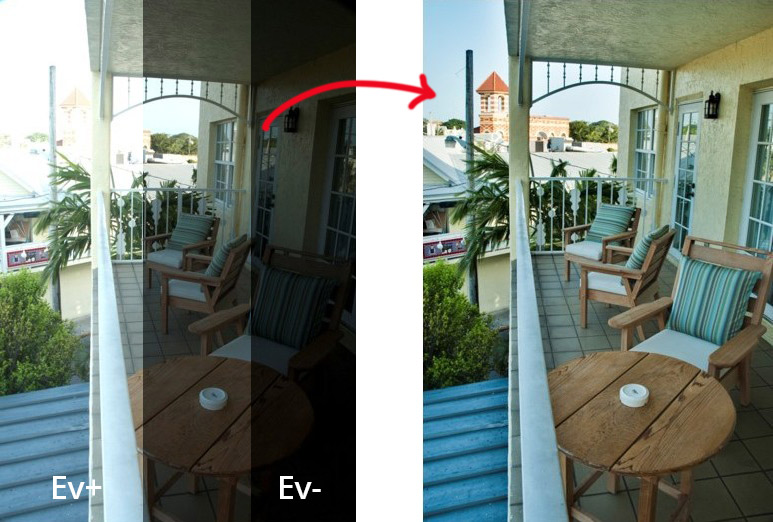
To do this, several photos, usually 3, 5 or 7, are taken with a different exposure each time. In the darker photos, the details in the lightest areas are still clearly visible, while in the lighter photos, the details in the dark areas are still clearly visible.
Software was developed to combine these photos in such a way that the details are displayed clearly everywhere.
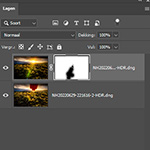
Initially, these were specialised programmes, but today the software is built into most photo-editing programmes, as well as modern cameras. The photo series here gives an impression of the process.
Initial use
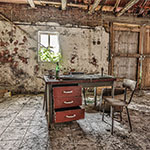
A popular branch of photography is Urbex, or Urban Exploration. Photos are taken in old and derelict buildings, showing the decay of the buildings and traces of their former use.
In these buildings, there is a large difference in brightness between the dark corners of the rooms and the areas where daylight can be seen or shines inside. The HDR technique was quickly adopted, particularly in these conditions.
Why does HDR have a negative connotation for some people?
Urbex photographers in particular used specialist software that allowed them to influence the merging process themselves.
This option was regularly used to make the process go further than necessary for an image that matched what you see with your eyes.
This creates images in which the contrasts are not only compensated for, but even minimised. You get photos with lots of detail visible in every area, resulting in flat lighting.
Some people consider this so-called HDR look over the top and ugly, and therefore reject the use of the HDR technique.
Is the technique widely used?
The HDR technique as originally intended is being used more and more by photographers. Many cameras now have a setting that automatically takes a number of shots with different exposures.
The technique for combining them is built into mainstream photo-editing programmes such as Lightroom and Photoshop.
For photographers who shoot in RAW, using Lightroom is attractive because the result is also a RAW file, which can be edited further with great flexibility.
Many cameras and phone apps also offer the option of combining the photos immediately, saving a ready-made HDR photo.
And the HDR look?
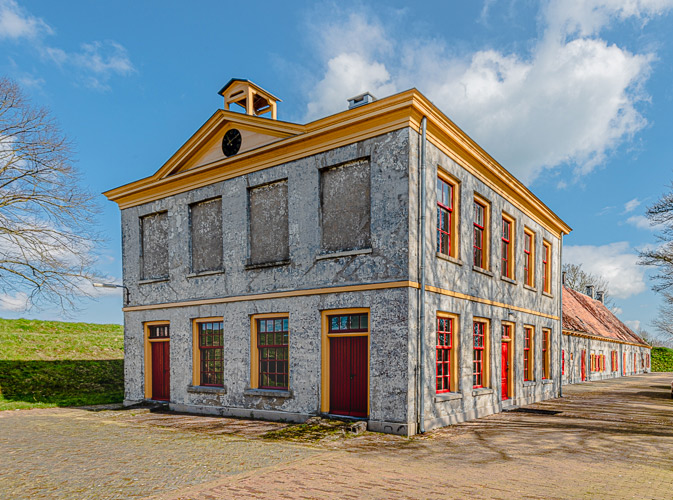
The HDR look itself has also gained wider acceptance, and many cameras, including phones, and photo-editing programmes have so-called HDR filters that can give a photo a similar appearance.
This does not combine multiple shots. Here is a photo that has been edited in Lightroom to create an HDR look.
About the author
Rob IJsselstein is 69 jaar. Hij fotografeert bij voorkeur natuurlijke en stedelijke landschappen. Foto's worden met enige regelmaat gepubliceerd en hij heeft twee fotoboeken over Alphen aan den Rijn op zijn naam staan. Rob begeleidt fotografen als persoonlijke coach. Lid van de fotoclub Alphoto, waar hij vijf jaar voorzitter was.
You might also like
-
 Edit an HDR like a normal photo
by Nando Harmsen
-
 Review: HDR and Dynamic Range Course
by Martin van Rooij
-
 Got flare in your HDR photo? Remove it with your finger
by Nando Harmsen
-
 An HDR photo is just a photo
by Nando Harmsen
-
 Programme your camera for HDR
by Nando Harmsen
-
 Creating an HDR photo with movement in the frame
by Nando Harmsen
4 comments
-
 guest wrote on Friday 16 April 2021 at 11:02 | reply
I think applying HDR is fine, but I’ve noticed that many (amateur) photographers take the technique much too far, causing bright edges to appear in places where the contrast differences are greatest. I really find that awful.
Translated from Dutch. -
 Rob IJsselstein wrote on Friday 16 April 2021 at 22:07 | reply
In response to the above: yes indeed, that can happen. It doesn't have to, but it can. It isn't attractive and should be avoided. Rob.
Translated from Dutch. -

 Myl wrote on Tuesday 20 April 2021 at 13:20
| reply
Myl wrote on Tuesday 20 April 2021 at 13:20
| reply
what is the difference with "bracketing" ?
Translated from Dutch. -
fotosvanrob
wrote on Tuesday 20 April 2021 at 15:12
| reply
@Myl. No difference: taking multiple shots with different exposures is called bracketing. And you can combine those into an HDR photo. Rob
Translated from Dutch.
Have your say
Please note: Articles older than a week can only be commented on by signed-in visitors.Would you still like to comment? sign in or create a free account.
Become a better photographer every week
A practical photography tip in your inbox every week.
39,103 photography enthusiasts already receive the tips! More about the weekly mail. Or keep up to date via  Facebook.

Elja Trum
Photofacts; everything to do with photography!
Would you like to take better photos and keep up with what is happening in photography? Photofacts publishes articles that teach you something about photography — from a product announcement to a practical shooting tip or a look at a website. Photofacts covers photography every day and is a hobby project of Elja Trum's that got out of hand. The articles are written by a team of volunteer authors. If you would enjoy writing one or more articles for Photofacts, do get in touch.More about PhotofactsPhotofacts is made possible in part by
