

Lens calibration, is it necessary or not?
Monday 5 February 2024, 16:08 by Nando Harmsen | 7,295 views | 6 commentsThis article was translated from Dutch with the help of AI. Read the original.
Every now and then, lens calibration comes up. But what exactly is it, and why would you do it? Is it only for DSLRs, or for mirrorless cameras too? Do you need to have it done, or can you do it yourself?
A camera with a lens is a precisely designed system. Everything needs to be perfectly aligned for the best results. Yet the focus point can sometimes be in the wrong place. If this happens now and then, it is probably down to the photographer. If it happens consistently, the system may have a deviation.
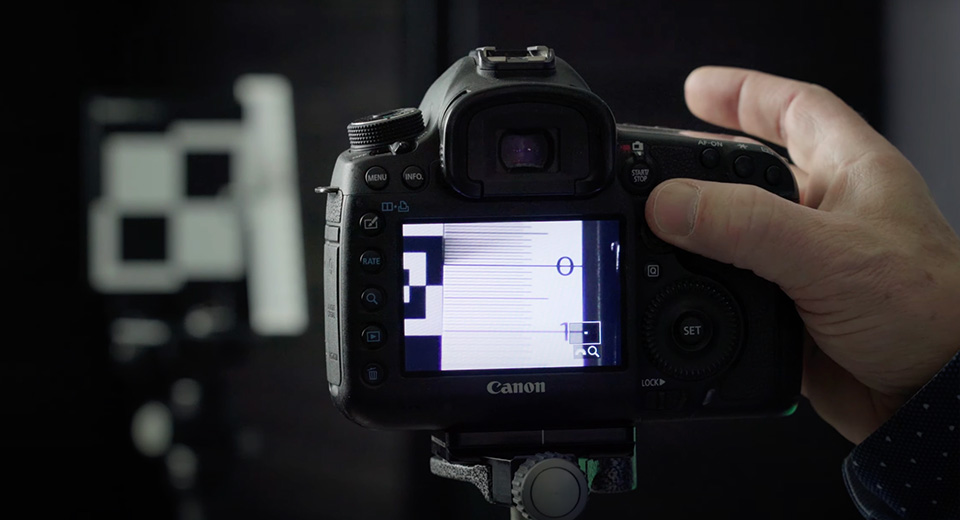
This chance of deviation only really exists with DSLRs. This is because they do not focus on the sensor itself, but via a separate AF sensor. If you focus using live view, this deviation is virtually impossible.

If your focus is off, you will notice that the sharpness is always just in front of or just behind the focus point. This is called front focus and back focus. You can correct this using AF correction. This process has a different name for each camera brand.
- Nikon: AF Fine Tune
- Canon: AF Microadjustment
- Sony: AF Micro Adjustment
- Pentax: AF Adjustment
- Olympus: AF Focus Adjust
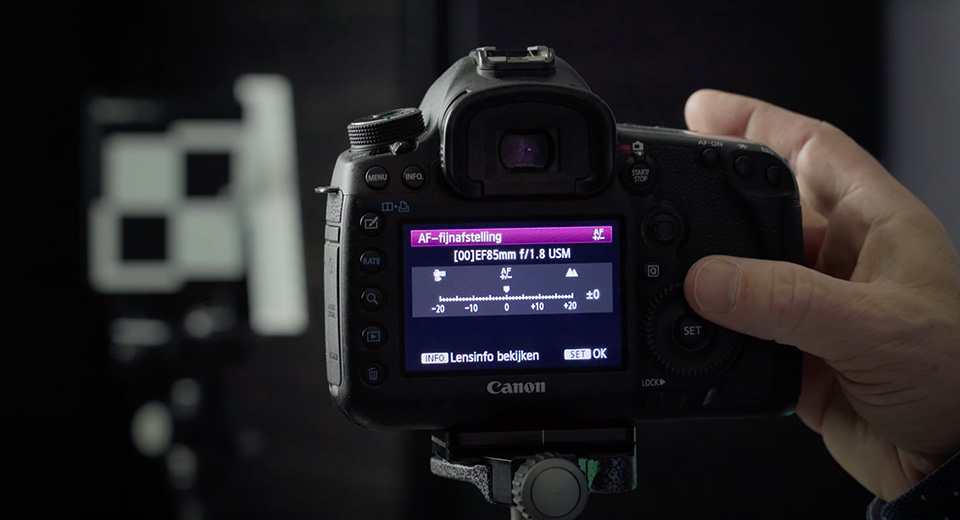
You should realise that this is different from lens correction. Mirrorless cameras have little or no problem with front or back focus because they focus directly on the sensor. You will almost never find a correction option on these types of cameras.
You can correct front or back focus yourself with a few tools. It requires precision and plenty of patience. This is fairly straightforward with prime lenses, but more difficult with zoom lenses.
Deviation correction is only possible within certain limits. Is the focus so far off that you need to make more correction than the camera allows? Then the camera and lens need to be repaired.
In most cases, lens calibration is not necessary. If your photo is simply sharp where it should be sharp, you do not need to do this. It is also of no use if you always photograph with a large depth of field.
It is mainly useful when you work with an extremely shallow depth of field. And only when you notice that the sharpness is consistently off.
About the author
Nando Harmsen has been photographing for more than 40 years. He specialises in wedding photography and landscape photography. Nando also gives talks, workshops, masterclasses and photo trips, and regularly reviews new and interesting equipment.
You might also like
-
 6 Reasons to Stick with a DSLR and One Reason Not To
by Nando Harmsen
-
 Is a DSLR still a good choice in 2026?
by Nando Harmsen
-
 Choose DSLR lenses for your mirrorless camera
by Nando Harmsen
-
 Is Nikon stopping making DSLRs?
by Elja Trum
-
 DSLR lenses are still perfect
by Nando Harmsen
-
 Wildlife photography and switching to mirrorless
by Evert Doorn
6 comments
-
 Donald Willemsen wrote on Monday 5 February 2024 at 19:25 | reply
In the past with the 70D, I did have to apply lens calibration. Now that I have the R7, there is no problem.
Translated from Dutch. -

-

-
 Paul van Aken wrote on Tuesday 6 February 2024 at 19:16 | reply
Even with a DSLR only needed if the lens has a deviation, the sensors for AF and image are fixed in the camera.
Translated from Dutch.
And don't forget: always do the correction measurements with the aperture fully open.... -

-
 guest wrote on Tuesday 6 February 2024 at 22:25 | reply
I have (among others) a Minolta 70-210mm on a Sonya6600 (via an LA-EA4). Adjusting it is difficult. I’m somewhere between a 4 and 5. Both settings are less sharp than when I focus manually.
Translated from Dutch.

Have your say
Please note: Articles older than a week can only be commented on by signed-in visitors.Would you still like to comment? sign in or create a free account.
Become a better photographer every week
A practical photography tip in your inbox every week.
39,079 photography enthusiasts already receive the tips! More about the weekly mail. Or keep up to date via  Facebook.

Elja Trum
Photofacts; everything to do with photography!
Would you like to take better photos and keep up with what is happening in photography? Photofacts publishes articles that teach you something about photography — from a product announcement to a practical shooting tip or a look at a website. Photofacts covers photography every day and is a hobby project of Elja Trum's that got out of hand. The articles are written by a team of volunteer authors. If you would enjoy writing one or more articles for Photofacts, do get in touch.More about PhotofactsPhotofacts is made possible in part by
