

4 uses of grey and polarising filters
Saturday 15 July 2017, 13:31 by Michelle Peeters | 8,065 views | 10 commentsThis article was translated from Dutch with the help of AI. Read the original.
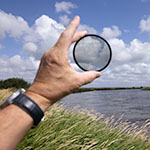
You can recreate many filters in Photoshop these days. Grey and polarising filters are difficult to recreate in Photoshop, so you still need to use them while taking the photo. This article covers four practical uses for these filters.
A grey filter, also known as a Neutral Density or ND filter, blocks a certain amount of light. They are available in different strengths. During the day, you may use a grey filter that can block up to 10 stops of light. This allows you to experiment with slow shutter speeds even in bright conditions.
But what can you use them for, and how do you see the result in your photos? And what is a polarising filter actually for? In this article, I will show you four possible uses for filters on your lenses.
1. Shallow depth of field in bright light
Grey filters are very suitable for photographing with a wide aperture in bright sunlight. They work roughly like sunglasses. Because a lot of light is blocked, you can reduce the depth of field further, giving you a shallower depth of field.

There are filters with a standard optical density, but there are also variable grey filters that allow you to adjust how many stops of light they should block.
There are also graduated grey filters that reduce the contrast between the lightest part, such as the sky, and the darkest part, such as a dark foreground, in your photo.
2. Extreme shutter speeds
Depending on its density, a grey filter blocks a considerable amount of the available light. The result is that much longer shutter speeds are needed to expose the sensor correctly.
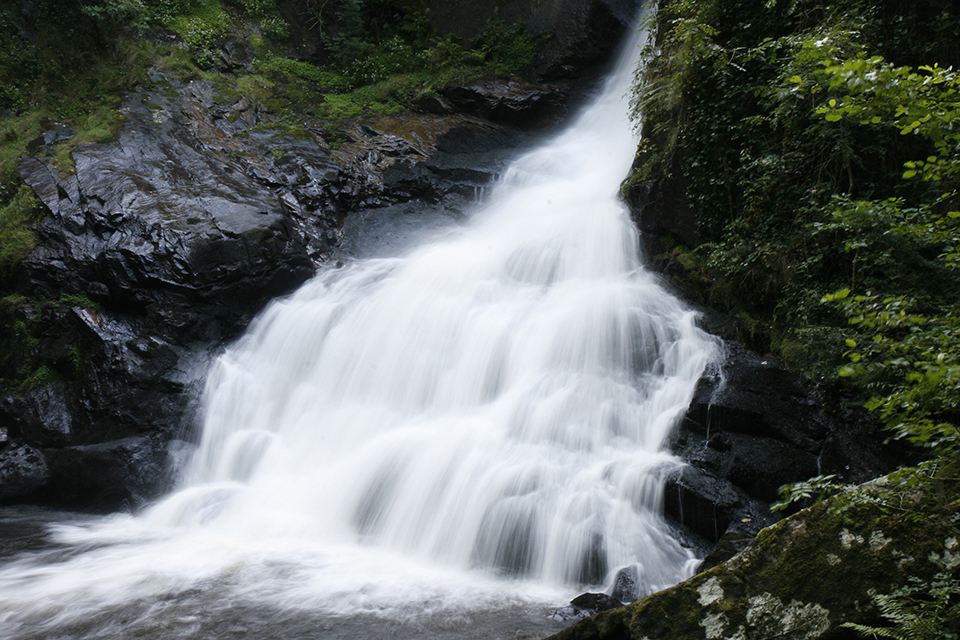
Landscape photographers often use grey filters to create milky-looking water surfaces and streams.
You can also use them to make crowds of people on streets and squares completely disappear. Grey filters create a great sense of calm in your image because every form of movement completely fades away.
3. Saturated colours
A polarising filter affects the saturation of your colours. It really comes into its own in landscape photos. It makes clouds stand out more strongly against a clear blue sky, while green or autumn colours become much more pronounced.
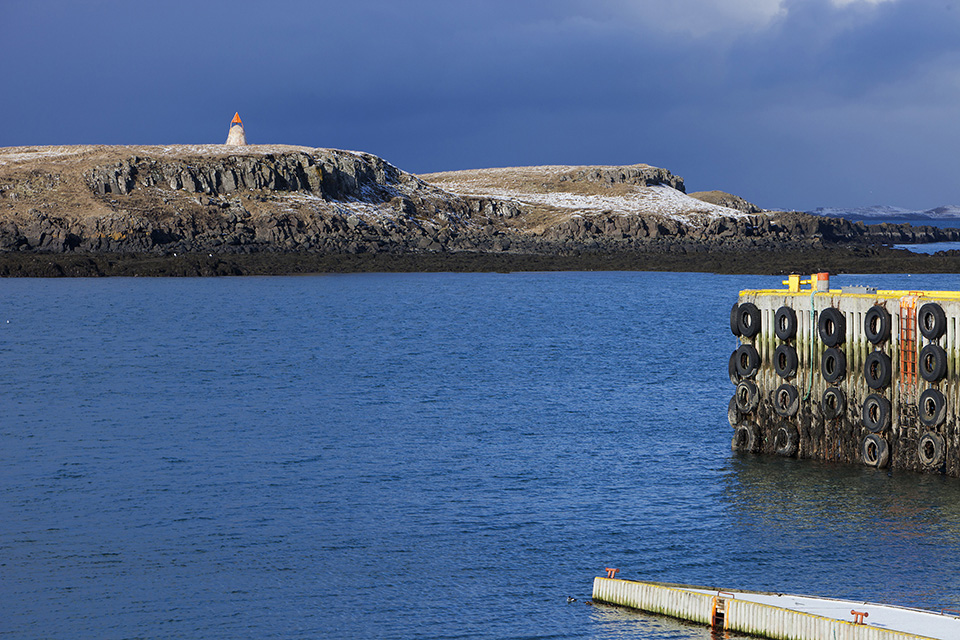
Of course, you can always increase saturation in post-processing, but it works much better to see it happen immediately as you take the photo.
4. Creating or preventing reflections
Polarising filters add great value when you deliberately want to create stronger reflections or prevent them.
By turning the filter, you can block reflected light entering your lens from a particular angle. This makes surfaces such as glass and water go from having a shiny layer to being completely transparent.
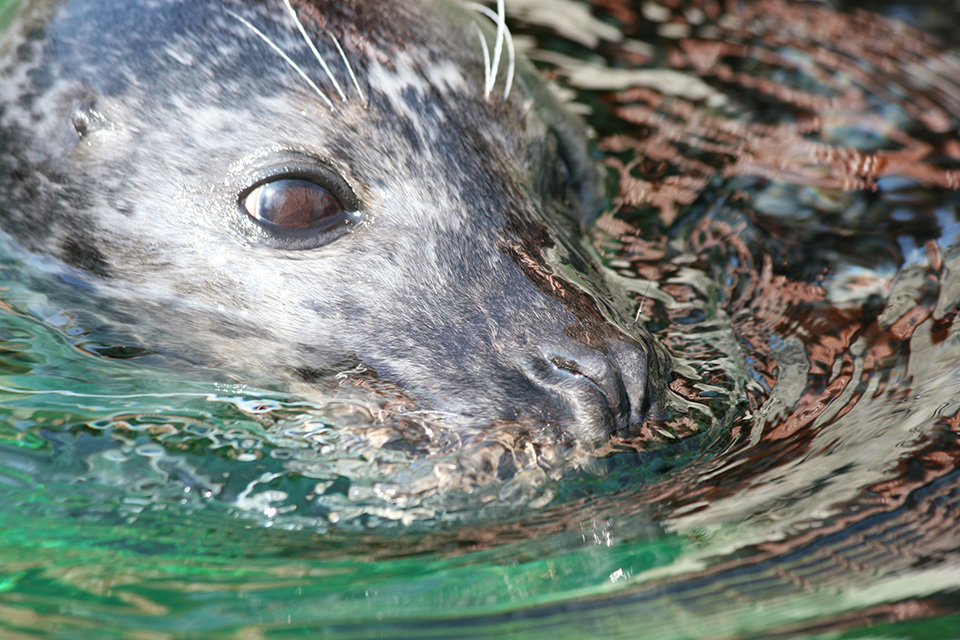
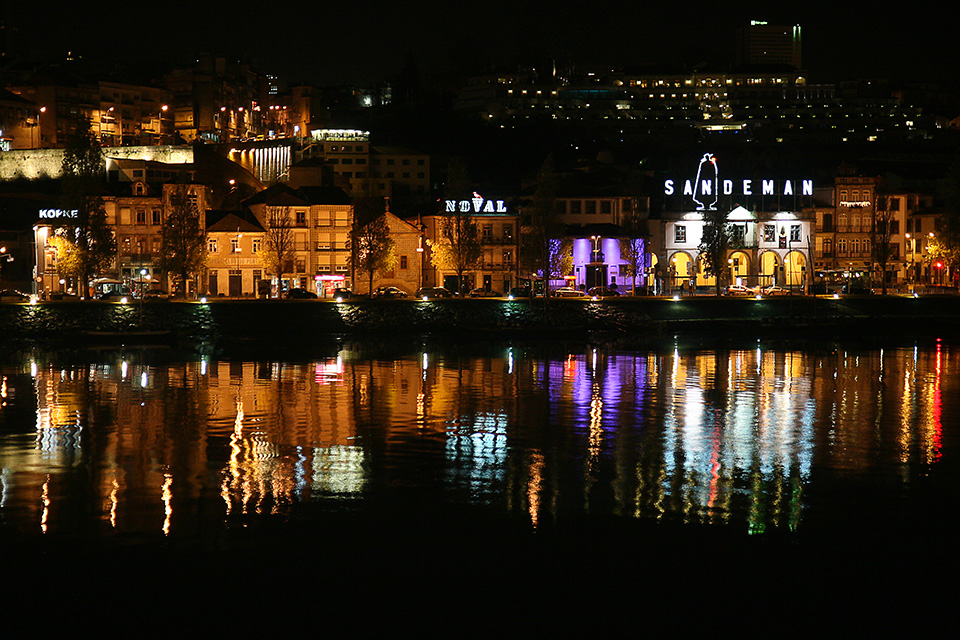
You can therefore see through them without distracting glare! You can also turn the filter so that it changes into a kind of mirror. This often creates beautiful reflections that are perfect for symmetrical photos.
About the author
Michelle Peeters is fotografe en oprichter van DeuxBleus Fotografie. Michelle herkent het bijzondere in het gewone en het gewone in het bijzondere. Ze heeft zich nooit willen specialiseren en is daardoor van alle markten thuis.
You might also like
-
 Control reflections with a polarising filter
by Erik Nevels
-
 Review: Haida variable ND filter with built-in polarisation
by Nando Harmsen
-
 Do not use a variable grey filter for photography
by Nando Harmsen
-
 Use polarisation for autumn photography
by Nando Harmsen
-
 Avoiding or removing reflections in glasses
by Michelle Peeters
10 comments
-
 Daniel wrote on Tuesday 18 July 2017 at 12:39 | reply
I photograph with a variable ND filter.
Translated from Dutch.
I focus, turn the ND filter and then take the photo. The only thing is that I get dark spots in the photo when I set it to the extreme position. If I set it just before the extreme point, those spots are gone or hardly visible. Does anyone perhaps know what causes this effect, or how it happens? -
 Freddy Van Erp wrote on Tuesday 18 July 2017 at 14:03 | reply
Can a polarizing filter also replace the lens hood? I'm thinking of leaving this one out and using a polarizing filter to correct the reflections in the lens while taking a photo. This way, this enormous lens hood can stay at home.
Translated from Dutch. -
 Arie Kraaijeveld wrote on Tuesday 18 July 2017 at 14:33 | reply
@ Daniel: The quality is probably the cause , not meant facetiously but Lee's filters are the best. Quite pricey.
Translated from Dutch. -
 Douwe Struiksma wrote on Tuesday 18 July 2017 at 14:52 | reply
@Daniel: is it about spots or a 'dark cross' in the image. For the latter see e.g.: http://www.nikon-club-nederland.nl/forum/viewtopic.php?t=30319
Translated from Dutch. -

 Donald Willemsen
wrote on Tuesday 18 July 2017 at 15:02
| reply
@Daniel, the spots you see are indeed related to the quality of the filter used. Variable filters suffer from this more often. It is better to use regular non-variable ND filters. If your wallet can handle it, buy ones made of glass, because they are better than those made of plastic.
Translated from Dutch.
@Michelle, polarizing filters also take away some light. -
 Willem wrote on Thursday 20 July 2017 at 09:56 | reply
My experience with Benro filters are great. Real glass and, very importantly, color-accurate! Several colleagues who worked with Lee filters have also switched. Do especially read the various reviews comparing the two (top) filters on the internet.
Translated from Dutch. -
 Reina wrote on Thursday 20 July 2017 at 13:42 | reply
GND filters (graduated filters) can also be used to block light across the full diameter of the lens. So just slide it over and do that with several stacked on top of each other.
Translated from Dutch. -
 Michelle Peeters wrote on Thursday 20 July 2017 at 18:08
| reply
Great tips, all of them, very educational!
Translated from Dutch. -
 tjeerd de wit
wrote on Monday 21 August 2017 at 19:27
| reply
I've also had bad experiences with variable filters, especially below 35mm (Kenko PL fader, quite expensive too!)
Translated from Dutch.
I agree with Willem, I also recently bought a Benro 10-stop filter (Benro SD ND 1000 WMC), good results and much cheaper than Lee.
Have your say
Please note: Articles older than a week can only be commented on by signed-in visitors.Would you still like to comment? sign in or create a free account.
Become a better photographer every week
A practical photography tip in your inbox every week.
38,764 photography enthusiasts already receive the tips! More about the weekly mail. Or keep up to date via  Facebook.

Elja Trum
Photofacts; everything to do with photography!
Would you like to take better photos and keep up with what is happening in photography? Photofacts publishes articles that teach you something about photography — from a product announcement to a practical shooting tip or a look at a website. Photofacts covers photography every day and is a hobby project of Elja Trum's that got out of hand. The articles are written by a team of volunteer authors. If you would enjoy writing one or more articles for Photofacts, do get in touch.More about PhotofactsPhotofacts is made possible in part by
