

The Lowest ISO Setting Is Not the Best ISO Setting
Saturday 4 May 2024, 16:08 by Nando Harmsen | 4,692 views | 8 commentsThis article was translated from Dutch with the help of AI. Read the original.
Everyone knows it. The higher the ISO setting becomes, the greater the chance of noise in a photo. That is why many photographers are still reluctant to increase the ISO setting. Wrongly so, because a low ISO setting is never the best setting.
Do you recognise yourself as the photographer who always keeps the ISO setting at its lowest value, even when that produces better results? Perhaps you believe that a good photo must not contain any noise at all?
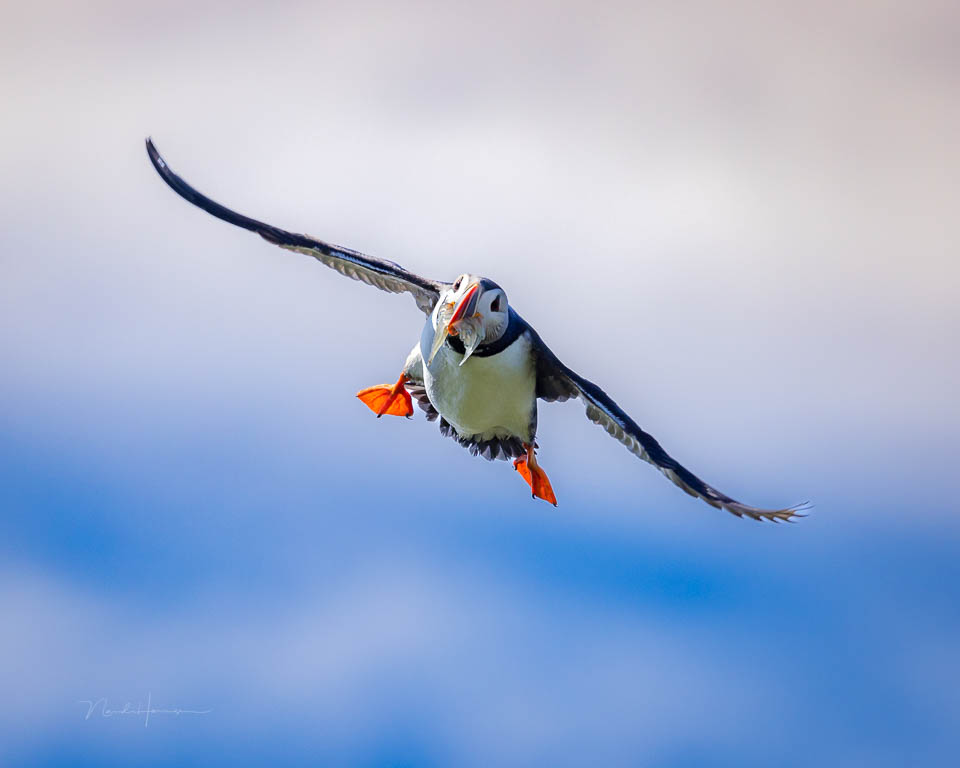
I would advise you to reconsider that belief. First of all, noise is less serious than you expect. Noise will only be distracting when you view a photo at 100% size, with your nose against the screen.
If you view a photo at full-screen size on a monitor, or print the photo, you will hardly ever see the noise. Only when it is very extreme. The condition is that you view the photo from a normal viewing distance.
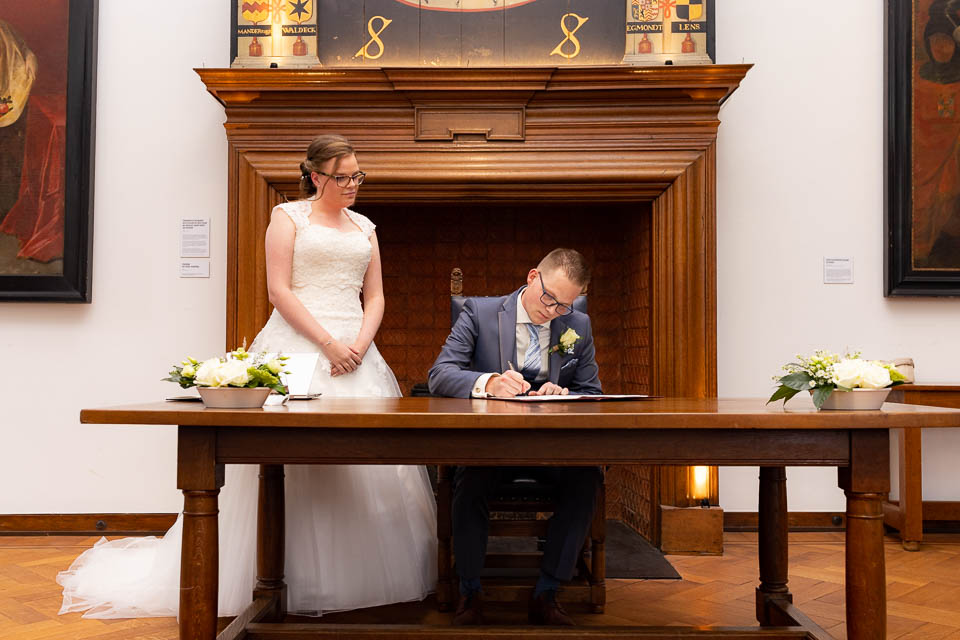
If you are not convinced by that, you will probably keep the ISO setting at ISO 100, or perhaps one or at most two stops higher. Even if that is the wrong choice. It is more important to have a correctly exposed photo with the right depth of field and the most suitable shutter speed.
If you photograph action, you need to use fast shutter speeds. A high ISO setting makes that possible.
If you photograph in a dark environment, you need to be able to keep the camera steady. A high ISO setting makes that possible.
Mixing flash with the ambient light in that dark environment often requires a high ISO setting.
Keeping the shutter speed fast enough to prevent movement from a normally moving subject may require a higher ISO setting.
Using a large depth of field means using a high ISO setting to keep the camera steady.
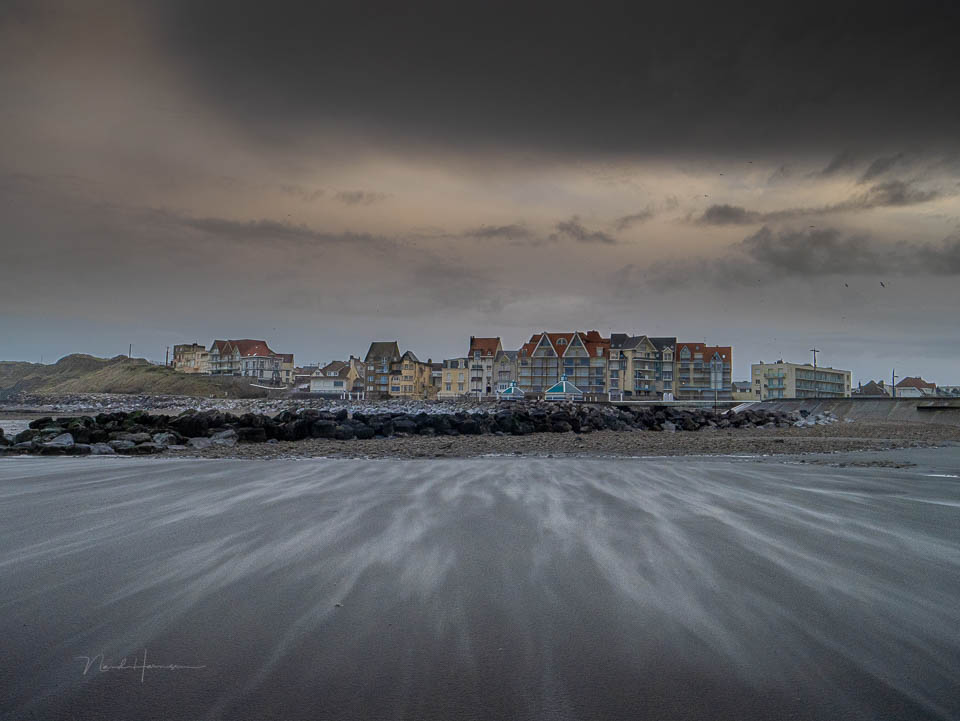
Of course, you can use a tripod or image stabilisation to make a longer shutter speed possible. But this does not freeze the movement of your subject. You may have a low ISO setting, but the photo will still fail.
In fact, it is very simple. The best ISO setting is the one you need to choose to achieve the desired shutter speed and aperture, while making sure your photo actually succeeds. So do not be afraid to use higher ISO settings too.
About the author
Nando Harmsen has been photographing for more than 40 years. He specialises in wedding photography and landscape photography. Nando also gives talks, workshops, masterclasses and photo trips, and regularly reviews new and interesting equipment.
You might also like
-
 Don't use a low ISO, use the right ISO setting
by Nando Harmsen
-
 How can you avoid and reduce noise in your photos?
by Huub Keulers
-
 Which is better? Stacking or noise reduction?
by Nando Harmsen
-
 Higher ISO instead of a longer shutter speed
by Nando Harmsen
-
 Low, lower, lowest: finding the right viewpoint
by Erik Nevels

8 comments
-

 martinphili wrote on Sunday 5 May 2024 at 07:11
| reply
martinphili wrote on Sunday 5 May 2024 at 07:11
| reply
I suspect that a lot of the sentiment towards noise comes from the early days of digital photography. My first DSLR, a Canon 350D, already produced very nasty ugly noise at ISO 800, making that setting unusable. Nowadays you can easily go to ISO 1600 and above.
Translated from Dutch.
But what you write about printing is absolutely true too, since I started photographing for magazines I don't worry about it at all anymore. -
 Martin wrote on Tuesday 7 May 2024 at 10:49 | reply
Unfortunately, you forget about the dynamic range. I am happy with my Nikon D810 because it has such a large dynamic range (14.5). Of course, exposing correctly remains important, but thanks to that dynamic range, the part that cannot be corrected remains small. But... if you just keep increasing your Iso without limit, you also reduce the dynamic range. So be careful with that!
Translated from Dutch. -
 Nando
wrote on Wednesday 8 May 2024 at 10:22
| reply
Nando
wrote on Wednesday 8 May 2024 at 10:22
| reply
If this is a reason not to increase the ISO, or to increase it only to a limited extent, it is the choice between having a photo or not.
Translated from Dutch.
In many cases you don't need the maximum of what you call dynamic range, and any deterioration is usually only visible if you can produce a direct comparison.
But it's good to mention it. Thank you for the addition.
-
 Donald Willemsen wrote on Tuesday 7 May 2024 at 10:58 | reply
By now I know from experience that you are right, Nando, with your argument. I increasingly use the auto ISO setting, where I have set a maximum value of ISO 6400. In terms of noise, that almost never causes problems. If it does, the noise is relatively easy to remove in post-processing without really losing any details.
Translated from Dutch. -
 Jan-Karel Kok wrote on Tuesday 7 May 2024 at 18:33 | reply
It seems to me that the text is somewhat vague: which ISO is high and which is low and what is a correct ISO? As stated in the previous response, there is apparently an upper limit and that shifts with each new camera model. ISO is, by the way, also just a relic from other times: every film had its own ISO and that could and can be influenced, and that has consequences for the contrast. Perhaps ISO could become a bit more fluid: after choosing aperture and shutter speed, a third dial for the correct exposure, whether that is called ISO or something else.
Translated from Dutch. -
Nando
wrote on Wednesday 8 May 2024 at 10:28
| reply
There are no absolute numbers to attach to that. The correct ISO is the ISO value at which you can achieve the depth of field and shutter speed you want. It is no more difficult than that.
Translated from Dutch.
A high ISO value is a value that is higher than a low ISO value.
However, it is not a relic from earlier times. The term itself perhaps, because it no longer has anything to do with 'sensitivity'. Regardless of the actual meaning, it still works exactly the same for the exposure as it did in the past. You can now set it separately for each photo. -
Donald Willemsen wrote on Tuesday 7 May 2024 at 22:19 | reply
Jan-Karel Kok, the upper limit I set is a personal choice. The actual upper limit of my camera (Canon Eos R7) is much higher. Personally, I think my camera delivers good noise performance up to ISO 6400, and above that it gets worse. The highest ISO value I can set on my camera is ISO 51200
Translated from Dutch. -
 Paul van Aken wrote on Wednesday 8 May 2024 at 16:02 | reply
I completely agree with you. At the beginning of digital photography it was hugely exaggerated, partly because it was rather ugly 'noise' back then. But a TriX film, or, in colour, a (I think) 4350 colour film at 3200 ASA produced quite a lot more grain, and with that colour film the colour rendition was also incomparable.
Translated from Dutch.
Have a D500 now, with which you can easily work at 3200 ISO, and when I'm after birds with the Sigma 150-600, 1600 is actually quite necessary. So I'm glad it can be done. The lowest value (ISO 50 in my case) is useful when you specifically want to expose for a very 'long' time, e.g. in combination with a thick grey filter.
So use whatever works well at that moment.
Have your say
Please note: Articles older than a week can only be commented on by signed-in visitors.Would you still like to comment? sign in or create a free account.
Become a better photographer every week
A practical photography tip in your inbox every week.
39,027 photography enthusiasts already receive the tips! More about the weekly mail. Or keep up to date via  Facebook.

Elja Trum
Photofacts; everything to do with photography!
Would you like to take better photos and keep up with what is happening in photography? Photofacts publishes articles that teach you something about photography — from a product announcement to a practical shooting tip or a look at a website. Photofacts covers photography every day and is a hobby project of Elja Trum's that got out of hand. The articles are written by a team of volunteer authors. If you would enjoy writing one or more articles for Photofacts, do get in touch.More about PhotofactsPhotofacts is made possible in part by
