

Does a high-resolution camera need a faster shutter speed?
Monday 15 August 2022, 20:02 by Nando Harmsen | 7,911 views | 17 commentsThis article was translated from Dutch with the help of AI. Read the original.
There is a rule that says you can still take a sharp photo at a shutter speed equal to 1 divided by the focal length, corrected for the crop factor.
Although this is a good guideline, it may become unusable with higher-resolution cameras. Or does it?
You probably know the rule, 1 / (focal length * crop factor) = minimum shutter speed in seconds. If you have a 100mm lens on a full-frame camera, you should use 1/100 second for a photo without camera shake.
If you have a 1.5x crop factor, the minimum shutter speed will be 1/150 second.

This rule dates from the analogue era, and although it is still broadly usable, the resolutions of modern digital sensors are higher than what analogue film could produce.
In other words, small vibrations and movements of your camera become visible sooner.
What about high resolutions?
The rule of 1 divided by the focal length has been debated for some time. There seems to be a tipping point around a resolution of 30 megapixels, at which the rule needs to be adjusted with an additional multiplication factor.
From 30 megapixels onwards, you should use 1 / (focal length * 2) (I will leave the crop factor out of consideration for now).
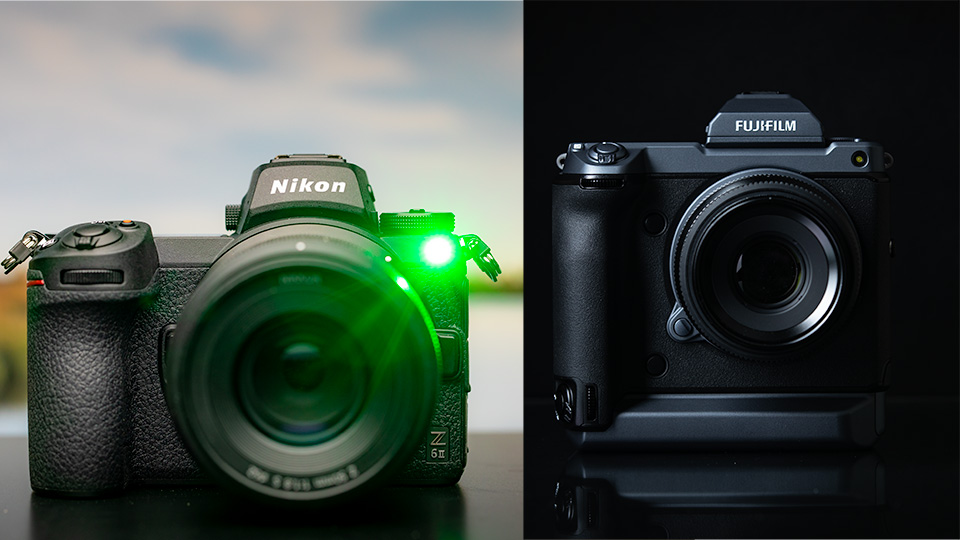
This means that with a 100mm lens on a 25-megapixel camera, you can use 1/100 second, but with a 30-megapixel camera, 1/200 second.
If you have a 100-megapixel camera, you should even multiply the shutter speed by 3.
It is a guideline
Of course, you should realise that these are guidelines. It depends on who is holding the camera. Some people can hold a camera steadier than others. But there is another point you need to take into account, and that is image stabilisation.
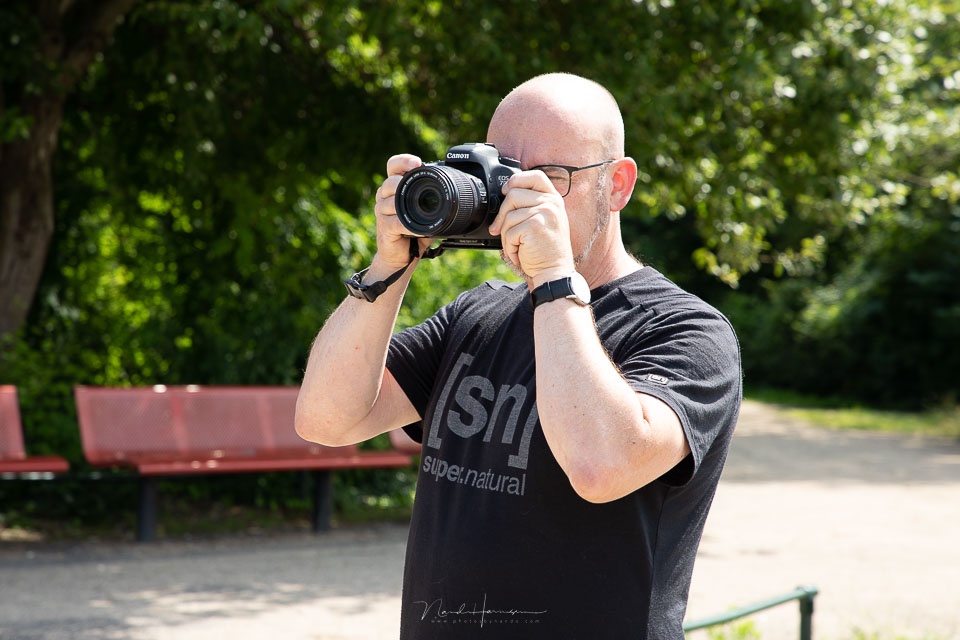
With image stabilisation, it is possible to use longer shutter speeds after all. Do you know how many stops your camera or lens can compensate for? Then you can of course increase the calculated value by the same number of stops.
With 2 stops of stabilisation, you can keep the camera steady at 1/25 second instead of 1/100 second. Do the maths.
How do you view your photo?
What do you do with your photos? Do you use them at 1200 pixels in size for the internet? Do you view them on your full HD screen or TV? Do you make a photo album in A4 format? Or do you print them at 120x90 centimetres?

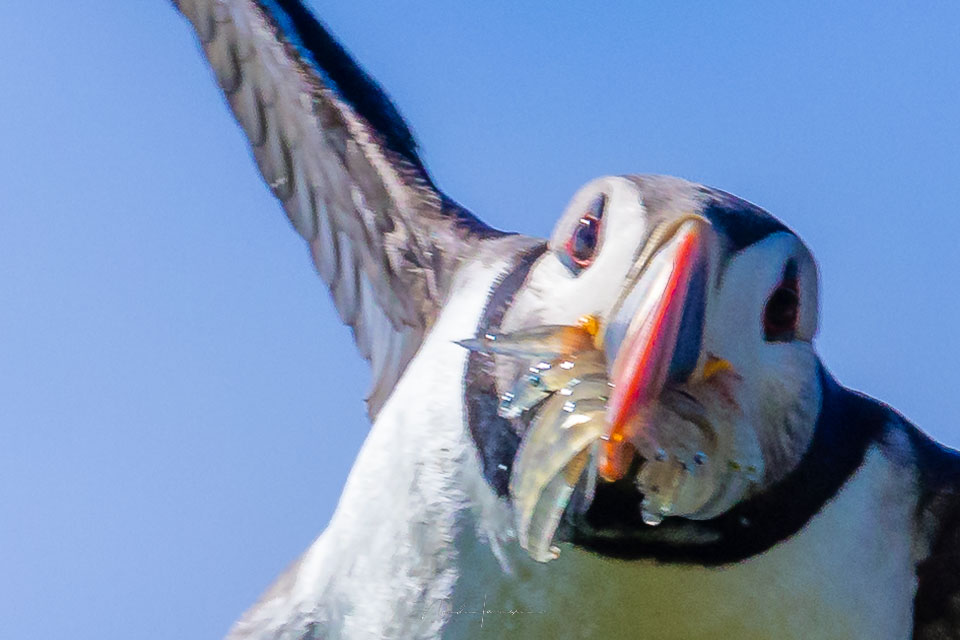
You can see where this is going. The way you view a photo also determines its sharpness. If you reduce all your photos to an internet size of, for example, 1200 pixels, any motion blur will no longer be visible.
It then makes no difference whether you have a 10-megapixel camera or a 100-megapixel camera.
Do you view them full-screen on your full HD TV? Then you only need 1920 x 1080 pixels, and by reducing your 10, 20, 50 or even 100-megapixel photo, any motion blur will no longer be visible.
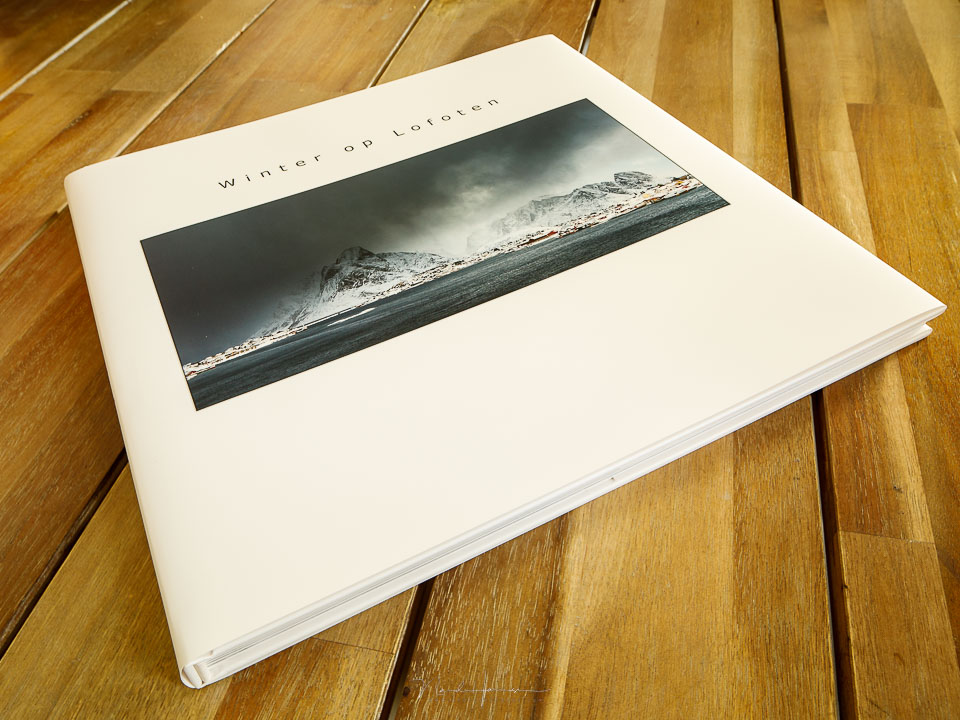
You also throw away so much resolution in a photo book that a slightly blurry photo will look sharp again. Any lack of sharpness will only be visible when you view the photo at 100 per cent size on your screen.
What if you crop the photo?
Still, a higher resolution can sometimes offer an advantage. It gives you the option to crop. This allows you to simulate a longer focal length, effectively zooming in on the details. In that case, it is very important that the photo is sharp.
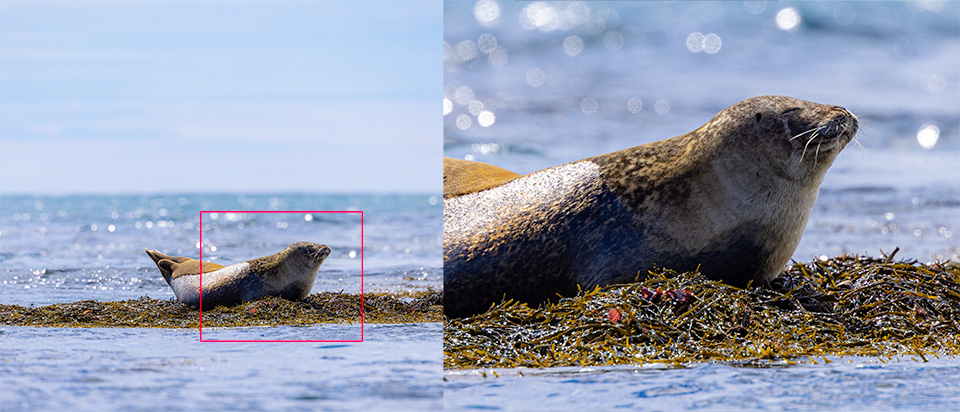
In fact, if you are going to crop a lot, it may be important to take this into extra consideration when choosing your shutter speed. The rule 1/(focal length * crop factor) may then need to be multiplied by not 2 or 3, but perhaps 5.
A cautious conclusion
A higher-resolution camera will show motion blur sooner than a lower-resolution camera, precisely because of the increase in resolution. After all, you can distinguish more detail.
However, the way you view a photo largely determines whether the photo is perceived as sharp or not.
Of course, you want a sharp photo, whether you view it at 10% of its resolution (on the internet, for example) or at 100% (pixel peeping on your monitor). But bear in mind that a small amount of blur can still result in a (limited) usable photo. It all depends on how you are going to view the photo.
What shutter speeds do you use with your camera when taking photos handheld? Tell us in a comment below this post. Also tell us which camera you use or what resolution it has, because this makes a big difference.
About the author
Nando Harmsen has been photographing for more than 40 years. He specialises in wedding photography and landscape photography. Nando also gives talks, workshops, masterclasses and photo trips, and regularly reviews new and interesting equipment.
You might also like
-
 Using Motion Blur to Your Advantage
by Nando Harmsen
-
 Everything you need to know about resolution
by Nando Harmsen
-
 Is the Canon EOS R5's high-resolution option any use?
by Nando Harmsen
-
 A 3,200-megapixel camera
by Nando Harmsen
-
 The difference between file size and resolution
by Nando Harmsen
-
 The new Lightroom update now offers super-resolution
by Nando Harmsen
17 comments
-

 Donald Willemsen
wrote on Tuesday 16 August 2022 at 10:58
| reply
Donald Willemsen
wrote on Tuesday 16 August 2022 at 10:58
| reply
@Nando, this is an interesting article. It also doesn't leave anything to be desired in terms of clarity. Because I usually shoot with aperture priority, my shutter speed varies. If necessary, I will correct it to get a correct exposure without motion blur. In the studio I always work with a fixed shutter speed.
Translated from Dutch. -

-
 Wouter van Duin wrote on Tuesday 16 August 2022 at 11:25 | reply
Not much to criticize about this article. However, I myself would prefer not to speak of a motionless photo with any combination of shutter speed, lens diameter, telephoto setting or, in fact, angle of view. Instead of motionless, perhaps it would be better to speak of motion blur being limited as much as possible. Because especially with editing, enlargement and screen resolution, it will be clear that even a photo taken from a tripod will rarely show absolutely no motion blur.
Translated from Dutch. -
 Nando
wrote on Tuesday 16 August 2022 at 11:37
| reply
Nando
wrote on Tuesday 16 August 2022 at 11:37
| reply
@PixelDude:
Translated from Dutch.
Image stabilization does indeed make it easier to keep the camera steady, but it doesn't work for a subject that is moving. That movement is also more noticeable at higher resolutions, so it is definitely wise to take that into account -
-
Pixeldude wrote on Tuesday 16 August 2022 at 11:46 | reply
Of course, 'steadiness' is always an important factor. I have nevertheless already managed to obtain, at 25000 pixels, a handheld 2-second night shot for landscape photography that was sharp enough for an A3 print (everything is relative, of course, with extreme enlargement).
Translated from Dutch.
I think 'experimentally testing' how long your shutter speed can be with your camera is a lot more interesting than doing calculations with the rules mentioned. -
 Henk van den Brink wrote on Tuesday 16 August 2022 at 11:59 | reply
Clear explanation. I hadn't realized that pixel size is also a significant factor when it comes to sharpness. I thought: as long as you have enough pixels and the shutter speed complies with the formula you use in relation to the size of your (tele)lens, it will be fine. Thanks for the tips.
Translated from Dutch.
But I think there is another tricky phenomenon that you should take into account: air turbulence in good weather that occurs with super telephoto lenses. I think there is little you can do about it, but it definitely does affect the sharpness of your photos. -
 Paul wrote on Tuesday 16 August 2022 at 12:01 | reply
This also explains why photos I take with my phone are very often blurry.
Translated from Dutch.
Very tiny sensor, lots of pixels. Was to try: looked at it at 100% on the PC, not something to look at..... -
Nando
wrote on Tuesday 16 August 2022 at 12:15
| reply
@PixelDude:
Translated from Dutch.
Figuring everything out experimentally yourself sometimes feels like reinventing the wheel. You can also use this knowledge and apply common sense. The point is that you are aware of it, so that you can take it into account. -
 guest wrote on Tuesday 16 August 2022 at 12:44 | reply
Another well-written article that reads smoothly and puts a not-to-be-neglected aspect of digital photography (ever-increasing resolutions and the quality that may potentially come with them) into the right perspective and gives important tips on how to deal with it. Sharpness is still one of the most important elements for a successful photo.
Translated from Dutch.
greetings,
rudy -
 K.J.Schilstra
wrote on Tuesday 16 August 2022 at 13:39
| reply
K.J.Schilstra
wrote on Tuesday 16 August 2022 at 13:39
| reply
Great article, now I'm pondering shutter speed versus Canon 5Ds (50 MP) flash sync speed max 1/200 at 85 mm?
Translated from Dutch.
Would that mean I always have to use 1/200? -
 Luc wrote on Tuesday 16 August 2022 at 15:58 | reply
I still come from the analogue era and I more or less continue to use the rule of thumb of 1 divided by the focal length as the minimum shutter speed, it always sticks in the back of my mind... and then I look at my aperture, my ISO and shutter speed and determine the order of importance for the given situation... and, then I still have image stabilization as an ultimate aid to possibly lower the shutter speed anyway (but with moving subjects that doesn't help at all).
Translated from Dutch. -
guest wrote on Tuesday 16 August 2022 at 19:51 | reply
I had already read your article in English. My question afterwards was "what does this mean for movement of the subject"? In my opinion, you need relatively higher shutter speeds to freeze movement with high MP cameras than with lower MP cameras. For example, a few years ago I had shots of surfers in San Diego with both my 24MP camera and 42MP camera with a 200-600 lens. Where 1/2000 was sufficient with the 24MP camera, I subsequently had to go to 1/4000 with the 42MP camera. I am talking about sharpness where the logos on the suits were sharp. It was extremely bright here, though, so I could easily stay a bit lower in ISO. But for wildlife I sometimes run into the limits when the light is not optimal. In those cases my 24MP camera is sometimes my preference again if I need high shutter speeds anyway. Besides one or two stops in shutter speed, I also gain a bit in noise compared to my higher MP camera.
Translated from Dutch.
An other point is that in astrophotography you can use longer shutter speeds with lower MP cameras than with higher MP cameras before you get star trails. (see NPF calculator) -
 Yolanda wrote on Wednesday 17 August 2022 at 10:39 | reply
Clear article and I can endorse the findings. Not as nicely theoretically substantiated, but when I went from the Canon 5D Mark IV (30.4 MP) to the R5 (45 MP), it did take a while before I could take sharp photos again.
Translated from Dutch.
Maybe it's just me, but I always notice little of all the nice promises regarding image stabilization. That is partly why I am an avid tripod user. -
 4BYE
wrote on Wednesday 17 August 2022 at 11:26
| reply
4BYE
wrote on Wednesday 17 August 2022 at 11:26
| reply
@Luc: I'm also from that era but if you keep clinging to it things unfortunately do sometimes go wrong. As this article already points out, by now there is a big difference between high MP sensors, lower MP sensors and old-fashioned film. The so-called 500 rule for photographing stars without star trails is also no longer workable.
Translated from Dutch. -
4BYE
wrote on Wednesday 17 August 2022 at 11:45
| reply
@Yolanda: I hear that from Sony users too (A7R IV, 62MP) I noticed it already when using a 24MP and 42MP interchangeably for action shots, three years ago. I then also started looking for the reason etc. So I also wonder what the rumors of a 95MP FF sensor will bring.
Translated from Dutch. -
 Nico Hoeve wrote on Wednesday 17 August 2022 at 18:36 | reply
Coincidentally, I read this yesterday in a book from the late analog era: "Thus he (the photographer) will prefer aperture priority with the wide-angle lens, choose the automatic setting with the standard lens and short telephoto lens, and prefer shutter speed priority with the telephoto lens".
Translated from Dutch.

Have your say
Please note: Articles older than a week can only be commented on by signed-in visitors.Would you still like to comment? sign in or create a free account.
Become a better photographer every week
A practical photography tip in your inbox every week.
39,079 photography enthusiasts already receive the tips! More about the weekly mail. Or keep up to date via  Facebook.

Elja Trum
Photofacts; everything to do with photography!
Would you like to take better photos and keep up with what is happening in photography? Photofacts publishes articles that teach you something about photography — from a product announcement to a practical shooting tip or a look at a website. Photofacts covers photography every day and is a hobby project of Elja Trum's that got out of hand. The articles are written by a team of volunteer authors. If you would enjoy writing one or more articles for Photofacts, do get in touch.More about PhotofactsPhotofacts is made possible in part by
