

Have you ever heard of the Pep Ventosa technique?
Sunday 19 February 2023, 15:51 by Nando Harmsen | 11,042 views | 37 commentsThis article was translated from Dutch with the help of AI. Read the original.
You have the Orton effect. Some people know the Dragan effect. There is also an effect called the Pep Ventosa effect. In this article, I show you what it involves, how to do it, and what my results are with this technique. I think it is fantastic, but you have to like it.
Everyone knows the Orton effect by now. It is that lovely soft glow over a photo. This is usually added during post-processing, but it is also possible to do it while taking the photo. If your camera has the option, that is.
The Dragan effect is also fairly well known, especially among portrait photographers. It gives you an almost hyper-realistic effect, with an abundance of detail. Done well, it produces impressive results. You can only create this effect during post-processing.
An effect that is less well known is called the Pep Ventosa effect. Like the Orton and Dragan effects, it is named after the photographer who made it well known. The photographer is called... Pep Ventosa.
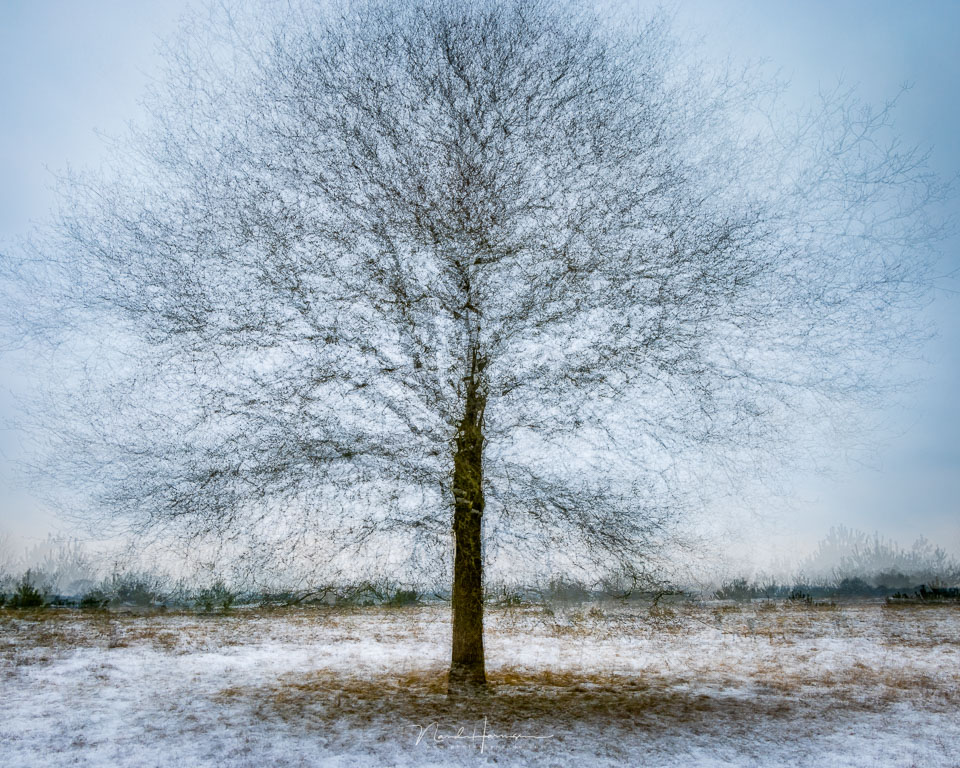
Laura van der Burgt has already written about the Pep Ventosa technique. You can find the article through this link.
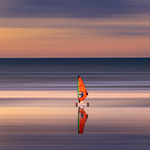
The principle works as follows. You photograph an object from all sides and layer the photos over each other. You therefore see the object from all sides in a single photo. This creates a distinctive painterly effect. Pep Ventosa is a master of it, although I do not like all of his work made using this technique.
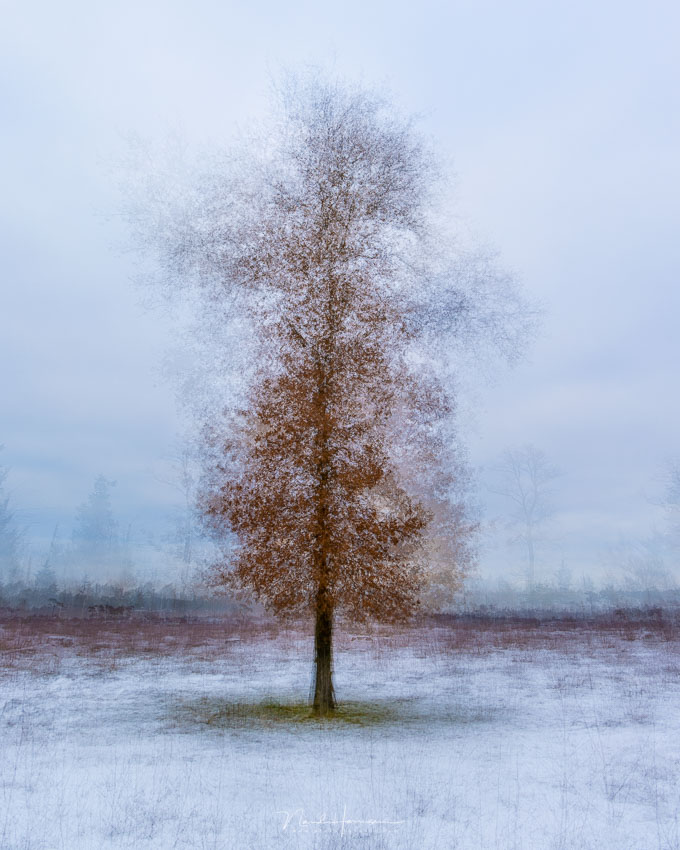
Intrigued by these photos, I started working with the technique myself. I had already worked out the technique from an inspiring photo I found online, before I had ever heard his name. Only after my first attempts did I learn his name and discover his work.
I have a Canon camera, which has the advantage that I can use the Pep Ventosa technique while taking the photos. The Canon allows you to make multiple exposures. The result of these multiple exposures is simply a raw file.
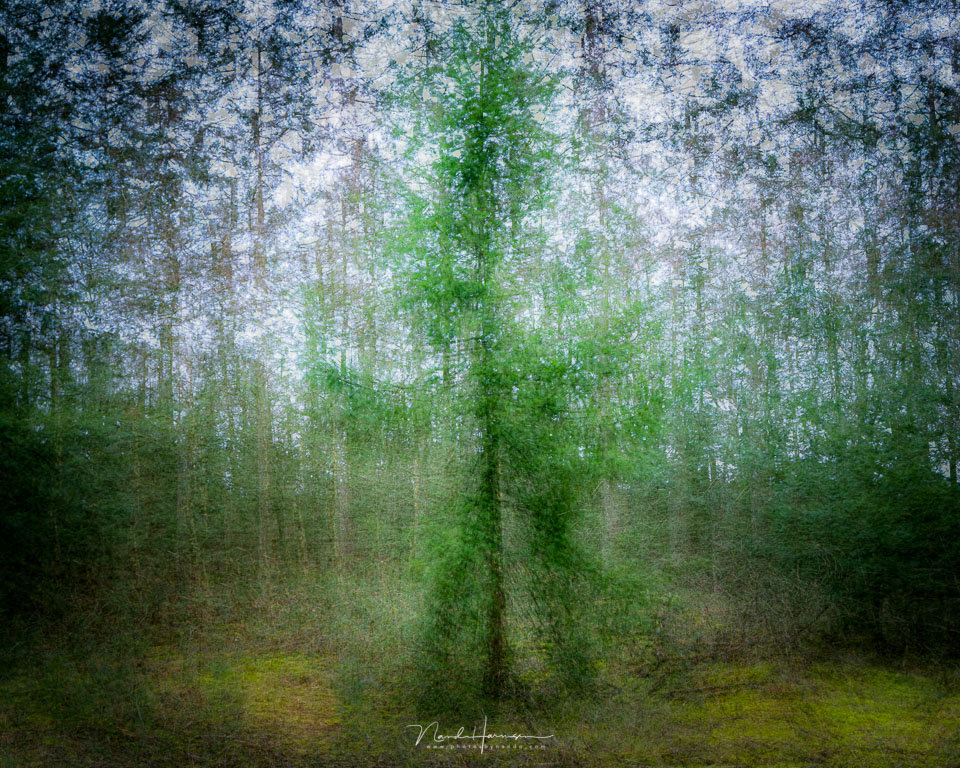
Not every camera brand can do this. Some cameras, such as Nikon cameras, have multiple exposure functionality, but the result is not a raw file. I have not yet used a modern Sony camera with the option to make multiple exposures in the camera. I do not know about the other brands.
You can of course do this during post-processing, by combining several photos in Photoshop or Affinity Photo. You then have to take several individual shots in the field, with the final result in mind.
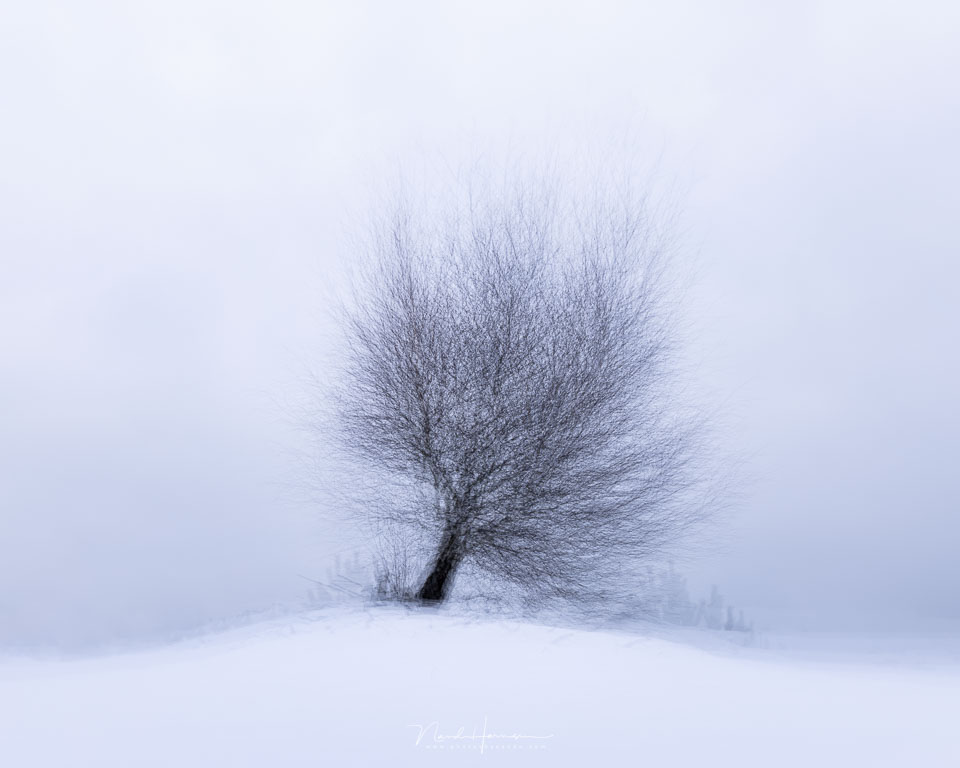
I see making a Pep Ventosa photo in Photoshop as photo editing, or even photo manipulation. That does not have to be wrong, but making such a photo in the field feels more like pure photography to me.
Using this technique in the field is more challenging and more fun. But in the end, it is of course all about the final result. If you do not have a camera that can do this, do not be afraid to use a photo editing programme.
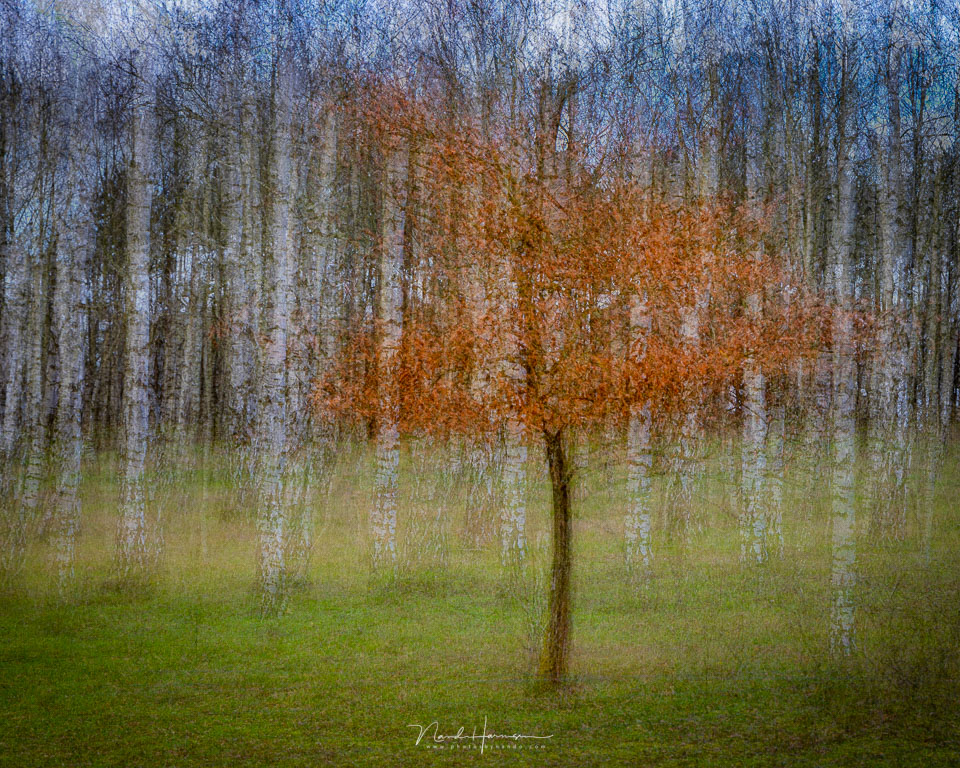
As with so much in photography, the Pep Ventosa technique depends on how it is executed. It is not something you can just do quickly. In that respect, it is no different from the Orton effect or Dragan effect mentioned earlier. If you do it without thinking, it can even detract from your photo.
Had you ever heard of the Pep Ventosa technique? Or have you ever made similar images yourself? Let us know in a comment. I am curious to hear what you think.
About the author
Nando Harmsen has been photographing for more than 40 years. He specialises in wedding photography and landscape photography. Nando also gives talks, workshops, masterclasses and photo trips, and regularly reviews new and interesting equipment.
You might also like
-
 Photographing Like Pep Ventosa
by Laura van der Burgt
-
 Orton effect directly in the camera
by Nando Harmsen
-
 The Orton effect without Photoshop
by Nando Harmsen
-
10 Tips for Applying the Orton Effect
by Nando Harmsen
-
 Shoot met meerdere camera's, van chaos naar orde
by Dick Holtman
37 comments
-
 guest wrote on Sunday 19 February 2023 at 20:44 | reply
Thanks for sharing this, I know the first two effects mentioned, but not this one yet...
Translated from Dutch. -
 Gonda van Wijk wrote on Tuesday 21 February 2023 at 10:22 | reply
I've tried it a few times already, still a very surprising effect and fun to do...
Translated from Dutch. -
 Bernard wrote on Tuesday 21 February 2023 at 11:27 | reply
To me, this falls into the category of: "not because it has to be done, but because it can be done" and in my opinion has little to do with photography.
Translated from Dutch. -

-
 Lauran wrote on Tuesday 21 February 2023 at 12:17 | reply
I agree with Ben that in my view as well, it has little to do with photography anymore. Then pick up a brush and canvas and start painting. Of course, everyone is free to apply this.
Translated from Dutch. -
-
 Paul wrote on Tuesday 21 February 2023 at 12:20 | reply
Had never heard of any of the three. And in a way I have to agree with Bernard a little, it's a trick, which can sometimes add something extra, but it's not really photography, more visual art, adding your own idea to an image.
Translated from Dutch.
When I think of photography, it's more about capturing existing things in a beautiful way, so that Orton effect definitely, the others belong to 'free expression', sometimes definitely worth it, so I will certainly give it a try. -
-
 Marcel de Bruin wrote on Tuesday 21 February 2023 at 12:28 | reply
Is something that really doesn't interest me at all. All the quality of your expensive lenses simply thrown overboard... Details gone, sharpness gone. Painting isn't my thing.
Translated from Dutch. -
 Wilma van Leeuwen-Vis wrote on Tuesday 21 February 2023 at 12:35 | reply
Nando
Translated from Dutch.
What a cool idea you're giving us here.
Great! I had never heard of this before but I'm definitely going to try it.
Thanks for sharing.
Kind regards,
Wilma van Leeuwen-Vis -
Bernard wrote on Tuesday 21 February 2023 at 12:36 | reply
Hi Nando, I’m an old school photographer and, with increasingly better equipment, I’m able to capture reality in a single shot. As for the modern possibilities, I pass on them because they don’t appeal to me.
Translated from Dutch. -
 Nando
wrote on Tuesday 21 February 2023 at 13:36
| reply
Nando
wrote on Tuesday 21 February 2023 at 13:36
| reply
Interesting that you call yourself an old-school photographer. This kind of technique isn't modern. It was already done by the old-school photographers in the darkroom.
Translated from Dutch.
But not liking it is reason enough not to find it beautiful. -
 hubert haenen wrote on Tuesday 21 February 2023 at 12:54 | reply
I do like adding an unexpected/strange element to a photo. That can sometimes make an ordinary photo more exciting.
Translated from Dutch. -
Paul wrote on Tuesday 21 February 2023 at 14:19 | reply
Yes, because as you yourself already indicate, you can do that directly, it's the same as other filters that I used to use (sometimes still do, I still have them), red for drama, soft focus for controlled blur, etc. A light orange filter on a dslr also gives such a warm effect, but a consciously adjusted color temperature does that too. Little or no post-processing needed.
Translated from Dutch.
Ansel did it with his fantastic black and white plates too, filters. -
Nando
wrote on Tuesday 21 February 2023 at 14:27
| reply
Indeed, with a soft-focus filter you can simulate this Orton effect while taking the photo. However, more than ninety percent of the Orton effects are done in post-processing.
Translated from Dutch.
The Pep Ventosa technique I do directly in the field, just like you do with the soft-focus filter. No Photoshop is involved. No digital tricks, then.
By the way, Ansel Adams used filters, but his images only came to life in the darkroom. There he used his famous zone system to achieve the final contrast. -
 AbRe wrote on Tuesday 21 February 2023 at 14:39 | reply
The three techniques mentioned were unknown to me. Nevertheless, I classify them under the heading of being creative with a camera, (electronic) tools and software. You can subsequently call that an artistic expression. It is photography, because the creator uses a camera!\n\nFor decades, there have been photographers who want to distinguish themselves within photography in a certain way. You do not have to have an opinion about that. Of course, you can let yourself be inspired by it. But, by trying to imitate that, you shortchange yourself and your own creativity.\n\nStay close to yourself by developing a certain way of photographing. Whether that should be called an individual style? You can fill that in yourself. It is about what you think and not what others think! If your work is considered beautiful, then that is a bonus. Do not let it become a goal in itself!\n\nThe naming of different techniques by photographers is nothing more than thinking in "boxes", which I personally have no use for. It is not my way of doing photography. Mine consists as much as possible of depicting reality. That applies to the subject, composition, colour rendition and exposure. For me, that means a much more exciting part of my photography hobby.
Translated from Dutch. -
 Ine wrote on Tuesday 21 February 2023 at 15:26 | reply
Interesting. I actually think that a photo should be finished when it is taken.
Translated from Dutch.
But, I think that almost everyone uses photo editing software. Just like I used the darkroom in the past. But with those photo editing programs, a photo is sometimes/ often changed quite a lot. So that can / may be done, just like the use of all kinds of lenses and filters.
I think this way also belongs here.
Interesting! -
Nando
wrote on Wednesday 22 February 2023 at 10:08
| reply
How far you go with photo editing is up to you. That is the same as the time when you used the darkroom. You could also go very far there with optimizing or even manipulating the photo.
Translated from Dutch.
The effect I achieve here is with multiple exposures in the camera. So the photo comes straight out of the camera, exactly as you think this should be now.
That doesn't mean you have to like it too. To each their own, right
-

-
Lauran wrote on Tuesday 21 February 2023 at 18:06 | reply
Well Nando, judging by your response I have to agree with you after all. And no, I don't find that difficult. If someone is right, I give them that.
Translated from Dutch. -
 Chantal wrote on Tuesday 21 February 2023 at 19:19 | reply
Nice and I will definitely do this sometime, it has everything to do with photography because you use the camera,
Translated from Dutch.
I love it -
Paul wrote on Tuesday 21 February 2023 at 19:44 | reply
I've also worked in the darkroom for years, and applied the zone system too.
Translated from Dutch.
A lot is now done by software, but that is still 'normal' post-processing for me. Combining 10 or more images no longer falls under that for me, as you wrote elsewhere, you're painting, which is fine, but it's no longer photography, which still stands more for depicting reality.
Personally, I don't find the effect really beautiful. -
Nando
wrote on Wednesday 22 February 2023 at 10:13
| reply
So that means that if I combine 400 photos to make a star trail photo, you no longer call this photography.
Translated from Dutch.
Following on from that, combining 200 photos for a focus stack in macro photography also doesn't count as photography then? -
 Liesbeth Verkade wrote on Tuesday 21 February 2023 at 22:22
| reply
Liesbeth Verkade wrote on Tuesday 21 February 2023 at 22:22
| reply
Thank you for the explanation! Nice to learn about different photographic effects. I searched the internet for examples again to get a better idea for myself of what is meant by those effects. Your explanation of the Pep Ventosa technique is very clear. I clearly don't find everything beautiful. I think the first photo and the b&w tree you used for the article about perspective are beautiful! Now let's see what possibilities my camera, a Canon 90D, has in that area. I have never worked with multiple exposures. Something else to learn.
Translated from Dutch. -
 Stefanie wrote on Wednesday 22 February 2023 at 09:07 | reply
Bernard, Old school? but never rewound the roll a bit to create multiple exposures? Never stood in the darkroom and placed 2 negatives on top of each other, dodging and burning, paper masks to create effects? If that's the case then you've really missed a piece of old school photography I'm afraid
Translated from Dutch. -
 Lauran wrote on Wednesday 22 February 2023 at 10:23 | reply
I do notice quite a big difference in the reactions between people who, like me, were very creative in the analog era and those who started in the digital age. I don't see people really learning photography anymore. Even at the vocational schools they no longer learn what we used to have to do. I notice that from the many questions I still frequently get about how I manage to get my photos looking so good without Photoshop. Of course I also work digitally nowadays, but still very often combined with old techniques.
Translated from Dutch. -
Paul wrote on Wednesday 22 February 2023 at 11:07 | reply
That star trail is a case apart for me. But indeed, those stacked macro photos also fall outside photography for me, I really find that far too artificial. As someone already wrote in the first responses, 'because it can'.
Translated from Dutch.
If I photograph a dragonfly or a little beetle, I can't make 100 on Ames of it without killing the creature. Day I have to do that 'old school', with the possibilities that a small aperture min offers, with all the pros and cons of that, if I then get a nice picture, I have a photo, a stacker then has a (re)construction. -
-
 PixelDude Raoul
wrote on Wednesday 22 February 2023 at 11:56
| reply
PixelDude Raoul
wrote on Wednesday 22 February 2023 at 11:56
| reply
GREAT, I will undoubtedly try it out.
Translated from Dutch.
And contrary to what some claim, photography is not exclusively about capturing reality.
Photographing is writing with light. One person writes in the Latin alphabet, another in Arabic script, with Chinese characters, or calligraphically, or exclusively in capitals, or with a computer program (like I am doing here), yet another uses printing, … countless forms.
And the same applies to photography. The camera and the editing program are the tools, like the canvas, the paints and the paintbrush. The result is the personal vision of the creator.
Or is Guernica not a painting? -
PixelDude Raoul
wrote on Wednesday 22 February 2023 at 13:03
| reply
If photography were only allowed to capture reality ... then you wouldn't even be allowed to shoot in black and white. Oh dear, oh dear ...
Translated from Dutch.
Everyone does with their camera what they think they should do.
You don't necessarily have to like all of that, everyone has their own taste.
I myself wouldn't think of hanging a Vermeersch, Rembrandt or Rubens in my house ... because I don't like the works of these masters. If I were to own one, I would sell the work. 8-) -
-
PixelDude Raoul
wrote on Wednesday 22 February 2023 at 15:02
| reply
@ Nando, then you get one from me as a gift.
Translated from Dutch. -
-
PixelDude Raoul
wrote on Thursday 23 February 2023 at 09:48
| reply
Yes, maybe a Rembrandt or Vermeer is still worth just a tiny little bit more than those of the forgers Rembrand or Vermeersch. Sometimes it's in the details (as in photography). But I don't need any of the four in my living room.
Translated from Dutch.
So just stick with an instant camera. -
 Cor Hietberg wrote on Wednesday 22 February 2023 at 15:29 | reply
Nice comments. I think that as long as you are not a photojournalist, in photography you may use all means to create the image you yourself like, whether or not to hang it above your couch.
Translated from Dutch.
I experimented a bit in the past and am still happy with the result. Definitely worth trying.
I have two questions:
- Because I wasn't aware of the possibility of multiple exposures in my camera, I combined the photos in Photoshop with a good result. Do you think the result will be essentially different compared to multiple exposures in the camera? Aligning seems easier to me in Photoshop.
- You take 25 shots per photo, I already get a beautiful photo with 4 to 5 shots. Why so many shots?
-
Nando
wrote on Wednesday 22 February 2023 at 15:54
| reply
I haven't done this in Photoshop yet. In principle, you then have more possibilities for merging the photos, including aligning them. Or masking unwanted effects, elements, and so on.
Translated from Dutch.
So yes, I think this turns out differently in Photoshop, but it doesn't necessarily have to.
The more shots, the different the whole thing looks. I have even done some images with 33 shots. That doesn't always give the desired effect. I believe I find 9, 17 and 25 shots give the most beautiful effect. But this also depends on the subject -
Paul wrote on Wednesday 22 February 2023 at 17:15 | reply
In product photography I think it’s a good application, there it’s not only about what is depicted, but about showing something very specific. I know how difficult that could be 'in the old days', but for macro and landscape I find it falls outside the photographic aspect, as I said, visual, but a construction, a manipulation, but to each their own.
Translated from Dutch.
Today I went out to photograph a few trees, they looked nice with a low sun.

Have your say
Please note: Articles older than a week can only be commented on by signed-in visitors.Would you still like to comment? sign in or create a free account.
Become a better photographer every week
A practical photography tip in your inbox every week.
39,083 photography enthusiasts already receive the tips! More about the weekly mail. Or keep up to date via  Facebook.

Elja Trum
Photofacts; everything to do with photography!
Would you like to take better photos and keep up with what is happening in photography? Photofacts publishes articles that teach you something about photography — from a product announcement to a practical shooting tip or a look at a website. Photofacts covers photography every day and is a hobby project of Elja Trum's that got out of hand. The articles are written by a team of volunteer authors. If you would enjoy writing one or more articles for Photofacts, do get in touch.More about PhotofactsPhotofacts is made possible in part by
