

Are you ready to photograph the 2022 Perseid meteor shower?
Saturday 6 August 2022, 14:41 by Nando Harmsen | 4,551 views | 10 commentsThis article was translated from Dutch with the help of AI. Read the original.
August 2022 will once again be marked by the Perseid meteor shower. If the sky is clear, you may be able to see as many as 80 shooting stars per hour. You do need to make some preparations to photograph the Perseids. In this article, I give you some tips and further reading.
The Perseids are a meteor shower that reaches its peak every year on the night of 12 to 13 August. In theory, up to 80 meteors, also known as shooting stars, can be seen. In practice, that number will always be lower, but it is nevertheless a wonderful spectacle.
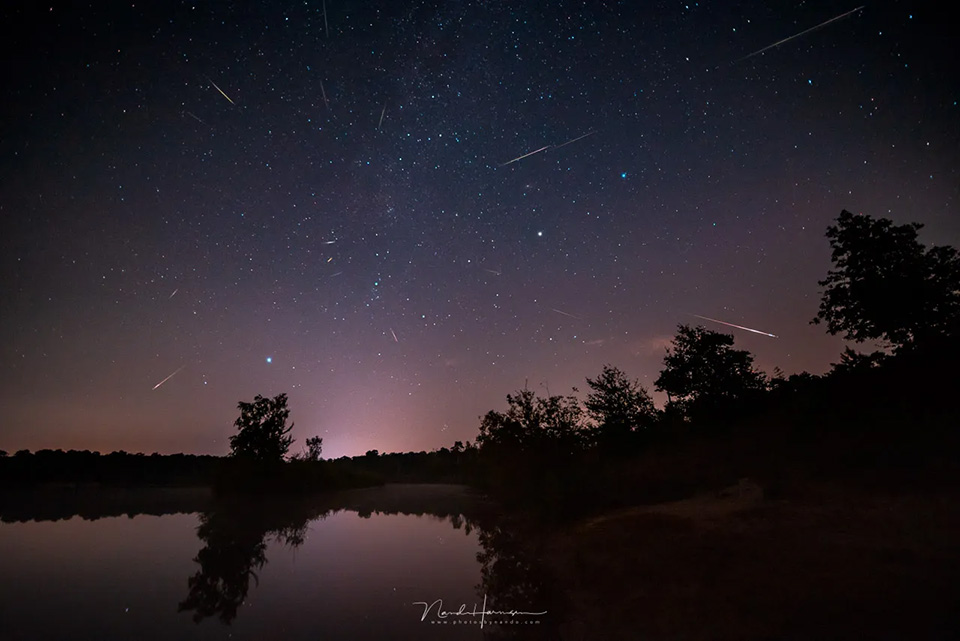
It is challenging and fun to capture this with your camera. You do not need much specialist equipment for this, an ordinary camera with a wide-angle lens is enough.
The most important thing is that you need to set a high ISO, so that you can actually capture the faint shooting stars. And you need to take lots of photos, continuously.
Shooting stars are fast, as fast as a flash of light. When you see them, they have already passed, so to speak. Moreover, you do not know where they will appear.
We do know where they appear to come from, and that is the constellation Perseus. Yet they can appear anywhere in the sky. So find a location with a good unobstructed view of the night sky.
Preferably find a place where it is dark, really dark. The more stray light there is from surrounding cities, villages, roads or other lighting, the fewer shooting stars you will see. In fact, you should ideally be at least 60 kilometres from a city or village, which is not possible in the Benelux. You can also check a light pollution map to see where it is best to go.
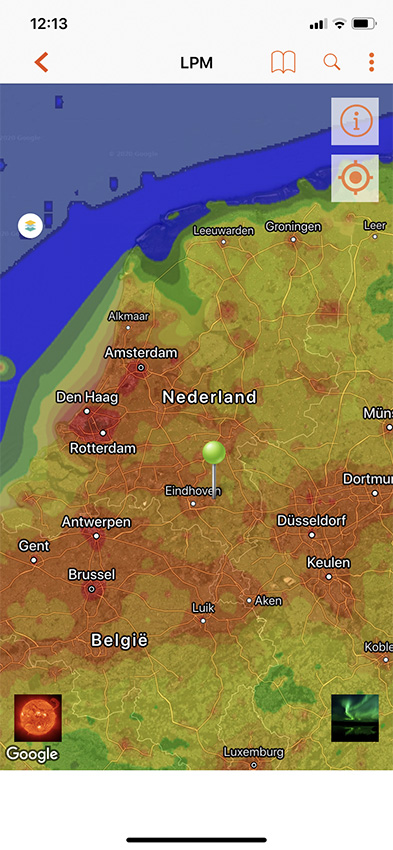
Have you chosen a location? Then it is simply a matter of setting up the camera, switching it on, and enjoying an evening or night of watching shooting stars. Take a chair, some company, and something to eat and drink.
In the meantime, you can leave the camera taking photos. Make sure you use a wide-angle lens with a large maximum aperture, f/2.8 or f/4 at least, and keep taking photos continuously.
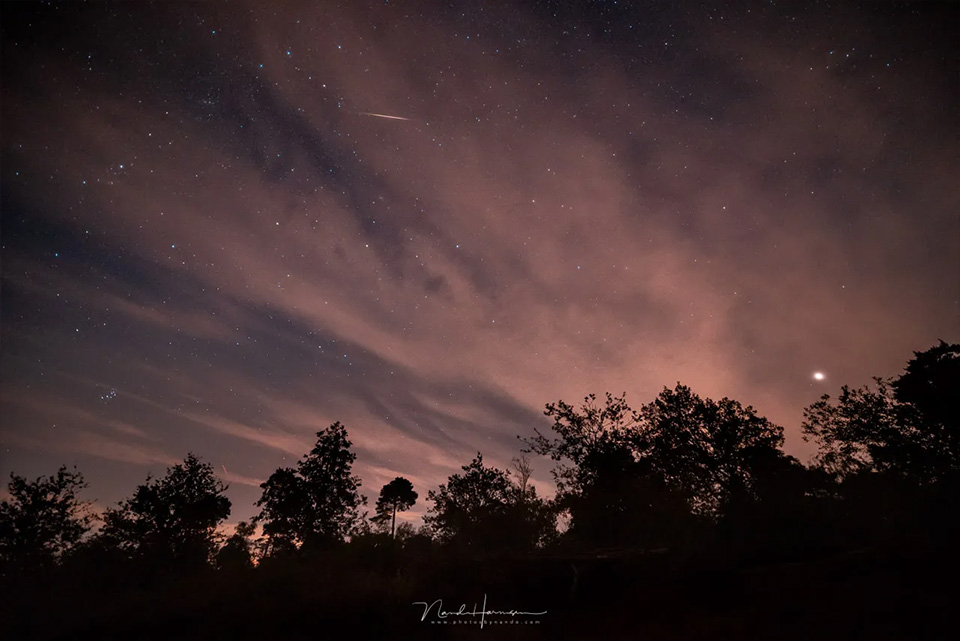
Choose at least ISO3200 to record as many shooting stars as possible, and use your shutter speed to get the correct exposure. It does not matter which shutter speed you use, as long as it does not become so long that stars turn into trails in the photo.
Use an interval function, or a remote shutter release with the continuous shooting mode on your camera to keep taking photos.
Turn off autofocus and use manual focusing. You only need to do this once, of course. And do not forget to put the camera on a tripod, but that goes without saying.
Do not use a torch, head torch (which are the most irritating, horrible lights in existence), and preferably turn off the LCD screen of your mirrorless camera.
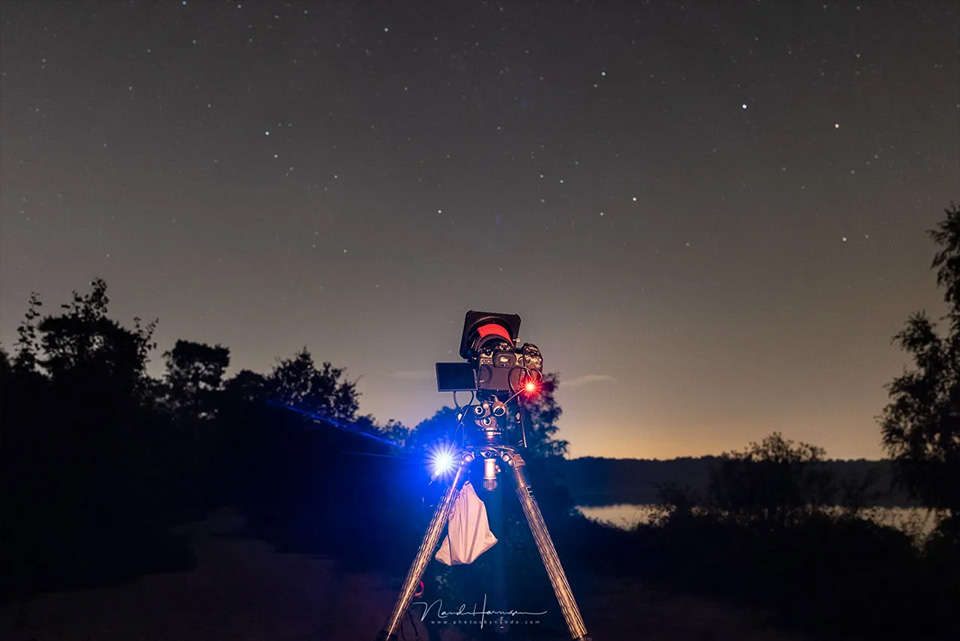
Then it is a matter of waiting and hoping that lots of shooting stars cross your camera's field of view. Often they will appear just outside the frame, or between exposures. So luck certainly plays a part. In the end, you will have a great many photos to go through at home, looking for genuine shooting stars.
Would you like to read more about photographing shooting stars? Then take a look at the following pages for more detailed information:
- Tips for photographing the Perseids
- 21 tips for photographing the Perseid meteor shower
- Preparations for photographing the Perseids (with PhotoPills)
- 60 shooting stars per hour, or not?
- The difference between aeroplanes, satellites and shooting stars
- Tips for editing photos of shooting stars
You can also use the techniques intended for photographing star trails. I have recorded a complete course on this at Photofacts Academy. The link is provided below.
About the author
Nando Harmsen has been photographing for more than 40 years. He specialises in wedding photography and landscape photography. Nando also gives talks, workshops, masterclasses and photo trips, and regularly reviews new and interesting equipment.
You might also like
-
 21 tips for photographing the Perseid meteor shower
by Nando Harmsen
-
Tips for Photographing the Perseids
by Nando Harmsen
-
 Go and photograph the Perseid meteor shower
by Nando Harmsen
-
Tips for editing photos of shooting stars
by Nando Harmsen
-
 Falling stars (Lyrids), photographic contributions
by Michelle Peeters
10 comments
-
 Edwin Mathlener wrote on Sunday 7 August 2022 at 22:27 | reply
Good piece, but it is a shame that the moon is quite disruptive this year. That means you can see and photograph far fewer meteors.
Translated from Dutch. -

-

 Donald Willemsen
wrote on Tuesday 9 August 2022 at 14:07
| reply
Donald Willemsen
wrote on Tuesday 9 August 2022 at 14:07
| reply
Great article and nicely published right on time. Unfortunately, the moon is the party pooper. Maybe I'll be lucky, because the moon sets at around 02.10 in my region.
Translated from Dutch. -
Donald Willemsen
wrote on Tuesday 9 August 2022 at 14:16
| reply
There is an error in my previous comment regarding the moonset. The time indicated is for today and it differs a lot from the date of the shooting stars, because then we will really be bothered by the full moon.
Translated from Dutch. -
Nando
wrote on Tuesday 9 August 2022 at 14:32
| reply
@Donald Willemsen;
Translated from Dutch.
The moon rises just before 22:00, an hour after sunset, and doesn't set until a few minutes after 7:30, about an hour and a half after sunrise.
So that's a whole night of full moon light. It can't get any worse for shooting stars -
Donald Willemsen
wrote on Tuesday 9 August 2022 at 14:48
| reply
@Nando, you're right. I had already corrected myself in a new comment. I didn't look properly beforehand.
Translated from Dutch. -
 Veuam wrote on Wednesday 10 August 2022 at 18:27
| reply
Veuam wrote on Wednesday 10 August 2022 at 18:27
| reply
Thanks for all the useful tips. One question; I see in all your photos that you also include a foreground, which completes the photo👍. But what to focus on with the large aperture, on the celestial bodies or do you also want to have that foreground in focus?
Translated from Dutch.
(Ps, is this also covered in the night photography bible?) -
Edwin Mathlener wrote on Wednesday 10 August 2022 at 22:42 | reply
@Nando "Interferes a lot" is the term astronomy writers use when we write for a broader audience. Among themselves, amateur astronomers also say that the moon messes things up. Due to the rhythm of the lunar cycles, roughly speaking, a meteor shower is either clearly visible or bothered by the moon every other year. Of course it is still fun to take a look. The Perseids sometimes produce a fireball and that comes out perfectly well above the moon. But an atmospheric photo with lots of meteors is not in the cards right now. Unfortunately, we are once again seeing enthusiastic pieces all over the media that raise expectations far too high.
Translated from Dutch. -
Nando
wrote on Thursday 11 August 2022 at 10:59
| reply
@Veuam:
Translated from Dutch.
Always focus on the foreground. Because you usually use a wide-angle lens, and you are always about 10 meters away from your foreground, there is a very good chance that the background will also be sharp, even at f/2.8. Unless the foreground is very close, because then it becomes a lot more difficult. -
Have your say
Please note: Articles older than a week can only be commented on by signed-in visitors.Would you still like to comment? sign in or create a free account.
Become a better photographer every week
A practical photography tip in your inbox every week.
39,024 photography enthusiasts already receive the tips! More about the weekly mail. Or keep up to date via  Facebook.

Elja Trum
Photofacts; everything to do with photography!
Would you like to take better photos and keep up with what is happening in photography? Photofacts publishes articles that teach you something about photography — from a product announcement to a practical shooting tip or a look at a website. Photofacts covers photography every day and is a hobby project of Elja Trum's that got out of hand. The articles are written by a team of volunteer authors. If you would enjoy writing one or more articles for Photofacts, do get in touch.More about PhotofactsPhotofacts is made possible in part by
