

Review: Canon 5D Mark IV
Friday 18 November 2016, 11:33 by Elja Trum | 13,767 views | 4 commentsThis article was translated from Dutch with the help of AI. Read the original.
In August this year, Canon announced the EOS 5D Mark IV, the successor to the popular Canon 5D Mark III. The main improvement in the new camera is, in my view, the dynamic range. It has finally reached the level of the competition.

Canon 5D Mark IV specifications
- Full-frame 30.4 megapixel CMOS sensor
- Sensitivity: 50 - 102,400 ISO (32,000 native)
- 61-point autofocus
- 7 frames per second
- 4K video (30p)
- 3.2-inch touchscreen display (1.62 million pixels)
- Compact Flash and SD(XC) memory card slots
- Weight: 890 grams
- Built-in GPS
- Built-in Wifi
In the hand
If you have worked with the Canon 5D Mark III (or 5Ds or 5D Mark II or even the 80D or 7D), the Canon 5D Mark IV feels very familiar. I have the Mark III myself. There is virtually no visible or tangible difference.
That means the camera feels immediately familiar to me. I do not need to search for settings, everything is where you are used to finding it. Ideal for photographers who already work with an earlier 5D model, as you do not have to get used to this model.
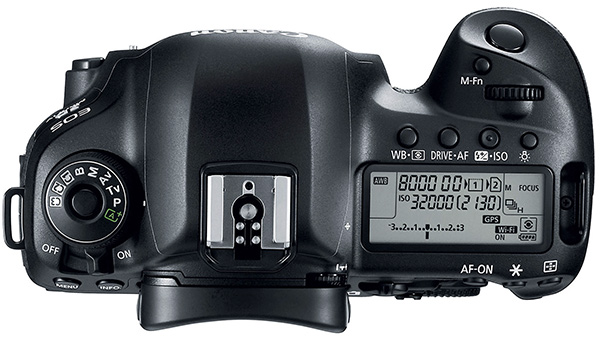
Like its predecessor, the camera is a solid block of metal. That feels durable, but it is also quite heavy. Especially if you are taking photographs all day, you can really feel it in your hands by the evening.
The camera is a fraction lighter than the Mark III, but in practice you cannot feel the difference.
Dynamic range
I still think the Canon 5D Mark III is a fine camera, but there is one area where I find it really falls short: dynamic range. Fortunately, Canon has addressed this properly with the new sensor in the Canon 5D Mark IV.
A greater dynamic range in a photograph means that a greater contrast can be captured, the difference between the light and dark areas in a photograph. In practice, you can see this difference very clearly when editing.
The files from the Canon 5D Mark IV give you much more room to lift dark areas in a photograph without quickly introducing an extreme amount of noise.

In the photograph above, you can see that even at 2500 ISO, you can still brighten things considerably in post-processing. With a photograph taken at 100 ISO, you can go much further. This extra room is a huge advantage.
The Canon 5D Mark IV catches up with the competition in this respect. Sony and Nikon have offered you a greater dynamic range for longer. However, the best cameras from these other brands still offer more dynamic range than the Canon.
Autofocus
Personally, I already thought the autofocus of the Canon 5D Mark III was fine, but it has been improved considerably in the Mark IV. The autofocus sensor is now the same as the sensor in the Canon 1D X, the sports camera for professionals and Canon's flagship model (in the meantime, the Canon 1D X Mark II has also come onto the market).
What is particularly useful about the improved autofocus is that a larger part of the image is covered by autofocus points. There are 61 autofocus points in total, 41 of which are cross-type (more sensitive).
A useful improvement, then, which many photographers will be pleased with. The Canon 5D Mark IV is also perfectly suitable for sports photography, although real die-hard sports photographers will still prefer the Canon 1D X Mark II.
GPS, Wifi and touchscreen
There are a few options that, in my view, should already have been included in the previous model: built-in Wifi, GPS and the touchscreen. Other Canon models have had these for years now. We finally see them in the 5D series as well.
The touchscreen is particularly useful, because it lets you zoom in on a specific part of your photograph incredibly quickly. Handy when you want to check the focus. Until now, this was quite a hassle with the buttons, where one wrong movement would put you back in the centre of the image.
Canon has also included a good Wifi implementation in the camera straight away. You can send files directly to an FTP server, an option that previously always required the external, and expensive, Wifi module.
GPS is naturally useful when travelling. Afterwards, you can see exactly where your photographs were taken. This was not a feature I specifically missed, but it is simply useful that you can now always get the coordinates with a photograph. Your phone has been doing this as standard for years.
External differences compared with the 5D Mark III
There is one extra button on the back of the camera, above the control dial. With this button, you can quickly switch between autofocus areas. For example, from focusing on the centre of the image to focusing on all points automatically. I do not change focusing methods that often myself, but it can be useful.
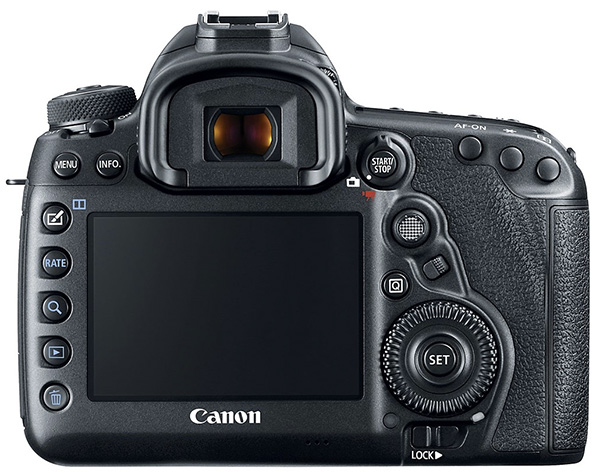
Another, very minor, difference I noticed was the small lines on top of the camera by the prism housing. These lines are there because this top is not made of metal, like the rest of the body, but of a very strong plastic.
This is because the GPS and Wifi antennas are located beneath the plastic. Metal blocks the signals too much. The plastic does not look any different from the metal, by the way. You can only hear the difference when you tap it.
Dual Pixel RAW
This may well be the most notable innovation in the 5D Mark IV. With Dual Pixel RAW, Canon uses the two photodiodes that every pixel on Canon's sensor has. Because these pixels are always positioned slightly apart, this difference can be used for minor adjustments afterwards.
To adjust your photograph afterwards, you need Canon's own editing package: Digital Photo Professional (DPP). With Image Microadjustments, you can then shift the focus very slightly afterwards. This involves a movement of approximately 1 centimetre. Not an enormous amount, but in a portrait with a shallow depth of field, this can be the difference between sharp eyes in the image or not.
You can also use Bokeh Shift. This lets you move the background blur slightly. This might make it fit your photograph a little better.
The final option offered by Dual Pixel RAW is Ghosting Reduction. This lets you reduce unwanted light entering the image.
It all sounds like some pretty great new options that could prove useful. This post-processing will probably also become available in Photoshop and Lightroom, but for now there are only some rumours about that.
Canon's promotional video below also briefly shows the possibilities of Dual Pixel RAW.
HDR Movie
Another nice innovation is the HDR movie mode. This lets you record in full HD at 60 frames per second. However, an underexposed and a correctly exposed image are captured alternately. These two images are combined into an HDR image directly in the camera.
The result is a video in which areas that would normally be blown out are now properly exposed. The dynamic range is effectively increased by quite a lot.
The video below shows what this looks like in practice.
4K video
The 5D can not only record in HDR, it can now also record 4K video. A nice addition for videographers. The Mark IV records in DCI 4K/30p. This is a wider format than the popular 16:9 ratio.
The camera uses Motion JPEG encoding to store video. This format provides excellent image quality, but uses a lot of storage space. An additional advantage is that individual frames, a single image from a video, are also of good quality. It is almost as if you had taken 30 photographs per second.
Unfortunately, the HDMI-out port is limited to full HD quality. This means you cannot save 4K video using an external recording device.
Recording video with the 5D is also very smooth because it now has dual-pixel autofocus. This means the camera focuses quickly and accurately during video recording too. The face-tracking option is also very useful, as the camera automatically focuses on faces in the image.
Canon 5D Mark IV versus the 5Ds
There is another version of the 5D as well: the Canon EOS 5Ds. This camera, announced a year and a half ago, has no fewer than 50.6 megapixels. It is therefore an excellent alternative for anyone who really needs that high resolution.
The Canon 5D Mark IV is much better in low light, however (12,800 versus 102,400 ISO), the autofocus is better, the video is 4K instead of Full HD and it has a touchscreen and dual pixel AF.
If you do not necessarily need the higher resolution, the 5D Mark IV is probably the best choice for most photographers.
Compared with other brands
The Canon 5D Mark IV is a major upgrade over the Canon 5D Mark III. However, if you compare it with the full-frame models from Sony and Nikon, the upgrades are not so impressive.
For example, the Nikon D810 has a full-frame sensor with 36.3 megapixels, and the dynamic range of this camera is also excellent. Video recording on this two-year-old camera is still limited to Full HD.
The Sony a7r Mark II was released a year ago. This camera has the same sensitivity as the 5D Mark IV, but has a 42-megapixel sensor. The Sony can also record in 4K and has an impressive dynamic range.
Both models are cheaper to buy than the 5D Mark IV.
Price
I find the price of this new camera striking. When it was announced, the first Canon 5D was still the cheapest full-frame DSLR. The Canon 5D Mark II cost about the same, at around 2,500 euros. The price of the 5D Mark III suddenly rose to 3,500 euros.
The Canon 5D Mark IV now costs 4,129 euros. Another 600 euros on top. I am interested in this camera myself, but with such steep prices I have to think twice. And certainly take a look at what the competition has to offer.
Personally, I would at least take a look at Sony and Fujifilm, both of which offer interesting mirrorless cameras with excellent specifications and image quality at a lower price.
Another option is to wait for the Canon 6D Mark II. There are already quite a few rumours about this camera. It will probably be announced sometime in the second quarter of 2017. If it also has an improved sensor with a higher dynamic range, it could be an affordable alternative, at around 2,000 euros.
Conclusion
With the Canon 5D Mark IV, Canon has launched a worthy successor in the 5D line. The 5D Mark IV is an all-rounder, you can photograph virtually anything with it. The camera is excellent for landscapes, portraits and sports, and even for videographers.
With 30 megapixels, you have enough pixels, and with 7 frames per second, enough speed. Thanks to the excellent autofocus, focusing in time is no problem at all. The increased dynamic range is a huge improvement.
In my view, there is really no reason why you would not want to buy this camera. The only real downside I can think of is the high purchase price. If that is not a problem for you, you will not regret buying the Canon EOS 5D Mark IV.
More information
- Canon 5D Mark IV review by EOSzine (Dutch)
- Canon 5D Mark IV review by DP Review
- Canon 5D Mark IV review by The Digital Picture
- Canon 5D Mark IV review by Ken Rockwell
- Canon 5D Mark IV review by CameraLabs
About the author
Elja Trum is the founder of Photofacts and online photography course website Photofacts Academy. He has been writing about photography since 2006. Elja is also the author of (Dutch) books on composition, black-and-white photography, flash photography and portrait photography.
You might also like
-
 Review: Canon EOS 1Dx mark III
by Nando Harmsen
-
 Review: Sony A7 IV
by Nando Harmsen
-
 Review: Canon EOS R5
by Nando Harmsen
-
 Review of the fantastic Canon EOS R6 Mark II
by Nando Harmsen
-
 Review: Canon EOS R6 mark III
by Nando Harmsen
-
 Review of the Canon EOS M50 mark II
by Nando Harmsen
4 comments
-
 Wim Hendriks wrote on Tuesday 22 November 2016 at 11:26 | reply
Ha Elja,ik mis nog wat kleine dingetjes bij het filmen van de Canon,geluid is nog steeds belabberd,kropfactor bij filmen,geen verschillende codes,daar bedoel ik mee het is wel jpeg motion ,maar het is maar 8bit.en een van de belangrijke dingen is toch dat het LCD schermpje kan kantelen of draaien,voor filmen wel belangrijk.
This comment was written in another language and has not been translated yet.
Ooit de start geweest voor beginende filmende fotografen,maar na 5 jaar is deze Camera een beetje achterhaald en ook persoonlijk te duur als fotocamera. -

 Elja Trum
wrote on Tuesday 22 November 2016 at 11:48
| reply
@Wim; Geluid ben ik, direct vanaf een camera, nog nooit enthousiast over geweest. Ik ga altijd uit van een externe microfoon voor het geluid bij de video. Maar goed om te noemen ja.
This comment was written in another language and has not been translated yet.
De cropfactor bij video is alleen in de 4K modus, maar dit kan inderdaad ook vervelend zijn. De Canon 5D mark IV is in mijn ogen ook niet de ideale camera voor video. -
 Harm Bakker wrote on Tuesday 22 November 2016 at 20:12 | reply
Elja, uitstekend genuanceerd review! Als je al, zoals ik, al verschillende goede Canon lenzen hebt (nu voor mijn 5D MKII), zijn andere merken niet zo'n goed alternatief vind ik.
This comment was written in another language and has not been translated yet.
Harm Bakker -
Elja Trum
wrote on Tuesday 22 November 2016 at 22:03
| reply
@Harm; Als je al veel accessoires en objectieven hebt is een overstap inderdaad financieel nooit gunstig. En volgens mij zal vrijwel elke 5D fotograaf ook helemaal tevreden zijn met een 5D mark IV.
This comment was written in another language and has not been translated yet.
Aan de andere kant; als je verkoopt wat je hebt dan kun je ook een heel mooi nieuw setje kopen van een ander merk...
Zelf ben ik er ook nog niet uit of ik voor de 5D mark IV ga of wellicht toch eens moet overstappen. Een eventuele 6D mark II zou ik ook interessant kunnen vinden.
Have your say
Please note: Articles older than a week can only be commented on by signed-in visitors.Would you still like to comment? sign in or create a free account.
Become a better photographer every week
A practical photography tip in your inbox every week.
38,783 photography enthusiasts already receive the tips! More about the weekly mail. Or keep up to date via  Facebook.

Elja Trum
Photofacts; everything to do with photography!
Would you like to take better photos and keep up with what is happening in photography? Photofacts publishes articles that teach you something about photography — from a product announcement to a practical shooting tip or a look at a website. Photofacts covers photography every day and is a hobby project of Elja Trum's that got out of hand. The articles are written by a team of volunteer authors. If you would enjoy writing one or more articles for Photofacts, do get in touch.More about PhotofactsPhotofacts is made possible in part by
