

Review: Canon EOS R10 mirrorless camera
Friday 28 October 2022, 14:28 by Nando Harmsen | 6,365 views | 8 commentsThis article was translated from Dutch with the help of AI. Read the original.
The Canon EOS R10 is a mirrorless camera with an APS-C sensor. This compact camera proves to be very versatile and is highly suitable if you are looking for a good all-round camera at a relatively attractive price.
I used the EOS R10 for several weeks for an extensive review.
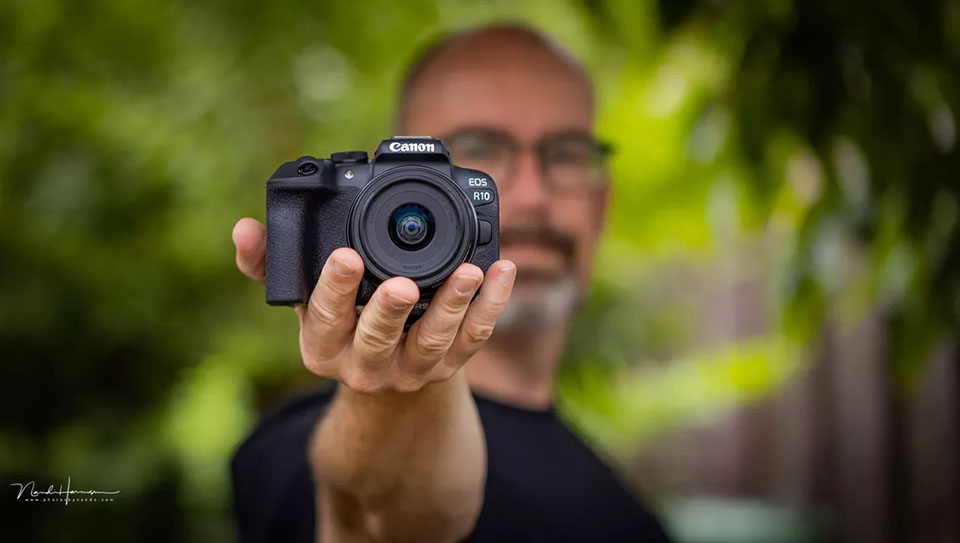
The review of the Canon EOS R10 is a great follow-up to that of the Canon EOS R7, which I was previously allowed to test.
Although I think the latter is a beautiful and particularly capable camera, there were still a few things about it that I would have expected from a more entry-level camera.
The EOS R10 is that entry-level camera. It is an APS-C camera that, in terms of functionality, loses little to the more expensive models.
You get a very extensive AF menu with eye, face and head AF for people and animals. There is AF tracking with special recognition for vehicles, as well as eye AF for people and animals. The camera is fast, including pre-shooting.
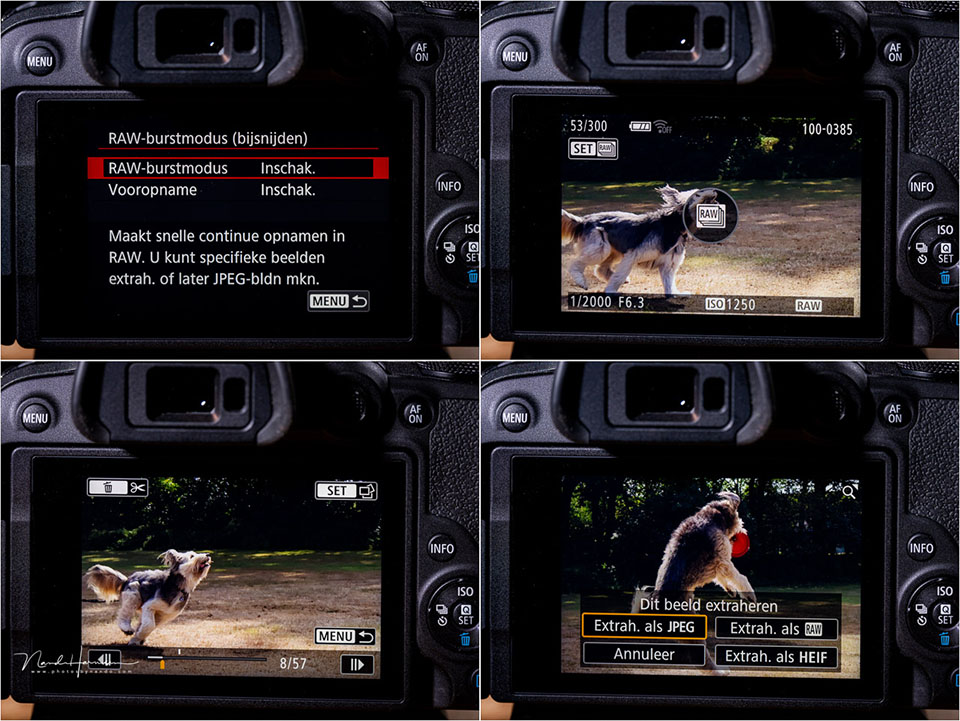
These are only a few of the options offered by the EOS R10. You might think that this makes it too complicated, or could make it too complicated, for the beginner photographer or for the photographer who does not like setting up the camera in detail.
Fortunately, the simple menu with its help pages guides you smoothly through the settings.
If you are the kind of photographer who wants a JPEG straight out of the camera, you have a wide range of presets at your disposal. Scene settings and creative settings give you access to many options without needing to know much about how it is created.
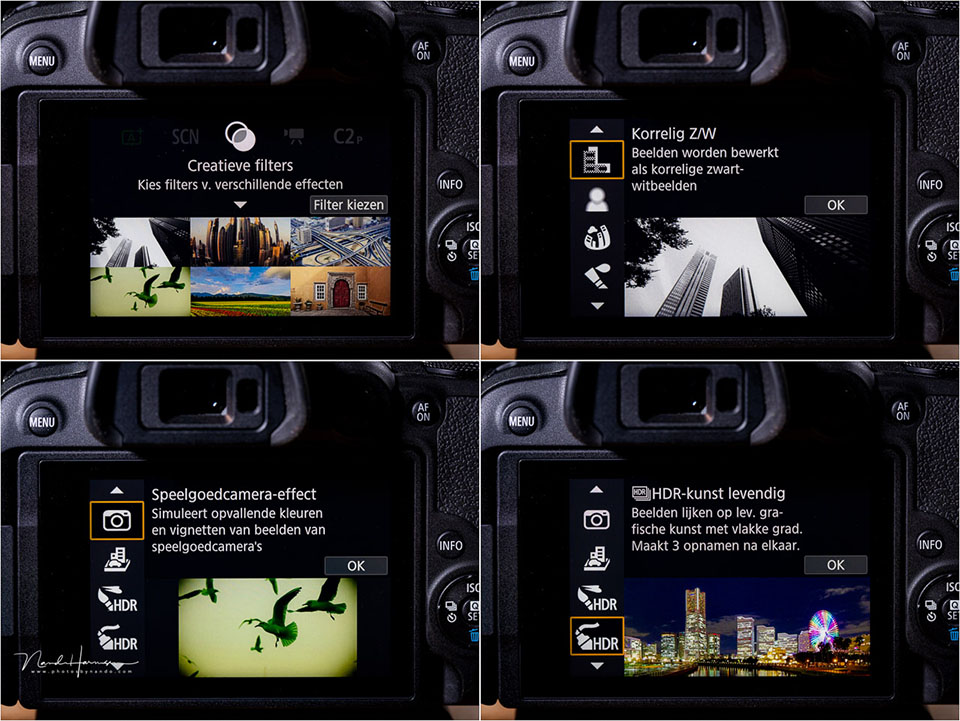
I thought the Canon EOS R10 would be a camera that appealed to me less. It was striking how much I enjoyed using this camera.
Although it is not a professional-grade camera, it comes very close. There were few moments when I thought: now I am missing my professional camera.
There are a few things to bear in mind. The EOS R10 is small, very small. Its size is comparable to that of the EOS M50 Mark II.
You can also compare it to that camera to some extent, but with all the benefits of advanced autofocus, speed and, of course, the RF mount.
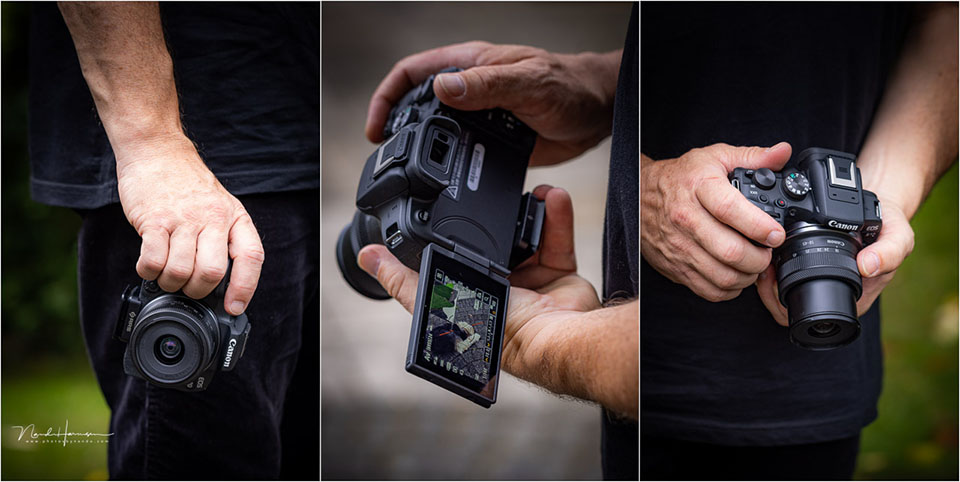
I could actually find very few disadvantages to this little powerhouse, which was striking. Of course, it is good to view the camera in the right perspective. From a professional point of view, you can find many things you would want to be different, but that is not what this camera is intended for.
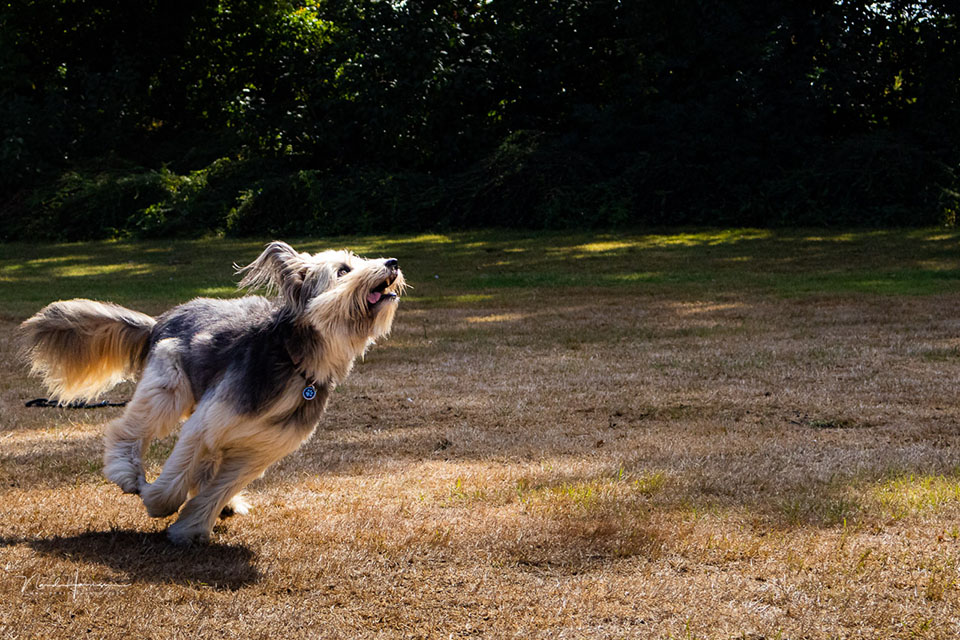
So, from the point of view of the right target group, I think the Canon EOS R10 is a bullseye. Small, user-friendly, fast, accurate and packed with features that could be called professional.
If a disadvantage must be mentioned, it is the lack of weather sealing and the battery's low capacity.
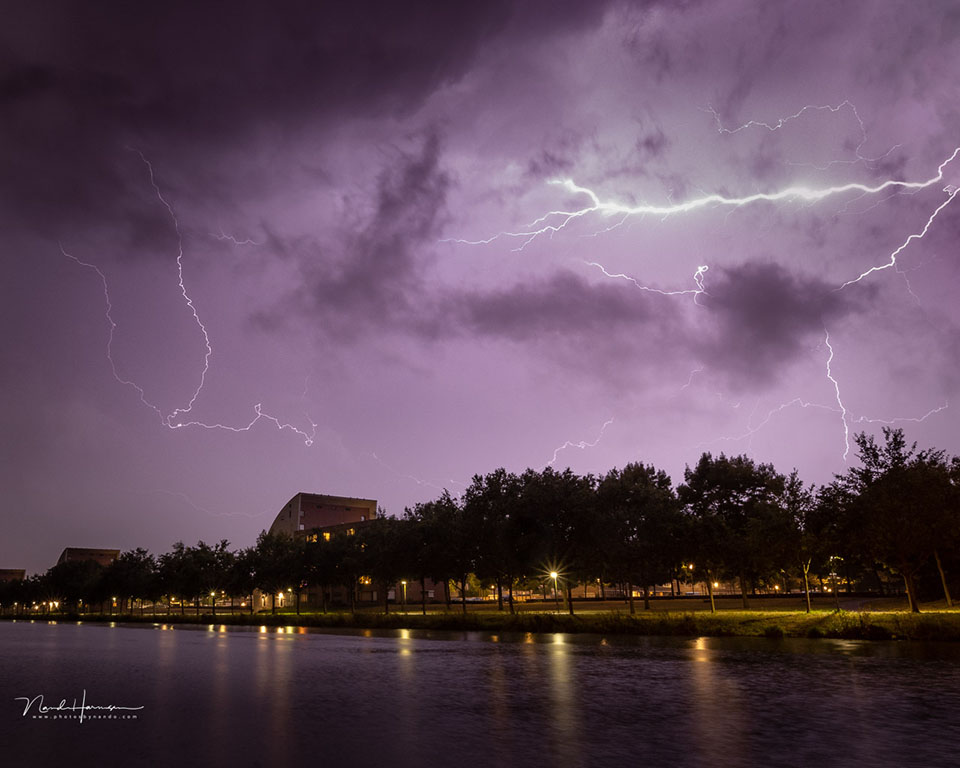
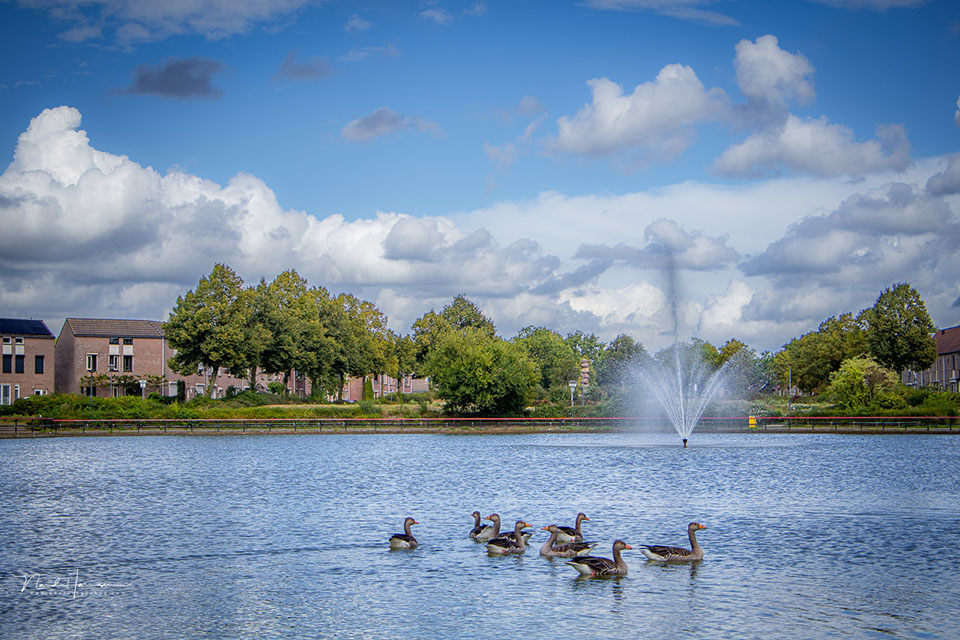
Would you like to read the complete review? Then visit the Cameraland.nl website. You will find more photos of the camera there, as well as photos taken with it.
The Canon EOS R10 costs 999 euros, which is very close to the price of the Canon EOS RP at 1,099 euros. So, for 100 euros more, you get a full-frame camera instead of an APS-C camera. That may sound attractive, but I think the EOS R10 is a much better choice.
Although the EOS RP is a good camera, you miss the fantastic features that make the EOS R10 so special. The eye AF, servo AF and speed are worth much more than a larger sensor ever could be. Unless you do not need those advanced AF capabilities, of course.
In short, the Canon EOS R10 is a fantastic camera at a very reasonable price. I can wholeheartedly recommend it, both for beginner photographers and more advanced amateur photographers.
About the author
Nando Harmsen has been photographing for more than 40 years. He specialises in wedding photography and landscape photography. Nando also gives talks, workshops, masterclasses and photo trips, and regularly reviews new and interesting equipment.
You might also like
-
 Canon introduces mirrorless crop cameras: the EOS R7 and EOS R10
by Nando Harmsen
-
 Review: Canon EOS R7
by Nando Harmsen
-
 Review: Canon EOS R8 full-frame mirrorless camera
by Nando Harmsen
-
 Review: Canon EOS R50 mirrorless camera
by Nando Harmsen
-
 Review of the Canon EOS M50 mark II
by Nando Harmsen
-
 Review: Canon EOS R5 C for video
by Nando Harmsen
8 comments
-

 Slimpie wrote on Sunday 30 October 2022 at 00:41
| reply
Slimpie wrote on Sunday 30 October 2022 at 00:41
| reply
Compared to the EOS R7, in my opinion the R10 has 1 more disadvantage, in-body image stabilization. Otherwise, the R10 sounds like a very capable camera for beginners and advanced users.
Translated from Dutch. -

-
 guest wrote on Tuesday 1 November 2022 at 11:03 | reply
I do consider the lack of IS in the camera a disadvantage. Especially after I bought the R7 myself last week and have therefore already experienced what the in-camera IS does. I think it is a blessing. I bought the R7 with a kit lens, namely the RF-S 18-150mm. As far as I know, that lens has NO image stabilization.
Translated from Dutch.
But in general, the R10 is an excellent camera as an entry-level model for a reasonable price. For people with large hands, the camera may be a bit small, but that can be solved by placing a battery grip underneath the camera. That improves the grip and, moreover, you can put two batteries in it, allowing you to photograph for longer. Just like the R7, the R10 is a power hog. -
Nando
wrote on Tuesday 1 November 2022 at 11:31
| reply
@guest:
Translated from Dutch.
The EOS R10 cannot take a battery grip, so that is not a solution for that camera.
Both the RF-S 18-45mm and the RF-S 18-150mm have image stabilization, the latter even 4.5 stops. Just look at the type designation next to the front lens, where you will see IS mentioned.
Keep in mind that image stabilization is good for keeping your camera steady, but has no effect on movement of your subject. A faster shutter speed may still be necessary then, despite the fact that IS or IBIS allows you to use the camera at slow shutter speeds. -
guest wrote on Tuesday 1 November 2022 at 12:45 | reply
@Nando, There is indeed IS on the RF-S 18-150. What confused me is that there is no button on the lens to turn the IS on or off. By the way, for me it's also about the IS correcting motion blur caused by movement of the camera and that works perfectly. I didn't know that a battery grip doesn't fit the R10. Maybe one will still come.
Translated from Dutch. -
Nando
wrote on Tuesday 1 November 2022 at 14:22
| reply
@Guest:
Translated from Dutch.
That lack of an IS button on the RF-S 18-150mm does indeed put you on the wrong track. The downside is that turning it off has to be done in the camera's menu, should you want to do that.
As for the R10, as I understand it, there won't be a grip either. -
 Mirjam wrote on Thursday 3 November 2022 at 14:43 | reply
I have a question. My current camera is a Canon EOS 80D. I would like to have a more compact camera. I looked at the R7 and am now reading about the R10. What would you recommend? I have the necessary lenses, but I understood that they can still be used with an adapter
Translated from Dutch. -
Nando
wrote on Thursday 3 November 2022 at 20:27
| reply
@Mirjam:
Translated from Dutch.
Both the R7 and the R10 are small and compact compared to the 80D. It depends on the requirements you have for the camera. I think the R7 could be a more suitable camera, provided it fits within the budget.
List your expectations and requirements, and see how many of those points the camera meets.
You can indeed use all EF and EFs lenses with an adapter. So that’s not a problem.
Have your say
Please note: Articles older than a week can only be commented on by signed-in visitors.Would you still like to comment? sign in or create a free account.
Become a better photographer every week
A practical photography tip in your inbox every week.
39,077 photography enthusiasts already receive the tips! More about the weekly mail. Or keep up to date via  Facebook.

Elja Trum
Photofacts; everything to do with photography!
Would you like to take better photos and keep up with what is happening in photography? Photofacts publishes articles that teach you something about photography — from a product announcement to a practical shooting tip or a look at a website. Photofacts covers photography every day and is a hobby project of Elja Trum's that got out of hand. The articles are written by a team of volunteer authors. If you would enjoy writing one or more articles for Photofacts, do get in touch.More about PhotofactsPhotofacts is made possible in part by
