

Blocking out extreme amounts of light: review of the Haida One Million X Edition filter
Friday 31 July 2020, 14:14 by Nando Harmsen | 6,312 views | 11 commentsThis article was translated from Dutch with the help of AI. Read the original.
Photographing with long shutter speeds is great fun. It allows you to capture beautiful movements, such as streams, waterfalls or waves at the seaside.
Or you can use long shutter speeds to make that movement disappear. A rough, moving water surface will then become smooth and even in appearance.
There are many ways to use long shutter speeds, all of which I cover in my Long Shutter Speeds course on Photofacts Academy.
The most commonly used filter for long shutter speeds is the 10-stop neutral density filter. This filter blocks no less than 1,000x the light. In bright sunshine, you can achieve a shutter speed of up to 30 to 60 seconds. There are situations in which you want to expose for longer. Using several filters at the same time is one option.
You can also choose an even darker neutral density filter, which blocks more light than the 10-stop filter. For this, I use a 15-stop neutral density filter from Haida, which blocks the light by no less than 32,000 times. Just work out what shutter speed you could achieve in bright sunlight.
Is even a 15-stop neutral density filter not enough? You now have the chance to buy a neutral density filter that blocks the light no less than one million times: the Haida One Million X Edition filter.
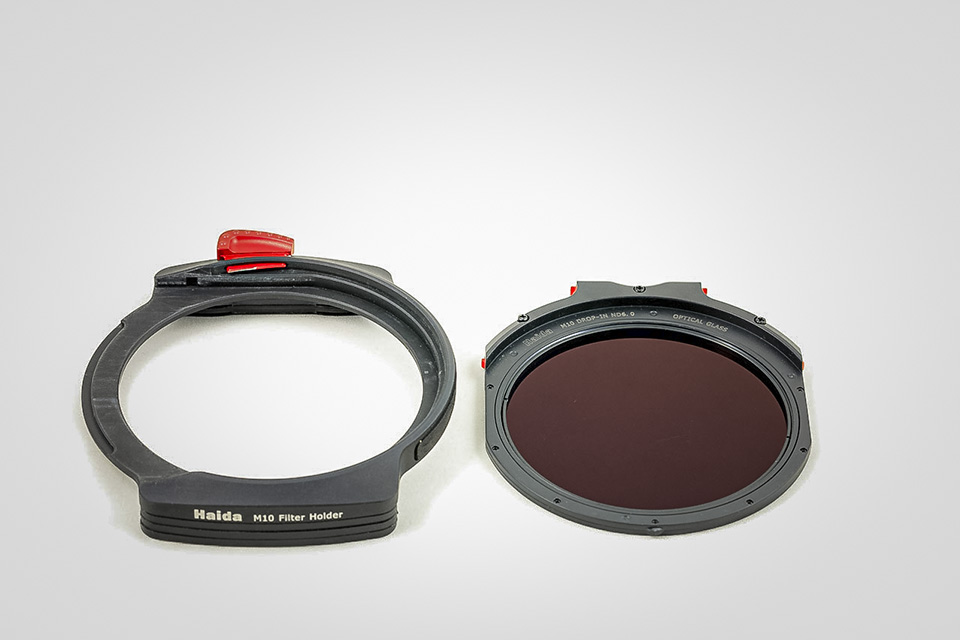
The filter at a glance
The filter I have been given is intended for the Haida M10 filter system. It is the drop-in version, which fits into the filter slot and prevents light leakage perfectly.
Haida also supplies magnetic versions for the 150mm system, as well as the standard square 100x100mm and 150x150mm filters, so you are not necessarily tied to the Haida filter holder.
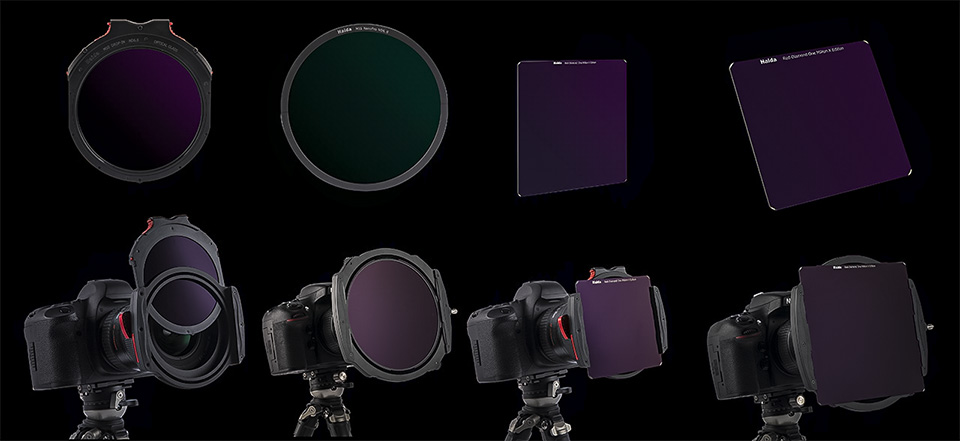
How long do you need to expose with a 20-stop filter?
To get an idea of how much light a 20-stop filter blocks, I will compare it with a 10-stop filter.
With an unfiltered exposure of 1/30 second, that filter requires a shutter speed of 30 seconds with the filter fitted. This is what you can achieve in full sunshine. It makes the shutter speed 1,000 times longer.
The One Million X Edition filter makes the shutter speed one million times longer. An unfiltered shutter speed of 1/30 second will therefore become no less than 333,333.333 seconds with the filter fitted for a good exposure. Converting this number gives a shutter speed of no less than 9 hours, 42 minutes and 29 seconds. Do you have that much patience?
I have two more examples to give you an idea of what 20 stops means exactly. If you had a shutter speed of 1/1000 second without a filter, the 20-stop filter would give you an exposure of 17 minutes and 29 seconds.
With a shutter speed of 1/8000 second, the 20-stop neutral density filter gives you a shutter speed of no less than 2 minutes and 16 seconds.
Photographing the sun
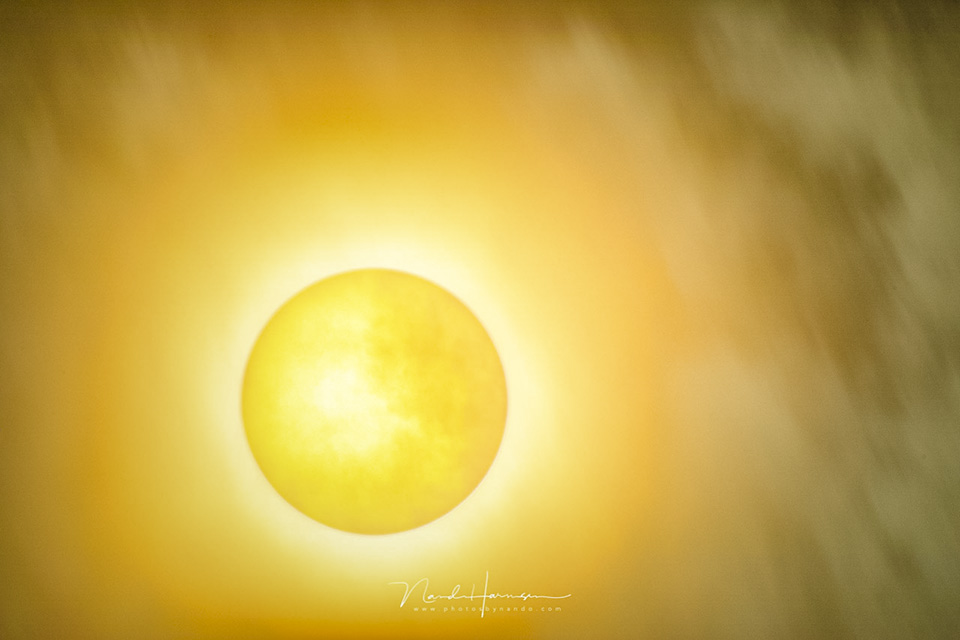
This filter is very suitable for photographing the sun with a long telephoto lens. Normally, this is strongly advised against. A telephoto lens is a magnifying glass that further concentrates the sun's already bright light, making it even brighter.
Looking at the sun through a telephoto lens is the same as looking at the sun through binoculars. You will burn your eyes and be blind for the rest of your life. If you do this with a camera, you can be sure that it will burn a hole in your sensor after your eyes have been burned while trying to aim the camera.
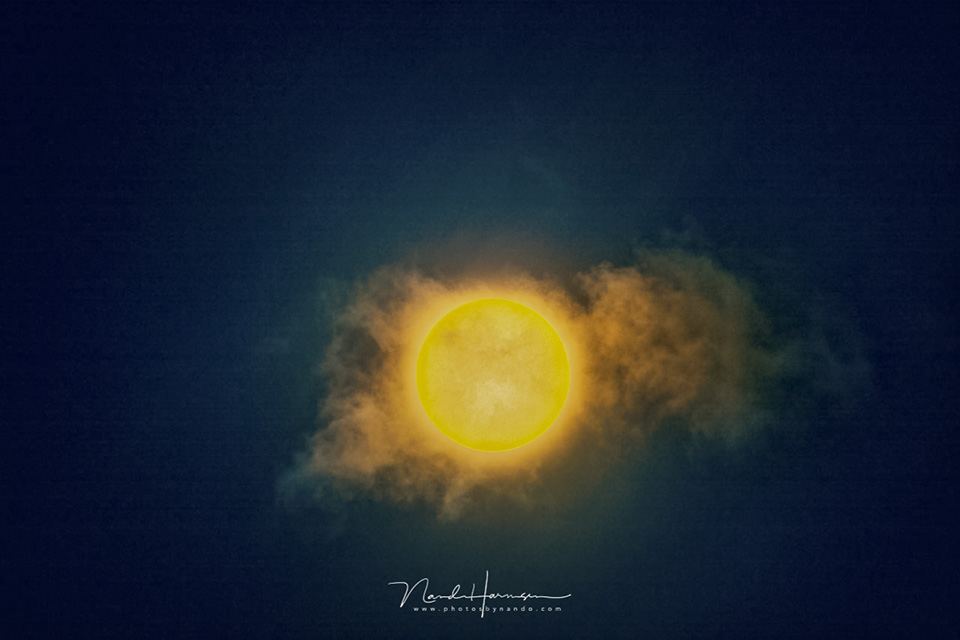
I once photographed the sun with a telephoto lens fitted with a 10-stop filter and a 6-stop filter. I captured sunspots and the transit of the planet Mercury. With 16 stops of neutral density filters, I still had a shutter speed of 1/500 second at ISO200 and f/16.
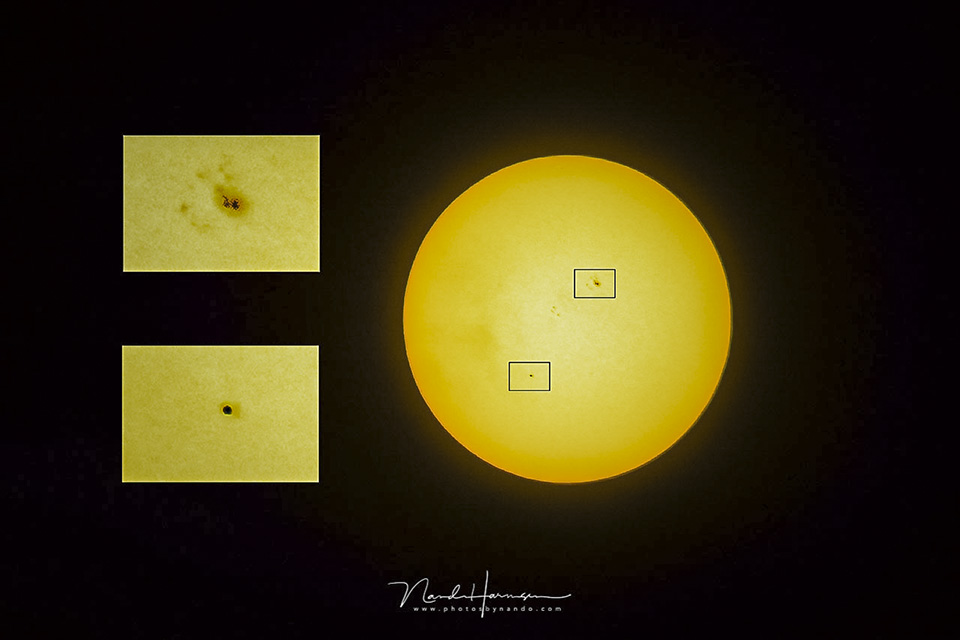
The Haida One Million X Edition filter is particularly suitable for this kind of photography. Because it reduces the light by a factor of one million before it enters your lens, it is safe to photograph the sun this way.
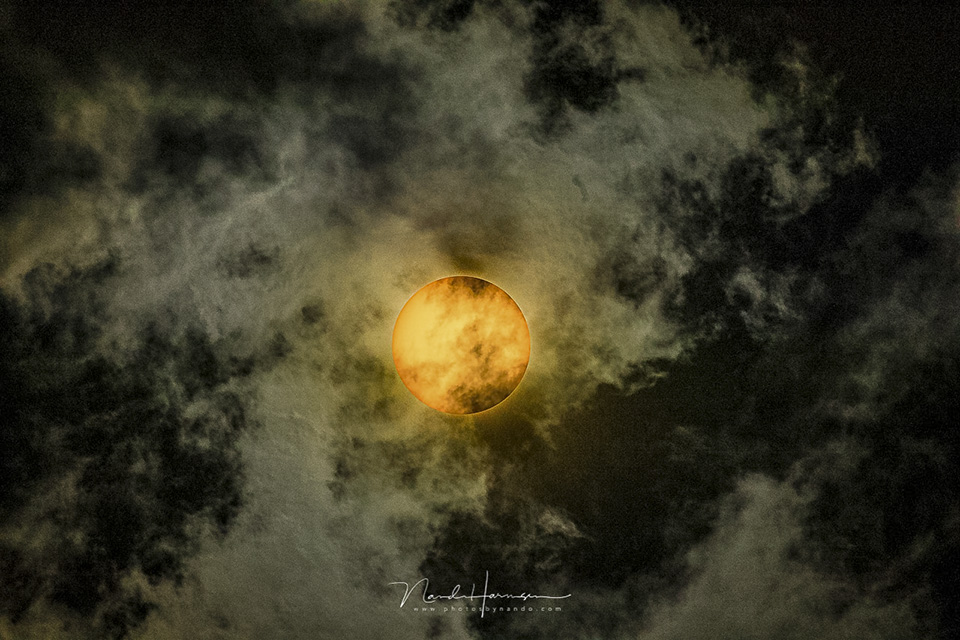
Can you use the filter for landscapes?
Of course, you want to be able to use a filter in as many ways as possible, not just for photographing the sun. I also started using the filter to photograph landscapes, to see the effect of these extremely long shutter speeds.
A landscape is often photographed with a wide-angle lens and a large depth of field. A large depth of field means using a small aperture, which means your shutter speed already needs to be somewhat longer.
The calculation example I gave earlier, in which more than nine hours of exposure was required, will therefore be reached quickly with this filter. This greatly limits its use.
The Haida One Million X Edition filter can mainly be used in clear, sunny weather, with an aperture that is not too small. At a shutter speed of 1/160 second and ISO100, I needed to expose for more than 54 minutes with the filter when I increased the ISO value by 1 stop.
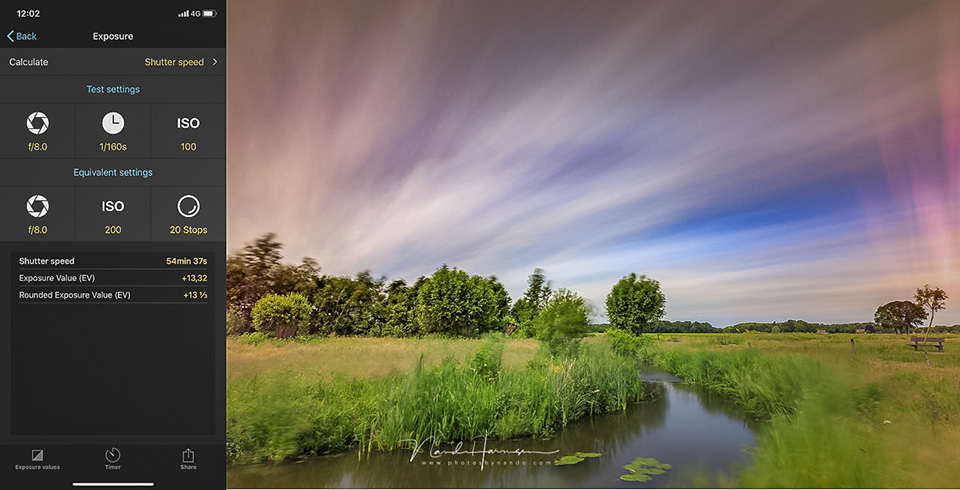
The result of an exposure of almost 1 hour does not look too bad. But two things stand out. First, light leakage has occurred, which can mainly be seen at the edges of the photo, and, although it cannot be seen at this size, the noise level has increased considerably.
Light leakage is a major problem with this filter. The filter itself seals very well, and the light leakage does not occur there. In this case, it is light leaking through the camera's optical viewfinder.
You might think this cannot happen because the mirror is raised and closes off the viewfinder, but every mirror has a section that lets light through so that the autofocus and exposure meter can work.
When photographing with these long exposures, it is very important to cover the viewfinder as well. Of course, this is not necessary if you use a mirrorless camera. But all cameras do suffer from increased noise and hot pixels.
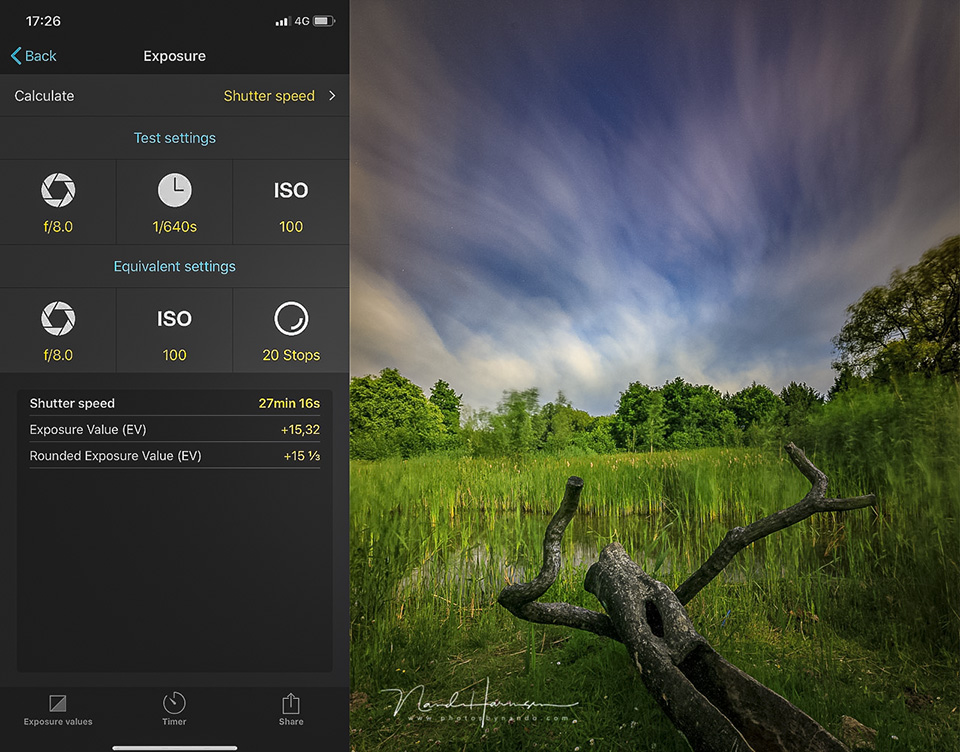
The longer you expose, the more noise is produced. I have noticed that this becomes very distracting with exposures longer than half an hour. If you are going to use the Haida One Million X Edition filter for extremely long shutter speeds, keep this in mind.
How severe that noise is depends on many other things. How old is your sensor, what type of sensor do you have, and how often has the sensor been used, in other words, how much wear has it had?
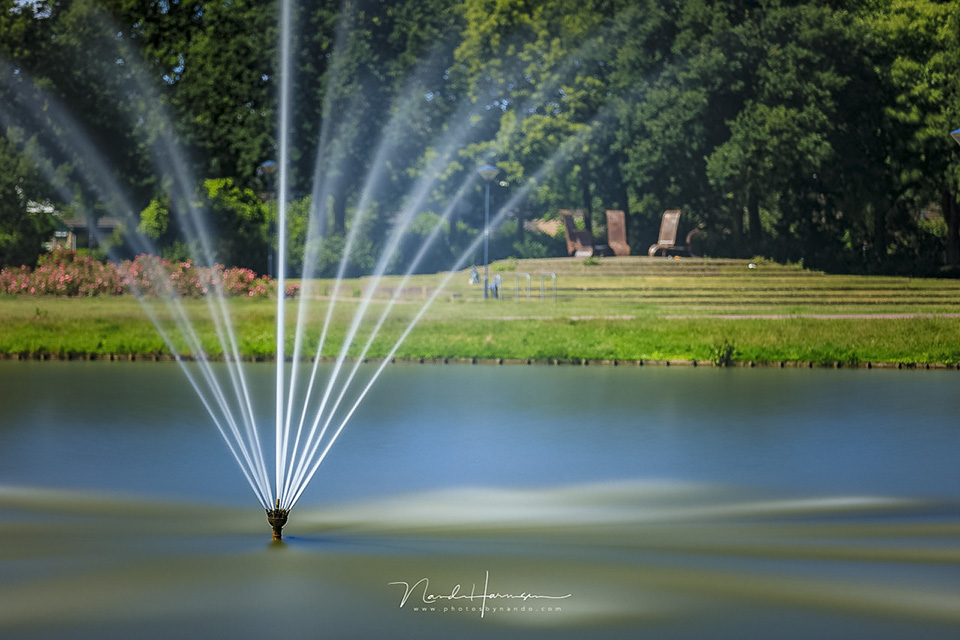
Long shutter speeds with a shallow depth of field
The Haida One Million X Edition filter can be used particularly well for photographing with very long shutter speeds and a very shallow depth of field.
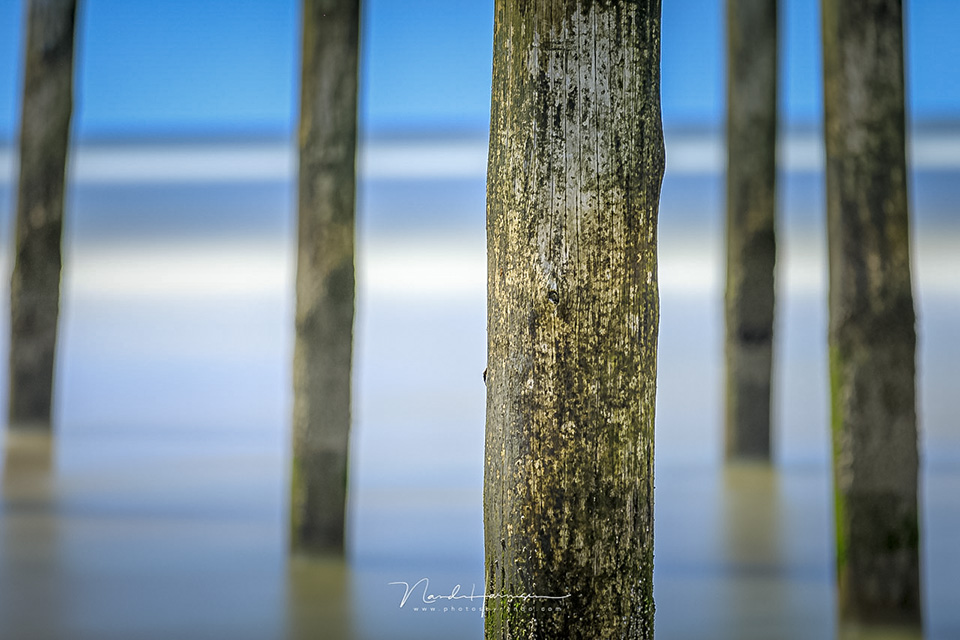
A shallow depth of field requires a large aperture, which allows a lot of light through your lens. The result is a faster shutter speed. With a 20-stop filter, it is still possible to achieve that long shutter speed.
I already mentioned the 1/8000 second shutter speed, which must be extended to 2 minutes and 16 seconds with a 20-stop filter. It allows you to create a unique type of photo.
My findings
The first thing I noticed was the extremely long shutter speeds that can be achieved with this 20-stop neutral density filter. The second thing that really stood out was the preservation of colour accuracy. There is absolutely no colour shift or colour cast to be seen.
That is impressive, especially because many manufacturers already struggle to guarantee colour accuracy with a 10-stop filter.
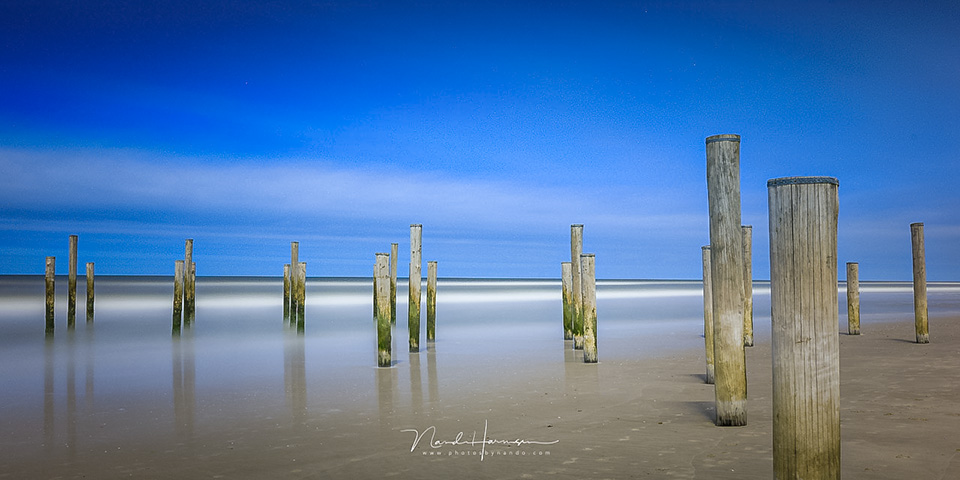
It was also striking how much light leakage you see with extremely long shutter speeds on a DSLR. The need to cover the viewfinder is obvious, although this is actually always advisable in bright sunshine. Mirrorless camera users do not have this problem, of course.
The filter is extremely suitable for photographing the sun with long focal lengths. It makes photographing sunspots, planetary transits or even the International Space Station in front of the sun much easier.
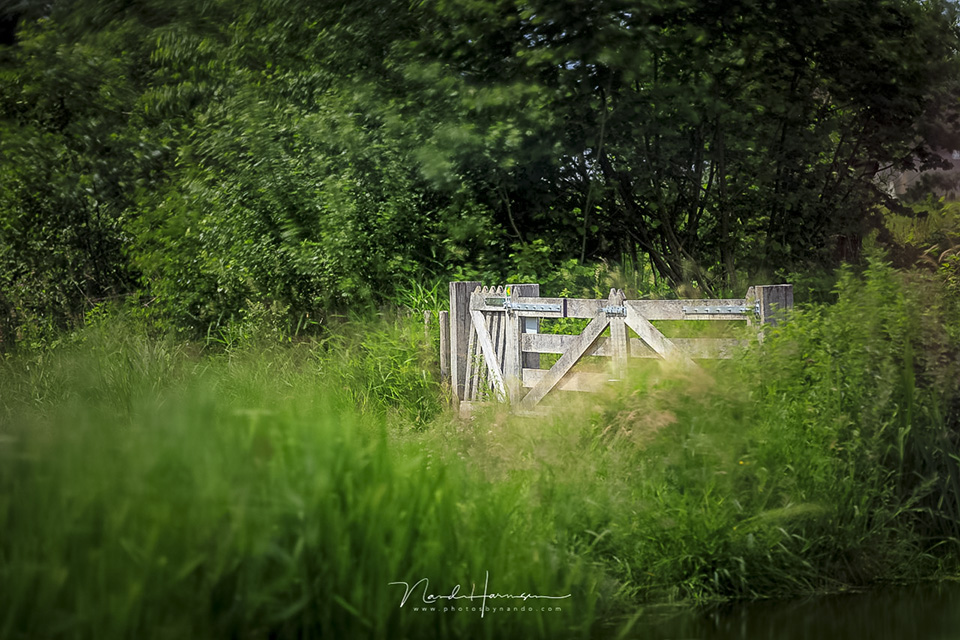
For landscapes, the use of this filter is very limited. Extremely long shutter speeds are required, with the resulting increase in noise. But for landscapes with a long shutter speed combined with a very shallow depth of field, it works very well.
What I liked about this filter
- Photographing the sun is easy, without much danger
- No colour cast or colour shift at all, completely colour-neutral
- The M10 drop-in system provides extremely good protection against light leakage
- Extremely long shutter speeds with an extremely shallow depth of field are possible
- The name One Million X Edition filter
What I liked less about this filter
- Far too dark for normal long exposure photography
- Normal long exposures are limited to sunny days
- No black bag is supplied to cover the camera body and prevent light leakage through the viewfinder (on DSLRs)
The last point, a bag to cover the camera, is something Haida is taking seriously after my first review. It may, hopefully, be included at a later date.
An alternative
If the 20-stop filter is too dark after all, a 17-stop filter is also available. It does not block the light one million times, but 'only' 128,000 times. It fills the gap between the 15-stop filter and a 20-stop filter.
The filter was supplied by Haida filters in China. Haida filters are available from omnifoto.nl. Mention my name, Nando Harmsen, when ordering and receive a nice gift with your order.
What do you think of a 20-stop filter? Do you think it has a practical use, or do you think its use is too limited for it to be of any real benefit? Would you consider buying one? Let us know your opinion in a comment below this article.
About the author
Nando Harmsen has been photographing for more than 40 years. He specialises in wedding photography and landscape photography. Nando also gives talks, workshops, masterclasses and photo trips, and regularly reviews new and interesting equipment.
You might also like
-
 Review: Haida M10 Insert Variable ND filter
by Nando Harmsen
-
 Review: Haida X in 1 Ultra-Low Reflection Magnetic Filter
by Nando Harmsen
-
 Review: Haida MagSafe Magnetic Filter Holder for Smartphones
by Nando Harmsen
-
 Review: the Haida M10 filter system and Red Diamond filters
by Nando Harmsen
-
 Haida magnetic filters, a perfect alternative to a filter system
by Nando Harmsen
-
 Review: Haida variable ND filter with built-in polarisation
by Nando Harmsen
11 comments
-
 Alex wrote on Sunday 2 August 2020 at 10:16 | reply
Beautiful photos and review. I'm curious what kind of effect you get with this filter in an urban setting. I think all the people/cars/moving objects disappear, giving you a serene urban setting.
Translated from Dutch. -

-

 Donald Willemsen
wrote on Tuesday 4 August 2020 at 15:49
| reply
Donald Willemsen
wrote on Tuesday 4 August 2020 at 15:49
| reply
A fascinating and informative article. This article is also encouraging. It makes me want to get started with it too. But the problem is that I would first have to buy a basic set. Since I do have confidence in Nando's opinion of Haifa filter sets, I would like to buy those as well. I took a look at the prices and a basic set already comes to +/- €435. That will mean saving for months, if not a whole year. For now, I will have to make do with my HOYA variable ND filter. In any case, thanks for this fascinating and inspiring article.
Translated from Dutch. -
 Paulussie wrote on Tuesday 4 August 2020 at 16:47
| reply
Paulussie wrote on Tuesday 4 August 2020 at 16:47
| reply
Interesting piece. But that 20x is just a bit too much of a good thing.
Translated from Dutch.
And that bag over the camera, my D500 has a little disk in the eyepiece, and my D7000 and S80 had a cap/ disk that you can put over the eyepiece. I assume other manufacturers have something like that too, so such a bag isn't necessary. -
Nando
wrote on Wednesday 5 August 2020 at 09:46
| reply
@Paulussie:
Translated from Dutch.
The D500 has it, and I believe the D850 does too. With Canon, it's only the 1D series that has this.
Other Canons have a little cap that you can slide over your eyepiece, but that's not the most charming solution and doesn't always work well. A bag is much easier, faster, and more practical. -
Donald Willemsen
wrote on Wednesday 5 August 2020 at 14:53
| reply
@Nando, I just want to respond to what you write about the cap that you can slide over the viewfinder on a Canon to prevent 'dirty' air from entering the sensor through the viewfinder. That cap is often attached to the strap that comes supplied with the camera when you buy it. An eyecup also comes standard on the viewfinder. So every time you want to slide that cap (which is attached to the strap) over the viewfinder (eyepiece), you have to remove the eyecup. You can easily lose such a small thing and it also breaks easily because it is made of very thin, fragile plastic. So if you regularly have to remove that eyecup in order to take certain photos, the eyecup will gradually become looser and looser on the viewfinder. The result: the eyecup slides off the viewfinder too easily and then you quickly lose it. This has already happened to me about 4 times. An eyecup like that costs around €10, so that's not too bad. So I think your solution with such a bag is a cheaper solution.
Translated from Dutch. -
Nando
wrote on Wednesday 5 August 2020 at 15:21
| reply
@Donald;
Translated from Dutch.
If that cap is attached to your strap, you won't lose it. Of course, you only take the eye-cup off when necessary. I simply don't have it on one of my cameras at all.
That eye-cup won't become looser if you neatly press the sides when taking it off. That way you press in the hooks that hold it in place. It only breaks if you pull it off without pressing that in.
The cover cap is made of rubber, and not exactly designed for frequent use. I think it's an eyesore. Hence the bag. -
 FHoogeboom
wrote on Monday 10 August 2020 at 12:23
| reply
FHoogeboom
wrote on Monday 10 August 2020 at 12:23
| reply
As for that Canon cover, I took it off the camera strap (which I don't use anyway) and attached it to my body with a little cable so I always have it at hand. I work without an eye-cup, so it doesn't get in the way when putting it on or removing it either.
Translated from Dutch. -
-
 Marc Roofthooft wrote on Saturday 10 August 2024 at 11:18
| reply
Marc Roofthooft wrote on Saturday 10 August 2024 at 11:18
| reply
How do you meter the light? With an external light meter? Because with the camera's light meter you have problems when you point it at the sun.
Translated from Dutch. -

Have your say
Please note: Articles older than a week can only be commented on by signed-in visitors.Would you still like to comment? sign in or create a free account.
Become a better photographer every week
A practical photography tip in your inbox every week.
39,023 photography enthusiasts already receive the tips! More about the weekly mail. Or keep up to date via  Facebook.

Elja Trum
Photofacts; everything to do with photography!
Would you like to take better photos and keep up with what is happening in photography? Photofacts publishes articles that teach you something about photography — from a product announcement to a practical shooting tip or a look at a website. Photofacts covers photography every day and is a hobby project of Elja Trum's that got out of hand. The articles are written by a team of volunteer authors. If you would enjoy writing one or more articles for Photofacts, do get in touch.More about PhotofactsPhotofacts is made possible in part by
