

Clearer photos with polarisation
Thursday 13 August 2026, 23:23 by Nando Harmsen | 1,084 views | 6 commentsThis article was translated from Dutch with the help of AI. Read the original.
A polarising filter gives you a beautiful blue sky. It also removes reflections. A polarising filter can also reduce haze in a landscape. If you want it to.
Some photographers think that a polarising filter is intended to create a beautiful blue sky with white clouds standing out nicely against it. It can do that, but the filter is not specifically intended for this.
It is actually intended to remove reflections and glare from reflective or wet surfaces. Provided the angle of the incoming light is suitable. Colours also look better and warmer as a result.
There is a third reason why a polarising filter can be useful. It can remove haze from a landscape. This is especially noticeable with mountains.
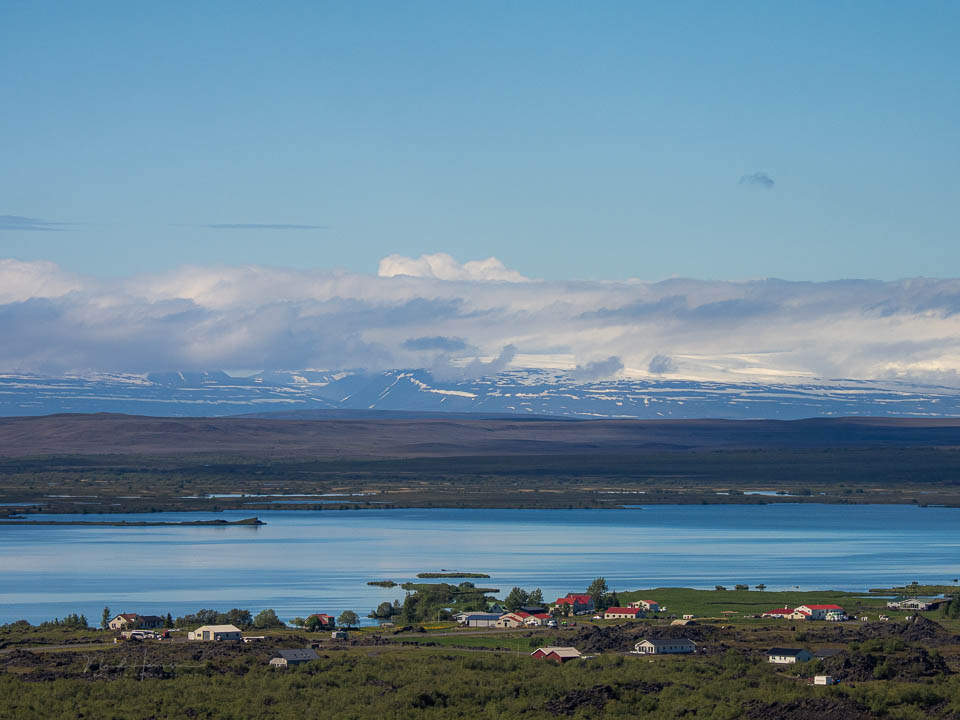
The photo above was taken in Iceland, with mountains on the horizon covered by a blanket of clouds. Because of the distance, everything in the background has become hazy, causing details to disappear. That may be what you want, and it is also a natural effect.
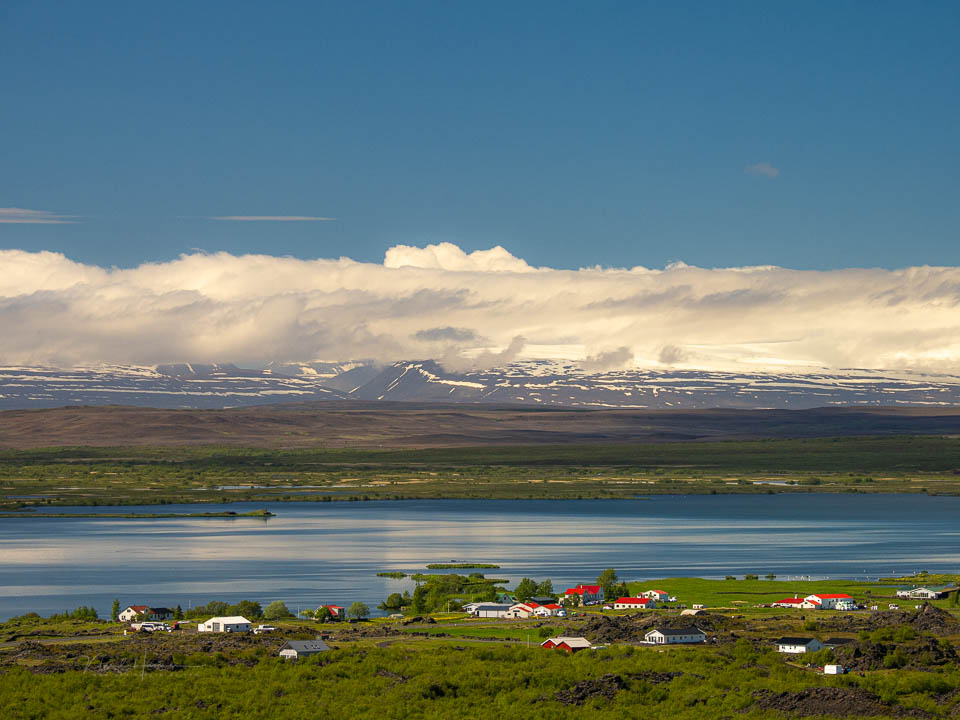
The photo above is exactly the same, but now with polarisation. The haze disappears, making details much more visible and clearer. The colours also come out much better.
This is a wonderful example of what a polarising filter can do. Colours are rendered better, and the photo has more contrast. Haze disappears in the distance.
For your information, all the settings and edits are exactly the same for both photos. The difference between the photos was caused entirely by the polarising filter.
You are never obliged to use polarisation, and sometimes it is even undesirable to use it. So choose carefully what you want to show and use the polarising filter as an extra tool.
About the author
Nando Harmsen has been photographing for more than 40 years. He specialises in wedding photography and landscape photography. Nando also gives talks, workshops, masterclasses and photo trips, and regularly reviews new and interesting equipment.
You might also like
-
 Control reflections with a polarising filter
by Erik Nevels
-
 Use polarisation for autumn photography
by Nando Harmsen
-
 Take a polarising filter with you more often
by Nando Harmsen
-
 3 reasons not to use a polarising filter
by Nando Harmsen
6 comments
-
 Govaerts wrote on Tuesday 18 August 2026 at 20:34 | reply
I live in Salinopolis: in the north of Brazil on the coast. I almost always use a polarizing filter. Not only to remove the reflections on the (sea)water, but also, for example, in bright sunlight on foliage in a swampy landscape with alternating patches of sunlight and shade on trees and plants. N.B.: I also almost always photograph from a tripod
Translated from Dutch. -
 Viv.B wrote on Wednesday 19 August 2026 at 09:42 | reply
Hi Nando,
Translated from Dutch.
I have 2 lenses, the rf 24-105L (R8)and the ef 70-300L (90D) from Canon.
If I were to buy a magnetic polarizing filter… which lens would I best put it on? I would think the 24-105 but I’m not sure. And is this the same for ND filters -

-
Viv B wrote on Wednesday 19 August 2026 at 12:54 | reply
Thank you Nando
Translated from Dutch. -
 Vercauteren Freddy wrote on Wednesday 19 August 2026 at 10:51 | reply
A polarizing filter is very useful as can be seen in the photo of Iceland. But always pay attention to the position of the sun, otherwise the result won't be so great.
Translated from Dutch. -

Have your say
Please note: Articles older than a week can only be commented on by signed-in visitors.Would you still like to comment? sign in or create a free account.
Become a better photographer every week
A practical photography tip in your inbox every week.
39,077 photography enthusiasts already receive the tips! More about the weekly mail. Or keep up to date via  Facebook.

Elja Trum
Photofacts; everything to do with photography!
Would you like to take better photos and keep up with what is happening in photography? Photofacts publishes articles that teach you something about photography — from a product announcement to a practical shooting tip or a look at a website. Photofacts covers photography every day and is a hobby project of Elja Trum's that got out of hand. The articles are written by a team of volunteer authors. If you would enjoy writing one or more articles for Photofacts, do get in touch.More about PhotofactsPhotofacts is made possible in part by
