

Why zooming with your feet is not the same as zooming with a lens
Monday 22 February 2021, 20:10 by Nando Harmsen | 6,414 views | 22 commentsThis article was translated from Dutch with the help of AI. Read the original.
People sometimes say that a zoom lens makes photographers lazy. They stay in one place and only have to zoom in or out.
Especially photographers who prefer shooting with a prime lens sometimes say this. They zoom with their feet. But is that really the same? In this article, I show that these are two different things.
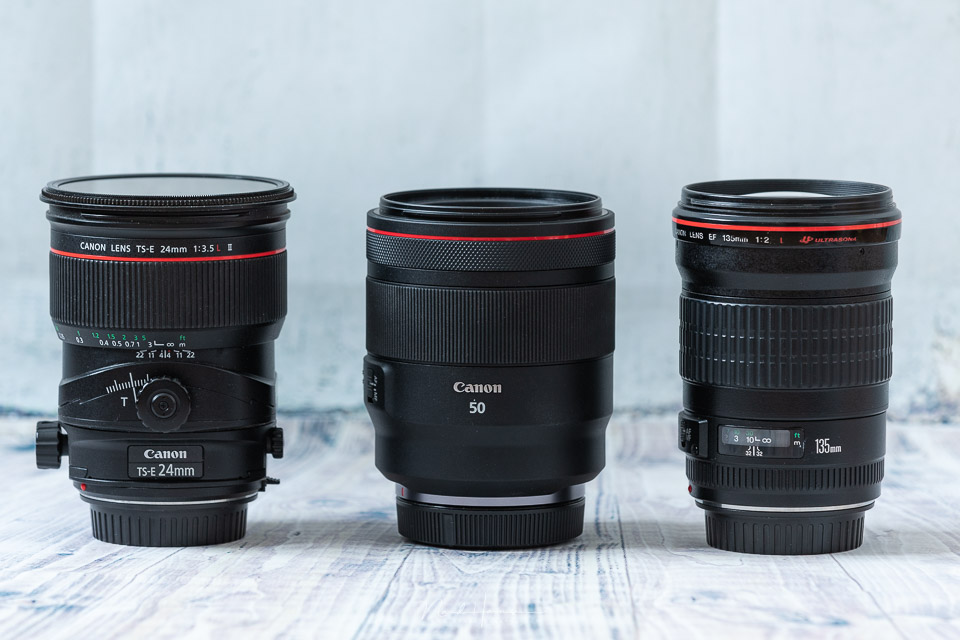
I think we have all heard the phrase zooming with your feet. It suggests that instead of using a zoom lens, you can also use a prime lens and simply stand a little closer.
And indeed, standing closer will make your subject appear larger in the frame. Of course, the condition is that you can actually get closer. If a ravine opens up in front of your feet, then zooming with your feet obviously won't work.
The same applies in the other direction. According to this phrase, zooming out would be the same as standing further away. The distance to your subject increases, so it appears smaller in the frame.
But does this exercise really produce the same image? Let me look at this step by step, I can't resist the pun.
A scenario
First, let me sketch the situation in which we are going to take photographs. Or rather, how far away the subject and the background are.
To make the difference as clear as possible, we place a subject ten metres away and make sure that the background is about 500 metres away.
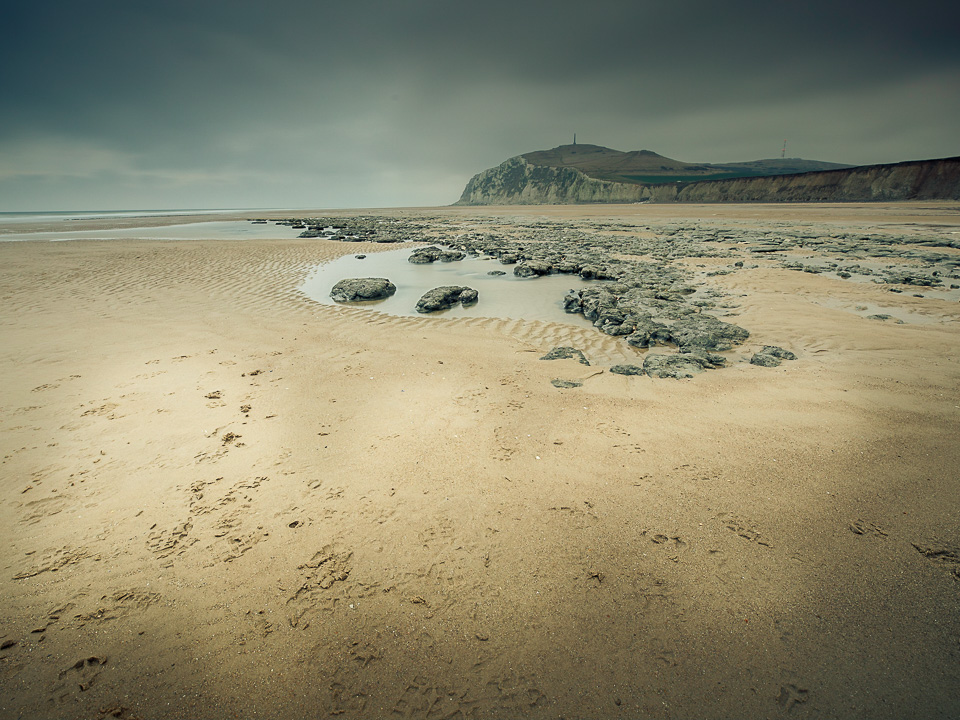
Of course, you won't always photograph in this kind of setting, but for now the point is to make the difference between zooming with your feet and actually zooming very clear. I also want to mention that this difference applies to all types of photography, not just landscapes.
What happens when you zoom with your feet?
When you zoom with your feet, you use a prime lens to make a subject appear larger or smaller in the frame. We change the distance to the subject. But what exactly happens?
Standing further away means that we make the subject appear smaller in the frame. Standing closer means that the subject appears larger. So far, there are no surprises, because this is logical.
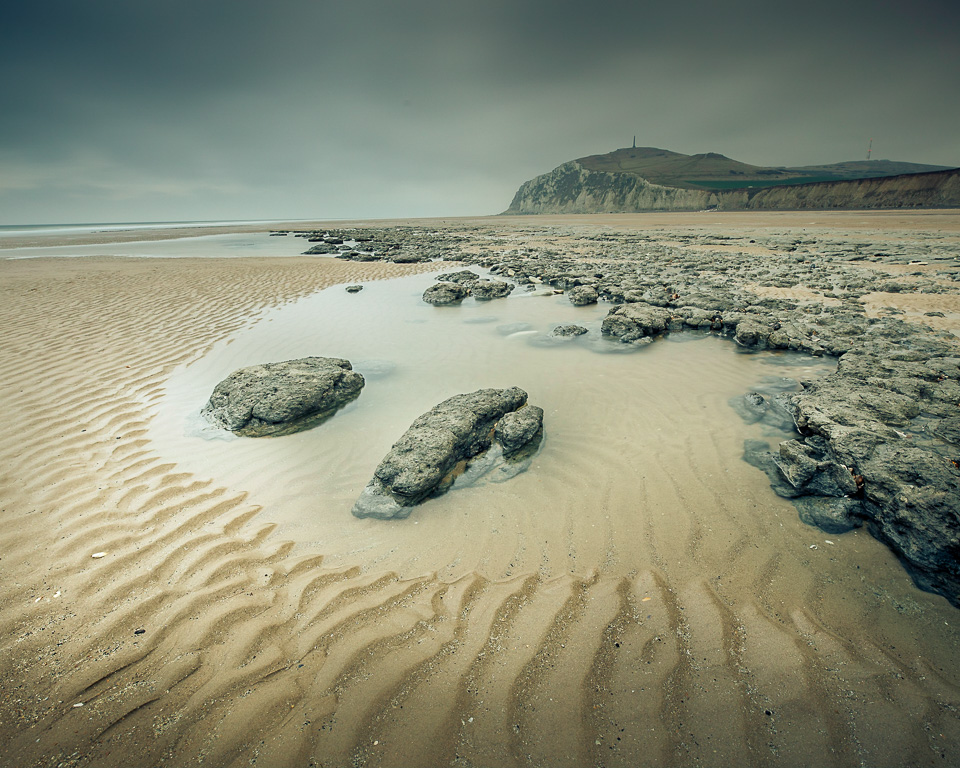
Because the angle of view does not change, it is about 107° diagonally at 16mm on a full-frame camera, you capture the same amount of background. You may have moved five metres closer, but the background is still about 500 metres away.
In short, when you change the distance to your subject with a prime lens, the size of your subject changes. But what you capture in the background does not change. You simply capture the same thing, both in terms of the amount and its size.
Zooming with a zoom lens
Now we are going to zoom with a zoom lens. Instead of moving closer or further away, we change the focal length. This also changes the angle of view. This is an important difference from zooming with your feet.
When we zoom in, we bring a subject closer. It appears larger in the frame. Zooming from a 16mm focal length to 35mm means that your subject appears twice as large in the frame. But the background will also appear larger, so you see less of it.
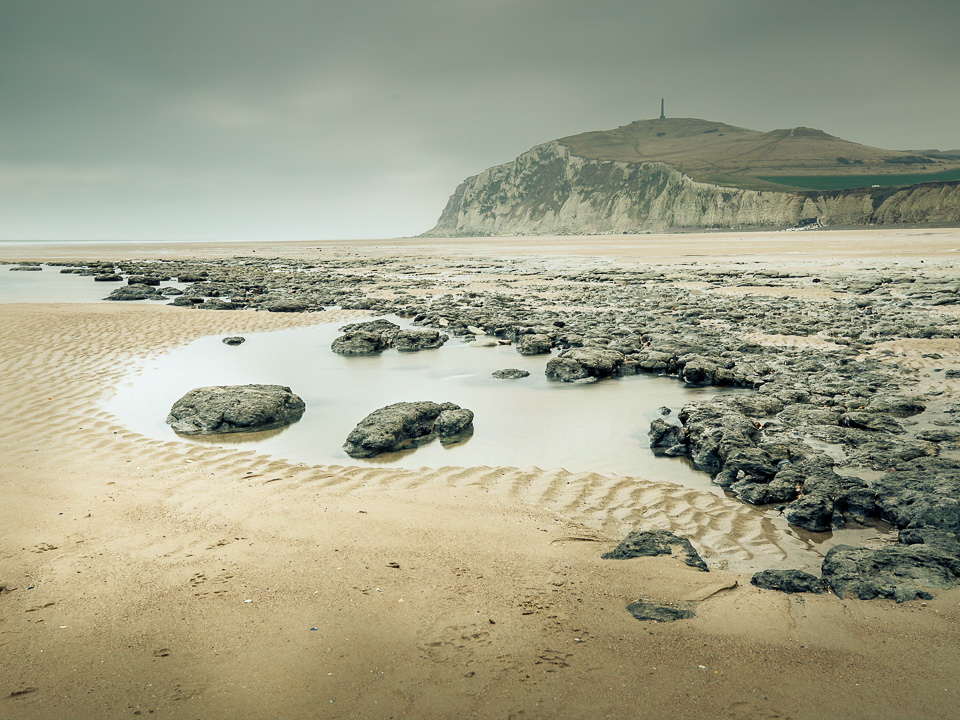
When you zoom in, the background gets larger, so it appears to come closer. This is the so-called compressing effect of a telephoto lens. When you zoom out, the background gets smaller, so it appears further away.
In short, when you zoom in, not only does your subject appear larger in the frame, but the background does too. When you zoom out, both the subject and the background appear smaller.
The conclusion
Zooming with your lens and zooming with your feet are two completely different things. Although your subject will appear larger or smaller in both cases, the effect on the background will not be the same.
You therefore cannot say that you might as well zoom with your feet, or that a photographer with a zoom lens is lazy. Both methods produce completely different images, and can also be used at the same time if desired.
Both zooming with your feet and zooming with your lens are ways to gain complete control over how the foreground and background are shown in relation to each other in the photo. This works not just in landscapes, but in all types of photography.
Two small notes about the above
The first is perspective distortion. Although this is not relevant in this example, it certainly plays a role in how your subject is rendered and shaped. You can clearly see this in the way the stones on the beach are rendered at the different focal lengths.
The second point is that the effect depends very much on the distance to the background. The effect will be very strong if the background is somewhere near the horizon, as in my example. The closer the background is to your subject, the smaller the effect will be.
If your background is really close, you will see little or none of this effect. That is why I provided a scenario in which the subject and background are far apart. This makes the effect most visible. Always bear this in mind, including when you try it yourself.
I wonder whether you knew that zooming with your feet was something quite different from zooming with a lens. If you did, have you ever used this technique in your own photography? Share your experience in a comment below this post.
About the author
Nando Harmsen has been photographing for more than 40 years. He specialises in wedding photography and landscape photography. Nando also gives talks, workshops, masterclasses and photo trips, and regularly reviews new and interesting equipment.
You might also like
-
 Landscape photography tip: try going out with a prime lens
by Nando Harmsen
-
 The ideal choice for primes
by Nando Harmsen
-
 Photographing with Canon's cheap primes
by Nando Harmsen
-
 Landscape photography tip: zoom with your feet and your lens
by Nando Harmsen
-
 Landscape photography tip: stay on after sunset
by Nando Harmsen
-
 Does AI generative removal make you a lazy photographer?
by Nando Harmsen
22 comments
-

 Donald Willemsen
wrote on Tuesday 23 February 2021 at 02:23
| reply
Donald Willemsen
wrote on Tuesday 23 February 2021 at 02:23
| reply
Nando, your story is as clear as day. In my eyes, you are right. Zooming with your feet is something completely different from zooming with a zoom lens. Not that I am lazy, but with a zoom lens I want to bring more or less into the frame by changing the angle of view. By zooming with your feet, you do not change the angle of view. We have not even mentioned the effects of a focal length yet. Long focal lengths not only have a smaller angle of view, but they also compress the image somewhat. The foreground and background are, as it were, pressed towards each other. With short focal lengths, the effect is exactly the opposite. The possible distortions (barrel distortion, pincushion distortion) do not change when you zoom with your feet.
Translated from Dutch. -
 martinphili wrote on Tuesday 23 February 2021 at 07:31
| reply
martinphili wrote on Tuesday 23 February 2021 at 07:31
| reply
This also applies very strongly to portrait photographers. Standing closer to your model causes perspective distortion that can be disastrous. The nose is then much closer than, for example, the eyes, and that nose is consequently shown larger than it actually is.
Translated from Dutch. -
 René Beckerschmidt wrote on Tuesday 23 February 2021 at 10:38 | reply
I once saw in a documentary that the combination of both is used in certain action films to keep people the same in the frame while the background changes.
Translated from Dutch.
To add more action/drama to the image that way. -
 toondevos
wrote on Tuesday 23 February 2021 at 11:14
| reply
toondevos
wrote on Tuesday 23 February 2021 at 11:14
| reply
I agree with Martinphili. That's why selfies often look so crappy, the distance is simply too short, which gives you ugly distortion. For portrait photos, I use this rule of thumb: distance 1.5 metres (hey, where do I know that from?)
Translated from Dutch. -
 Nando
wrote on Tuesday 23 February 2021 at 11:21
| reply
Nando
wrote on Tuesday 23 February 2021 at 11:21
| reply
@martinphili and @toondevos;
Translated from Dutch.
It's more than just distortion of your model. You also change the amount and shape of the background. By choosing a good angle of view, you can still get a good background for your model in the most unattractive locations. Of course, depth of field also plays an important role in that -
-
 guest wrote on Tuesday 23 February 2021 at 11:46 | reply
Thanks for this enlightening article!
Translated from Dutch. -
 4BYE
wrote on Tuesday 23 February 2021 at 11:56
| reply
4BYE
wrote on Tuesday 23 February 2021 at 11:56
| reply
That is why an 85mm on FF is also specifically (but of course not exclusively) intended for portrait photography. A 43 mm roughly gives you what the eyes perceive.
Translated from Dutch.
Although your explanation is of course clear, you can still see that those 5 meters do indeed also remove a part of the background.
I mainly use zoom lenses because of the convenience when we go on road trips. So I have both options. However, you do not always have the possibility on trails, for example, to "zoom" with your feet. Still, I will keep in mind that when it is possible, I should experiment a bit more. Normally I often create the framing by zooming in or out.
Another option that is not discussed now is "stitching". You then get a different perspective than when you zoom out. I still make use of that from time to time. -
guest wrote on Tuesday 23 February 2021 at 12:00 | reply
Another clear explanation Nando, thanks.
Translated from Dutch. -
 PixelDude Raoul
wrote on Tuesday 23 February 2021 at 12:25
| reply
PixelDude Raoul
wrote on Tuesday 23 February 2021 at 12:25
| reply
A wildlife photographer won't be zooming with his feet much.
Translated from Dutch.
Either the bird has (literally) flown away or he has to make a dash (let's say sprint) to the safari vehicle, chased by a Wildebeest. Also, when he gets too close to a herd of elephants, the shrill trumpeting will make his eardrums burst.
That a zoom lens makes the photographer lazy is nonsense spouted by photographers who know nothing about it. ... It does make the feet-zoomer more sporty when he is being chased. -
Robert wrote on Tuesday 23 February 2021 at 12:48 | reply
Hi Nando clear examples. I often get the compliment ' you take candid photos Robert Really so natural' !
Translated from Dutch.
We are then talking about the reportage/ wedding as the approach, and not a landscape. With my 80 - 200 mm I am almost invisible in a setting.
It suits me very well and also fits me.
Photo-shooting greetings from Almere Haven -
Nando
wrote on Tuesday 23 February 2021 at 13:45
| reply
@4BYE: What you see with 5 meters closer is that the background is not in exactly the same position. The one from closer by is placed more to the right, but the size (and therefore the amount) is the same.
Translated from Dutch.
You mention stitching. I assume you mean a panorama. This is nothing more than changing the angle of view.
Or do you mean something else? -
Nando
wrote on Tuesday 23 February 2021 at 13:48
| reply
@PixelDude Raoul: depends on what kind of wildlife photographer you have. In the Benelux you really don't have to run from a lion or elephant. It's behind bars.
Translated from Dutch.
Of course, this always depends on the space you have. That's obvious, right? If you're standing at a ravine, it's not possible either, just as it isn't wise if you're in Africa with the lions and elephants. -
Donald Willemsen
wrote on Tuesday 23 February 2021 at 14:22
| reply
Nando, have you ever been to a European safari park, for example Beekse Bergen? If you get out of your car there, you might get a lion chasing you. No bars to be seen. 😄😉 It happened to someone not all that long ago. I think in 2019. It was a passenger in a car with French license plates.
Translated from Dutch. -
4BYE
wrote on Tuesday 23 February 2021 at 14:45
| reply
@Nando, "stitching" doesn't necessarily have to be a panorama (it can also be, for example, 3x2 images or vertical). What I mean by that is that if you make a stitch, you don't have to zoom back out to photograph with a wider angle. You then also get a different perspective, because you take the photo of the subject with less wide-angle/more telephoto.
Translated from Dutch.
If you place your two photos on top of each other, you can see that despite those 5 meters there is already some difference in the background, especially in width. This is particularly visible in the two masts that are in the sky. But nothing to write home about, it just struck me what 5 meters does even at that distance. -
4BYE
wrote on Tuesday 23 February 2021 at 14:53
| reply
@Donald Willemsen - I think first French people who wanted to have a picnic and then a German tourist with a child out of the car. You can't make this stuff up... LOL
Translated from Dutch.
I myself have also stood eye to eye with a Black Bear at about 30 meters while walking on a trail in America. Luckily, they mainly eat vegetarian food.
-
-
PixelDude Raoul
wrote on Tuesday 23 February 2021 at 16:17
| reply
@ Nando
Translated from Dutch.
You have bipeds who use a telephoto lens to be able to move forwards or backwards without moving too much, and you have the bipeds who would gladly be quadrupeds when they have to run. With this little column, you hit the nail on the head: two different applications where one really isn't better than the other. -
Donald Willemsen
wrote on Tuesday 23 February 2021 at 16:52
| reply
@4BYE yeah, those Frenchmen weren't the brightest, or they were under the influence of the coke they had just bought. They had a cheetah chasing them. And those Germans, well, they just have a thick head with nothing in it. But the videos on YouTube remain amusing.
Translated from Dutch.
@Nando, I understand the point of your comment. Go take another look at Beekse Bergen 😄 -
Nando
wrote on Wednesday 24 February 2021 at 11:16
| reply
@4BYE:
Translated from Dutch.
You mean the Brenizer method, also known as bokeh panorama. With that you imitate the depth of field of a large-format camera.
Well, that is a completely different technique that has nothing to do with zooming with your feet or lens. So it doesn't fit this article, but it would be fun to look into that sometime -
4BYE
wrote on Wednesday 24 February 2021 at 11:45
| reply
@Nando - it may be just me but I don't think you understand my point. What I mean is that instead of photographing something that fits with, for example, a 24mm wide-angle lens, you can also take multiple shots with a 50mm and stitch them together to make the same thing fit. Unless I'm completely mistaken, you then get a different perspective than with the 24 mm while staying in the same spot.
Translated from Dutch.
No, I don't mean the Brenizer method, but it is certainly interesting. -
Nando
wrote on Wednesday 24 February 2021 at 13:51
| reply
@4BYE: that's just a multi-row panorama. And if you use a shallow depth of field it's the Brenizer method because you get that different perspective.
Translated from Dutch.
But I think that if you don't use that Brenizer technique, you get exactly the same image with 50mm as with 24mm. You're not changing your position relative to the foreground and background, after all.
Have your say
Please note: Articles older than a week can only be commented on by signed-in visitors.Would you still like to comment? sign in or create a free account.
Become a better photographer every week
A practical photography tip in your inbox every week.
39,077 photography enthusiasts already receive the tips! More about the weekly mail. Or keep up to date via  Facebook.

Elja Trum
Photofacts; everything to do with photography!
Would you like to take better photos and keep up with what is happening in photography? Photofacts publishes articles that teach you something about photography — from a product announcement to a practical shooting tip or a look at a website. Photofacts covers photography every day and is a hobby project of Elja Trum's that got out of hand. The articles are written by a team of volunteer authors. If you would enjoy writing one or more articles for Photofacts, do get in touch.More about PhotofactsPhotofacts is made possible in part by
